A Victorian idea that stuck
By the time Richard Cadbury designed his decorated heart-shaped chocolate boxes in the 1860s, Valentine's cards and small tokens were already a fixture of British romantic life. What made his boxes enduring was that the container mattered as much as the contents. Designed to be kept once the chocolates were gone — a love letter pressed into painted card and ribbon — they turned packaging into sentiment. Chocolate became the gift partly because the box itself was a keepsake.
That instinct is still visible in every ribbon-tied truffle box produced by small British makers today. The tradition never really changed; only the chocolate got better.
Why chocolate, specifically
Chocolate held a particular status in Victorian Britain that flour or sugar did not. It was expensive, imported, and associated with pleasure rather than sustenance. Giving someone chocolate was a legible signal: I spent money on something unnecessary, and I spent it on you. That logic remains durable. We no longer think of chocolate as exotic, but a well-chosen box still reads as deliberate rather than convenient.
The shift from drinking chocolate to eating chocolate also gave makers something shapeable. You can press chocolate into a heart. You cannot do the same with a cup of cocoa. The form followed the feeling.
What makes Valentine's chocolate worth buying
Size stopped being a useful measure of quality some time ago. A large box of cheap moulded chocolates delivers far less than a small box of properly made ganache truffles. The ganache in a good truffle is an emulsion of cream and melted chocolate with a flavouring worked in: dark chocolate with sea salt, milk with cardamom, white with passion fruit. Done carefully, the texture sits just below melting point at room temperature — which is why truffles feel so different from a standard filled sweet.
Small British makers tend to use better base chocolate, often from named-origin cacao, and keep their ganache ratios tighter. The result develops flavour as it melts rather than delivering one flat note. Two things are worth noting on a label: single origin tells you where the cacao grew; percentage gives the proportion of cocoa solids and butter relative to sugar. Neither guarantees quality, but both suggest the maker thought carefully about the base.
Ordering a posted gift
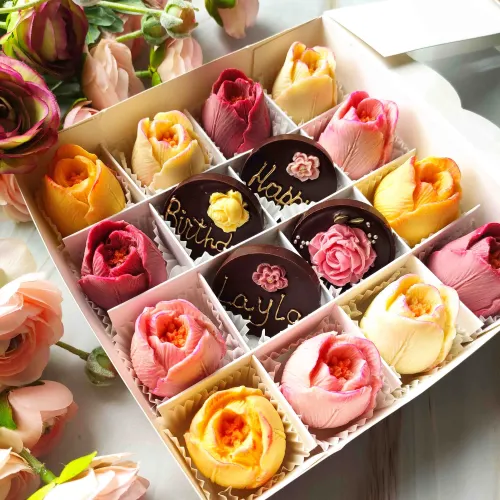
Valentine's Day falls on 14 February, and the preceding week is reliably one of the busiest periods for UK parcel couriers. If you are ordering for delivery rather than collection, allow more time than you expect — particularly for anything made fresh to order, such as hand-dipped truffles or personalised boxes. Most small makers post cut-off date guidance on their sites; read it before assuming standard delivery will suffice.
Chocolate travels better in cool weather than in summer, which is one of the few advantages February offers a postal gift. Some makers use insulated packaging for filled chocolates — worth checking if your recipient has unreliable post or a warm house.
Choosing well rather than buying big
The most useful question is not how much you are spending but what you are actually giving. A box chosen for a maker's specific craft — a chocolatier working with a particular origin cacao or known for an unusual flavour combination — carries more thought than a large generic assortment at any price. Filled chocolates and ganache truffles from independent makers are the clearest expression of the form right now.
If you can visit a maker's shop directly, you will often find small mixed selections that let you try several styles before committing. If you are buying online, look for makers who describe their ganache ingredients and sourcing with some specificity — that level of care on the page usually reflects the same care in the kitchen.