Why dates, and why first
Breaking the Ramadan fast with dates before anything else follows the Sunnah — the recorded traditions of the Prophet Muhammad — and it has shaped iftar tables across fourteen centuries and every continent. Dates are dense with natural sugars that absorb quickly after a long day without food, and their sweetness is satisfying in a way that juice alone is not. The ritual brevity of those first few minutes — a date, water, a short prayer — gives way to the fuller meal that follows, but nothing about those opening moments is incidental.
In Britain, the iftar spread reflects the breadth of the Muslim community here. A table in a Bangladeshi household might centre on lentil soup and onion-flecked pakoras; South Asian families frequently lay out samosas alongside Rooh Afza, the rose-flavoured cordial whose deep-pink colour has become almost synonymous with Ramadan evenings. But dates appear on every table, whatever else surrounds them.
The varieties worth seeking out
Not all dates are alike, and once you have tried a good Medjool alongside a Deglet Nour, the difference is hard to ignore.
- Medjool — the largest of the common varieties, with a soft, yielding texture and a flavour that sits somewhere between caramel and toffee. Grown across the Middle East and North Africa, it is the date most likely to appear in British delis and independent food shops.
- Ajwa — smaller and darker, with a drier, chewier flesh and a subtly complex flavour. Grown in the Medina region of Saudi Arabia, Ajwa dates carry particular religious significance and are among the most prized for Ramadan gifting.
- Deglet Nour — lighter in colour, firmer in texture, and less intensely sweet than Medjool. The name translates roughly as "date of light", a reference to the translucency visible when one is held up to the sun. It is the variety most commonly found in supermarket boxes.
- Sukkari — a Saudi variety with a crumbly, almost dry texture and an exceptionally sweet, honeyed flavour. Less widely available in the UK than Medjool, but worth tracking down through specialist Middle Eastern grocers.
Stuffed dates and the gift tradition
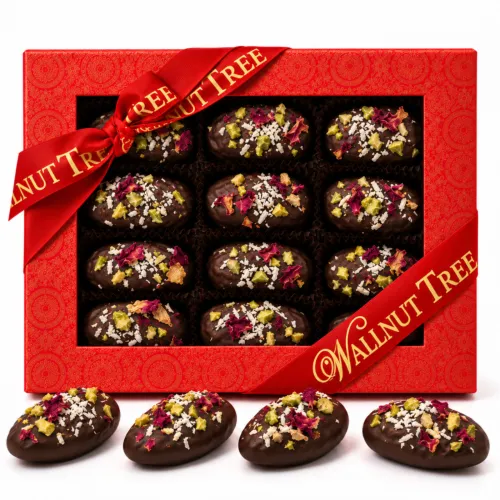
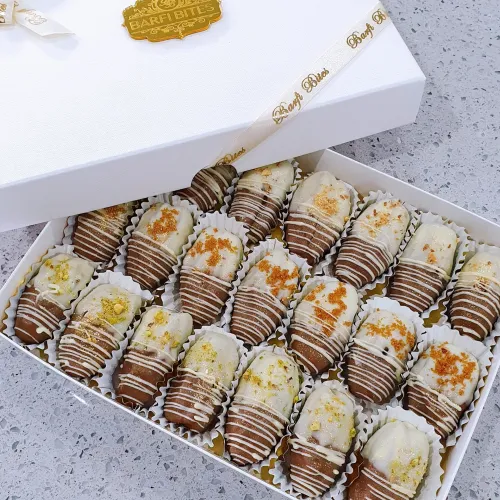
Ramadan is a month of heightened generosity, and dates have become one of its most considered edible gifts. Stuffed dates — pressed around a whole almond or a sliver of pistachio, or dipped partway into dark chocolate — are sold in decorative boxes across Middle Eastern bakeries and food shops throughout the month. The combination of a date's dense sweetness with the slight bitterness of dark chocolate works well; the nut-stuffed versions add texture and a savoury edge that prevents the whole thing from being cloying.
These make thoughtful gifts to bring to an iftar invitation, and British independent confectioners and chocolatiers have increasingly turned their attention to them. When buying a box, look for dates that are plump and unshrivelled, with a slight sheen rather than a dull, dried-out appearance.
Storing dates properly
At room temperature in a cool, dry place, most dates keep well for several weeks. Medjool, being softer and moister, benefits from refrigeration if you are keeping them for more than a fortnight — the chill preserves the texture far better than a warm kitchen would. Bring them back to room temperature before eating; a cold Medjool loses some of its characteristic softness.
Dates sold loose from a tray at a Middle Eastern grocer are often fresher and better value than pre-packaged supermarket boxes, particularly during Ramadan when stock turns over quickly. It is worth asking the shopkeeper which variety they would recommend that week — the answer usually reflects what has just come in.
Planning ahead for Ramadan
Ramadan moves through the solar calendar each year, arriving roughly ten or eleven days earlier than the previous year. In 2027, it is expected to begin around 8 February, though the exact date depends on the moon sighting — always confirm closer to the time. That earlier timing means iftar will fall in the late afternoon in Britain rather than during the long summer evenings that make fasting particularly demanding. For anyone buying dates in quantity — for a household, a community iftar, or as gifts — ordering through a specialist supplier early tends to mean better choice than leaving it until the final week before Ramadan begins.