Start with the drinker, not the packaging
The most common mistake with tea gifts is buying for the shelf rather than the cup. A strong breakfast-tea drinker who takes theirs with milk and two sugars will get far less pleasure from a fragrant Darjeeling first flush than from an exceptional Assam or a well-blended builder's-style loose-leaf. A green tea enthusiast finds robust Ceylons beside the point. Think about what your recipient actually drinks day to day, then give them a better version of it — or something close enough that the step feels exciting rather than baffling.
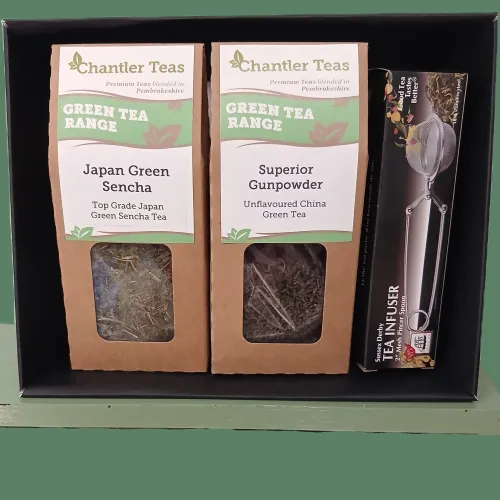
The builder's-tea drinker is well served by a full-bodied Assam, a malty Yunnan, or a solid classic breakfast blend from a specialist blender. Those who already drink green or white teas will likely appreciate a single-estate example — a Japanese sencha, a Taiwanese oolong, or a Chinese white tea whose character reflects its specific hillside. The flavour gap between a single-estate tea and a supermarket bag is wide enough that even experienced drinkers find it surprising. Our piece on single-estate teas covers what to look for.
Loose-leaf over teabags, nearly always
For a gift, loose-leaf tea is the obvious choice. It signals intent, and it almost always tastes better: the leaves open fully and release their flavour properly, whereas even good-quality teabags contain leaf cut small enough to fit the bag, which changes the extraction and the character of the cup. Our piece on loose-leaf versus teabags covers the practical detail; the short version for gifting purposes is that a small tin of quality loose-leaf will impress far more than a box of individually wrapped bags at the same price.
Freshness matters as much as quality. Tea fades — light, heat, moisture, and ambient smells all degrade it over time. If you are buying weeks ahead, store the tea in an airtight, opaque container somewhere cool and dry, away from anything strongly scented. Our piece on storing tea properly goes into this further, but the principle is straightforward: treat it more like ground coffee than a store-cupboard staple.
A good caddy is part of the gift
A well-made caddy — ideally double-lidded, with an inner seal as well as an outer lid — solves the freshness problem and, if it is beautiful, becomes part of the ritual of making tea. Look for caddies in tin, ceramic, or lacquered wood, sized to hold a reasonable quantity of loose-leaf without too much air space at the top. The less empty space inside, the slower the tea will oxidise once opened.
Pairing the caddy with the tea turns two modest presents into one considered gift. Fill it with something suited to the recipient's taste, seal it, and it arrives ready to use.
British-grown tea
For a genuinely unusual addition, consider tea grown in Britain. A small number of tea gardens operate in Cornwall and Scotland — the mild, damp conditions in parts of both regions prove hospitable to Camellia sinensis, which surprises most people who assume tea must come from equatorial hillsides. British-grown tea is produced in small quantities and priced accordingly, but it makes for a memorable talking point and a cup that is distinct from anything imported. Stocks can be limited and production varies year to year, so it is worth seeking out growers directly or through specialist retailers who stock it regularly.
What to put alongside the tea
Honey is a natural companion — particularly single-flower honeys, which have a complexity that blended commercial honey flattens out. A heather honey has a slightly bitter, almost gelatinous quality that works well alongside a robust Assam or Darjeeling; a light acacia honey suits more delicate green or white teas without overwhelming them. Our piece on single-flower honeys covers the range worth knowing about.
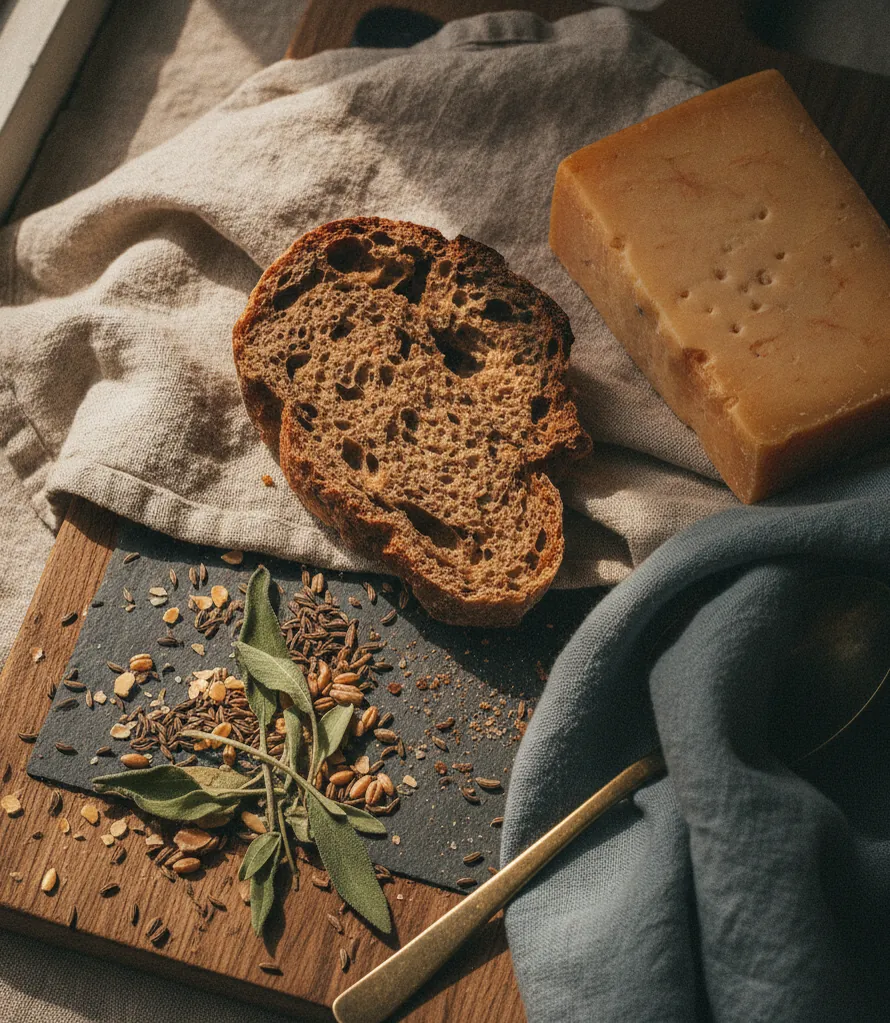
Shortbread and fruit cake are the most natural companions to tea in a British context — both hold their own against a strong brew, and both travel and keep well. Good shortbread should be buttery and crumbling rather than hard or floury. A dense, well-made fruit cake with proper dried fruit will outlast most other biscuits and cakes without losing quality. Preserves — a good marmalade, a sharp fruit jelly — are worth adding if there is a natural home for them in the recipient's kitchen, though they complement the tea-drinking occasion more than they pair with the cup itself.
Resist the temptation to fill space. A small number of genuinely good things, chosen with the person in mind, will always outperform a larger collection of the merely adequate.