Start with where you buy
A supermarket six-pack is fine for a barbecue. For a gift, it sets the wrong tone. A specialist beer shop — or a well-stocked independent off-licence — is where the interesting decisions begin. Staff at a good one will know their stock by flavour profile, not just by country of origin, and can steer you away from bottles that have been sitting too long in a warm window. Many will build a mixed case to order, which is worth asking about.
Buying direct from an independent brewery is the other strong option. A mixed case from a single producer's range makes a coherent gift — the recipient gets a proper introduction to one brewery's character rather than a random selection, and it tends to be good value. Most small British breweries now sell online and ship directly. Look for one geographically close to the person you're buying for; there's a pleasure in drinking something local that a generic mixed case cannot replicate.
Fresh versus laid down
Hoppy styles — pale ales, IPAs, anything where bitterness and aroma are the point — want to be drunk fresh. Hop character fades quickly. A bottle-conditioned IPA that was exceptional at three weeks can taste flat and papery at six months. If you're buying these, check the bottling date rather than just the best-before, and give the gift promptly.
Strong dark beers are another matter entirely. Barley wines, imperial stouts, and rich winter ales are built for time. Their high alcohol and dense malt character mellow and develop in the bottle over months or even years, much as a good wine does. A strong winter ale or barley wine from a respected independent brewery makes a gift with genuine longevity — drink it now, or tuck it away and find it transformed by next winter. We cover this further in our piece on bottle-conditioned ales and in our article on strong winter beers worth laying down.
Pairing with food
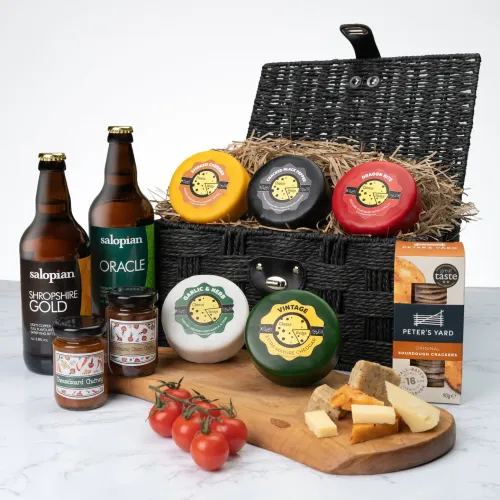
Beer and cheese is one of the great underrated pairings in British food. Where wine can fight with a strong cheese, beer tends to find common ground: bitterness in a pale ale cuts through fat, a rich stout mirrors the depth of an aged hard cheese, and a fruity amber ale can do what a chutney does — bridge a sharp cheddar and something milder. We've covered this in our article on beer and cheese, but as a gift principle: a small selection of complementary cheeses alongside a mixed beer case moves the whole thing into different territory.
Savoury snacks complete the picture. Pork scratchings — proper ones, from an artisan producer — have an intensity that holds up against a bitter or a dark ale. Good hand-cooked crisps, something pickled (pickled eggs in particular have an old pub logic that makes complete sense once tried with a malty bitter), and a jar or two of something punchy are inexpensive additions that strengthen the overall gift considerably.
Alcohol-free options
Alcohol-free beer has changed almost beyond recognition, and a good bottle-shop will have options worth including. If someone is a designated driver, or simply prefers not to drink, a thoughtfully chosen alcohol-free ale or lager — made with the same craft attention as its alcoholic counterparts — is a far better gesture than a generic afterthought. Some of the best come from independent British breweries using the same ingredients and process, with alcohol removed at the end. They're worth including in a mixed case regardless.
Putting it together
The most considered version of this gift has a clear logic: a mixed case from a local independent brewery, one or two strong bottles set aside for ageing, a wedge of good cheese, and a handful of proper snacks. Together, they make the point that this is a gift for sitting down with. A handwritten note explaining which beers to drink now and which to keep is a small touch that shows thought — and the kind of detail a beer-loving recipient will genuinely appreciate.
_o9j7-ts_JPGq80.webp)