A craft borrowed, then made local
Charcuterie in Britain is young. The knowledge came largely from France, Italy and Spain — brought back by cooks, farmers and food obsessives who had spent time in those countries and returned asking why we weren't doing the same. What followed wasn't imitation so much as translation: taking the principles of salt, time and airflow, and applying them to breeds, climates and landscapes that are unmistakably British.
The results are genuinely distinct. A coppa made from a Gloucestershire Old Spot carries different fat distribution and a different depth of flavour than one made from a commercial white pig. That's biology, and it's the reason breed has become central to the craft rather than incidental to it.
What air-drying actually means
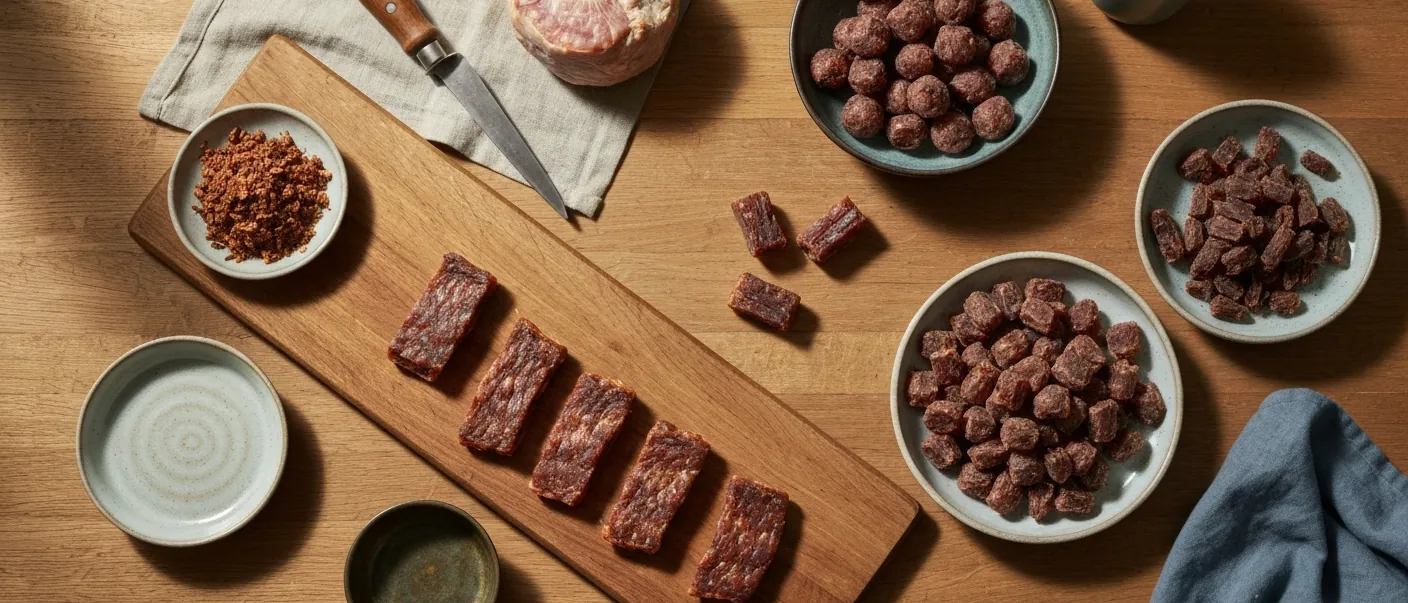
The process is one of controlled dehydration. A cut of meat — a whole leg, a collar, a cased salami mix — is salted, sometimes with added spices or herbs, then hung where temperature and humidity are carefully managed. Moisture leaves the meat slowly. Beneficial moulds may form on the surface of whole cuts, helping to regulate that moisture loss and contributing to the final flavour. Nothing is smoked or cooked. Preservation is achieved entirely through salt and the removal of water.
Time is the main ingredient nobody talks about. A small salami might be ready in weeks; a whole air-dried ham can take many months. That extended process concentrates flavour, firms the texture and develops the complex, slightly mineral character that distinguishes properly aged charcuterie from thin, wet-cured sliced meats.
British producers work within real constraints. The climate is damper and more variable than the mountain air of the Apennines or the Pyrenees. Some producers have invested in carefully controlled curing chambers; others work with traditional stone or brick buildings that offer the right conditions naturally. Neither approach is inherently superior — what matters is understanding the environment and managing it.
Why breed and rearing matter
Fat is where flavour lives in cured meat, which is why native and rare breeds have become the starting point for most serious British charcutiers. Breeds like Mangalitsa, Tamworth, Middle White, Berkshire and Gloucestershire Old Spot were historically prized for the qualities that modern intensive farming bred out: high fat-to-muscle ratios, slow growth and the marbling that produces a richly flavoured, silky result after curing.
How an animal was reared matters as much as which breed it is. Outdoor-reared pigs develop firmer, better-structured fat than those kept indoors. Some producers work closely with specific farms, specifying not just breed but diet and slaughter weight, because all those variables show up in the finished product. The field and the curing room are genuinely connected — which is a large part of what makes this end of the market worth following.
The British range so far
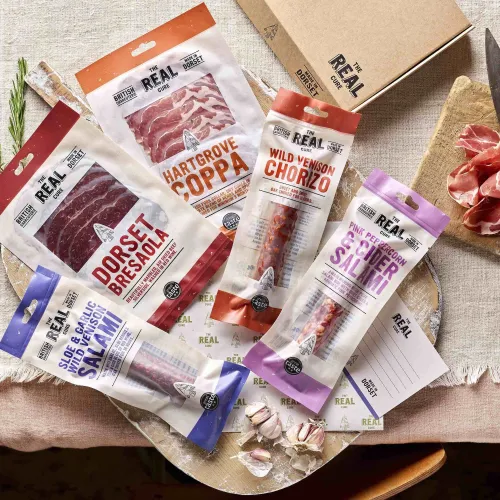
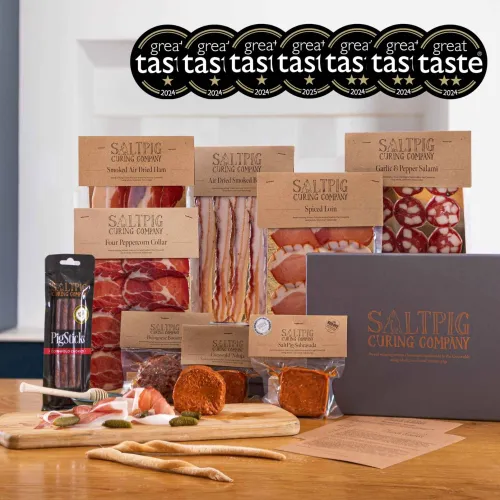
British charcutiers have focused primarily on three areas: whole air-dried legs cured in the manner of continental hams, coppa (the cured collar, rich with fat and deeply savoury), and salami in various forms. Some producers have also worked with bresaola-style beef, cured lamb and venison, finding that the principles transfer well beyond pork.
Regional character is beginning to emerge, though it's still early days. A producer working with salt from a British coastal source, herbs from their own land and pigs from a named local farm is making something that reflects a specific place — even if the technique has Italian roots. That sense of provenance is exactly what the best continental charcuterie has always had, and it's what British makers are now, quietly and with real seriousness, starting to build.
- Gloucestershire Old Spot, Berkshire and Middle White are among the native breeds most commonly associated with British charcuterie, valued for their fat cover and slow-maturing muscle.
- Coppa is made from the neck and shoulder collar — a cut that rewards long curing and benefits particularly from high-welfare, outdoor-reared animals.
- Salami gives producers the most creative latitude, with spicing, fermentation and casing all offering variables to work with.
How to eat it well
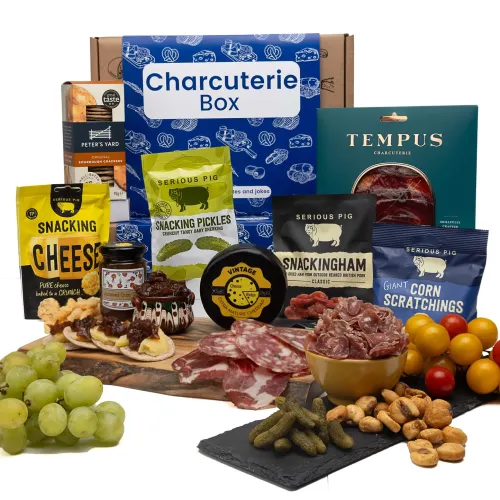
The instinct to pile British charcuterie onto a board alongside pickles and bread is sound, but it can obscure what you're tasting. A slice of good air-dried ham deserves a moment on its own first — held at room temperature, without accompaniment — so the fat can soften and the flavour open up. After that, pair it with something that adds acidity or crunch: good sourdough, cornichons or a piece of well-kept hard cheese work well without competing.
These are products that improve with attention. Producers who are proud of their work tend to be generous with guidance, so if you're buying directly — at a farmers' market or from a producer's own website — ask how they'd serve it themselves.