The process behind the phrase
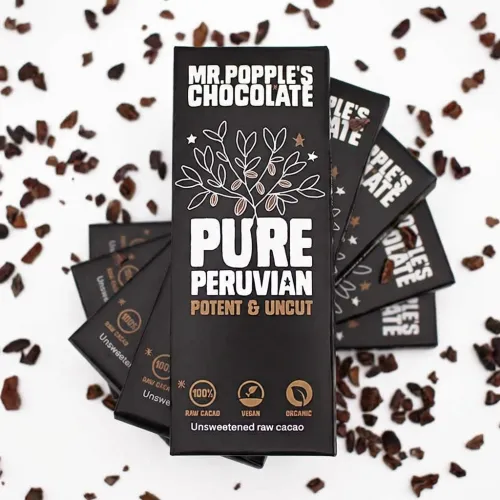
Bean to bar is not a marketing badge. It describes a specific manufacturing sequence: a maker sources raw cacao beans, roasts them, cracks the shells away, winnows out the husks, then grinds the nibs into a liquid mass — cacao liquor — before conching (a long, warming agitation that develops flavour and smooths texture), tempering, and finally moulding. Every one of those steps happens under the same roof, in the same hands.
That chain matters because each stage changes the flavour. Roast temperature and duration pull out different aromatic compounds. The length of the conche affects bitterness and finish. A maker controlling all of it can chase a specific result; one who skips those stages simply cannot.
What chocolatiers actually do
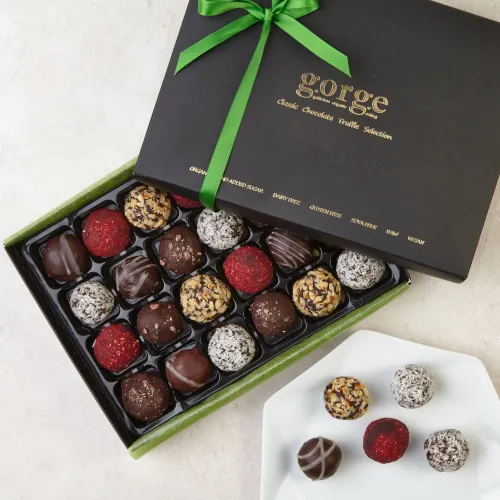
A chocolatier starts at a different point. They buy couverture — professionally made chocolate, already conched and tempered — and work with it: melting, tempering again, combining it with cream or butter or fruit, moulding pralines, coating truffles. This is a real and demanding craft. Tempering couverture correctly is harder than it sounds; ganache ratios require genuine skill; flavour pairing takes experience and a serious palate.
The distinction is not about quality. Some of the finest confectionery in Britain comes from chocolatiers working with excellent couverture. The confusion arises because both can call their output 'artisan chocolate' — which is where 'bean to bar' becomes useful rather than merely fashionable.
Why it produces a different kind of chocolate
Couverture is, by design, consistent and broadly likeable — made to perform reliably across a wide range of applications. Bean to bar chocolate is often deliberately not that. The maker is trying to express something specific: a particular cacao origin, a fermentation profile, a roast character. The result can be more complex, occasionally more challenging, and considerably more variable from batch to batch.
This is why single-origin labelling appears almost exclusively on bean to bar products. If you are doing everything yourself, you have reason to shout about where your beans came from. If you are melting a blended couverture, origin is largely irrelevant to what ends up in the bar.
How to spot which you're buying
The label is usually your clearest clue, though not always an obvious one. Look for:
- Ingredient lists. Bean to bar chocolate typically contains very few ingredients — cacao beans (or cacao mass/liquor), sugar, and perhaps cacao butter or a little vanilla. No emulsifiers, no added dairy solids in a dark bar.
- Origin information. Country or even region of bean origin, sometimes the farm or cooperative. This level of detail signals someone who bought the raw material, not the finished chocolate.
- The maker's own language. Words like 'roasted', 'winnowed', 'conched' in their copy — or a description of their equipment — suggest genuine from-scratch production. A chocolatier's site, by contrast, tends to discuss flavour combinations and filling techniques.
- Production volume. Not a reliable rule on its own, but genuinely small batches — sometimes a few kilograms at a time — are more typical of bean to bar makers using small-scale stone grinders or melangers.
A chocolatier who is proud of their work will usually say they use couverture and name its provenance. That transparency is a good sign. Vagueness — 'finest chocolate', nothing more — is a reason to ask a question.
What to expect from each
If you are buying bean to bar chocolate, expect variability. Bars from the same maker can shift noticeably between harvests. Acidity, fruit notes, tannin levels — all tied to cacao fermentation and weather, neither of which a small maker fully controls. That variability is part of the point.
A well-made truffle or praline from a skilled chocolatier offers something different: precision, balance, a considered combination of textures and flavours the maker has dialled in deliberately. There is no hierarchy here. They are answering different questions, and knowing which question you want answered is all the guidance you need.