A name with legal teeth
Scotch whisky is a protected designation recognised in law across the world. The name is not a style or a tradition — it is a guarantee. Any producer anywhere on the planet is bound by those rules the moment they use the word Scotch. This is enforceable, not a marketing convention.
That protection covers the entire chain from grain to glass. The spirit must be distilled in Scotland, matured in Scotland, and bottled at no less than 40 percent ABV. Each of those conditions is a hard floor, not a guideline.
The role of oak and time
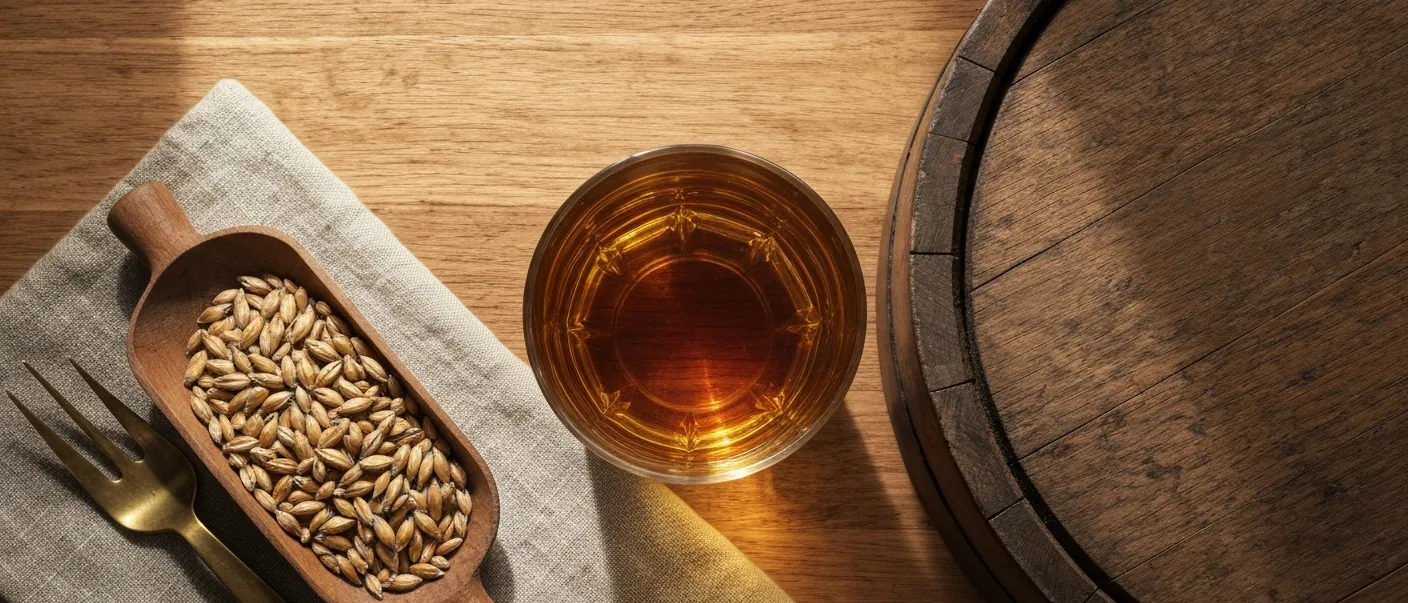
The oak cask requirement shapes Scotch more profoundly than almost anything else. New-make spirit — the raw distillate straight off the still — is clear, fierce, and unfinished. What becomes whisky is what emerges after at least three years of contact with wood. During that time the liquid breathes, draws colour and character from the cask, and sheds the harsher compounds that make young spirit difficult to drink.
Three years is the legal minimum, and genuinely a minimum. Many Scotch whiskies mature for considerably longer. Producers who choose to state an age on the label must use the age of the youngest whisky in the bottle — a rule that prevents a blend of older and younger whiskies being labelled with the age of the oldest. The age statement is a floor, not an average.
The species of oak is not fixed by law, but the type of cask — its previous contents, its size, whether it has been used before — is the single biggest variable a distiller controls. Previously used bourbon barrels and sherry butts are the most common choices, and each leaves a markedly different imprint on the final spirit.
Single malt and what it means
Of all the categories within Scotch, single malt is probably the most frequently misunderstood. Single refers to a single distillery, not a single cask or a single batch. Malt specifies the grain: malted barley only, which must be the sole cereal used in the mash. A bottle labelled single malt Scotch whisky is therefore the product of one distillery, made from malted barley, distilled and matured in Scotland, aged for at least three years in oak.
Blended Scotch — the category that accounts for the largest share of global sales — combines malt whisky with grain whisky, typically made from other cereals and distilled in a continuous column still rather than a traditional pot still. Blending is a serious craft in its own right, and a well-made blend can draw on malts from dozens of distilleries. The rules governing what can be called Scotch apply equally to blends as to single malts.
Why the geography matters
Scotland's climate and water sources are not incidental to the product — they are constitutive of it. Maturation in a cool, relatively humid environment means the spirit loses volume more slowly than it would in a warmer climate, affecting the balance of what remains. The water used in production, the peat cut from local ground where it is used, and the accumulated knowledge within individual distilleries all feed into a character that cannot be replicated elsewhere by following a formula.
This is precisely why the geographical requirement carries such weight. Without it, the designation would be about a process rather than a place — and place is genuinely part of what Scotch whisky is.
How to read a bottle
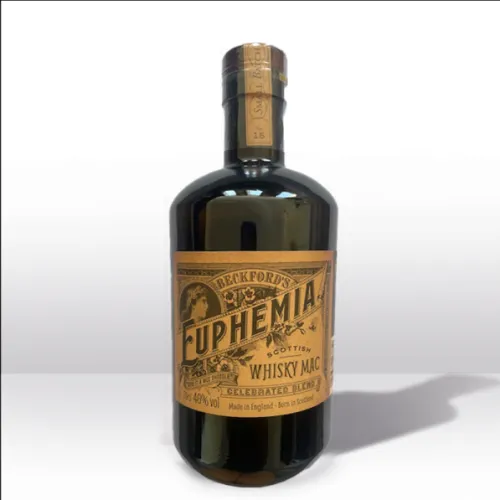
The label on a bottle of Scotch does considerable work if you know what to look for. The category — single malt, blended malt, blended Scotch, single grain — tells you about the grain source and how many distilleries are involved. An age statement, if present, tells you the minimum maturation. The ABV must be stated and cannot fall below 40 percent. Regional names such as Speyside, Islay, or Highlands carry real meaning in terms of broad flavour profiles, though they are distinct from the protected designation itself.
The label cannot tell you everything about how a whisky will taste — that depends on cask selection, distillery character, and the particular bottling. But before you have read a single tasting note, the rules behind the name already tell you a significant amount about what is in the glass.