A neighbourhood sweet with a long memory
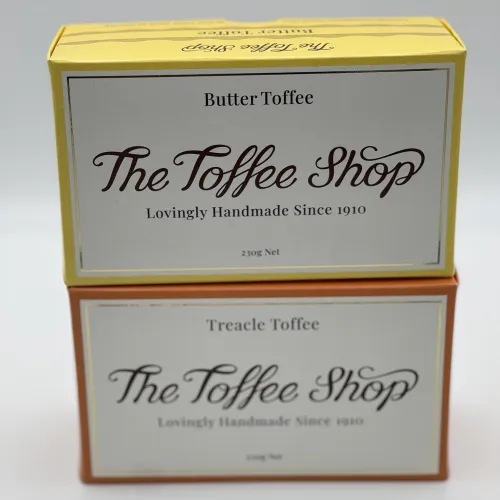
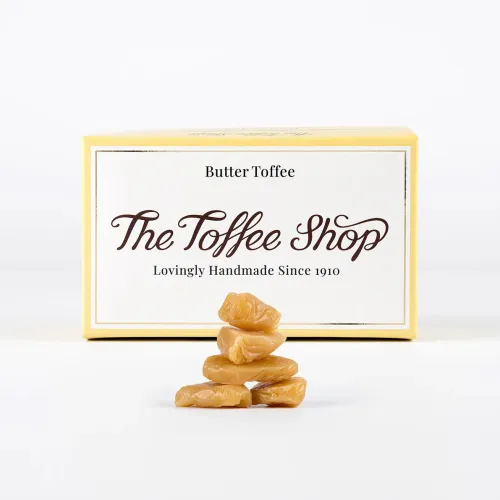
Everton, now absorbed into the wider city of Liverpool, was once a distinct hilltop village. By the eighteenth and nineteenth centuries it had a particular reputation for toffee-making: a hard, pale butter toffee — not the dark, treacle-led kind you crack with a hammer on Bonfire Night, but something closer to a butterscotch: golden, brittle, rich with dairy fat. Corner shops and market stalls sold it, and the district's name became attached to the confection.
British food history is full of sweets that carry a place name — Kendal Mint Cake, Edinburgh Rock, Pontefract Cakes — and the pattern is almost always the same: a small producer, a distinctive local ingredient or technique, and word of mouth doing the rest over generations. Everton toffee fits the model exactly.
What makes butter toffee what it is
The difference between a fudge, a tablet, a caramel, and a hard toffee comes down to sugar chemistry: how far the sugar is cooked and how much fat and liquid is present. Fudge is beaten to encourage fine sugar crystals and stays soft. Tablet is cooked a little further and has a drier, more granular snap. Hard toffee goes further still, reaching what confectioners call hard crack, where almost all moisture has been driven off and the sugar sets into a rigid, glassy mass on cooling.
Butter is what separates Everton-style toffee from the treacle variety. Bonfire Night toffee relies on black treacle or molasses for its dark colour, its slight bitterness, and the particular way it pulls at your back teeth. Everton toffee has none of that. Butter and sugar without dark syrup gives a paler, cleaner sweetness — more snap, less chew. Some recipes historically included a small amount of lemon or other flavouring, though the butter itself provides most of the interest.
Small-batch confectioners making traditional British boiled sweets still work in this way: cooking sugar in a copper pan, adding butter at the right moment, then pouring the mass onto a cool slab. The skill lies in reading the sugar as it cooks, not in following a clock.
The football club's sweet folklore
Everton Football Club was founded in the Everton district, and tradition holds that the connection between the club and the local toffee trade ran deep. The story most often told involves a toffee shop near the club's early ground — shopkeepers whose names appear in various retellings — and the habit of tossing sweets to supporters before matches. This is club folklore, handed down rather than documented, and the specific names and details shift depending on who is telling it. That makes it more typically British: the kind of origin that lives in local pride rather than the archive.
What is certain is that the Toffees became Everton's nickname, that a mascot known as Toffee Lady has appeared at the club's ground for decades, and that the sweet is part of how the club understands its own identity. For supporters and confectionery historians alike, the toffee is the thread that ties a Victorian neighbourhood trade to a modern Premier League side.
Who still makes it
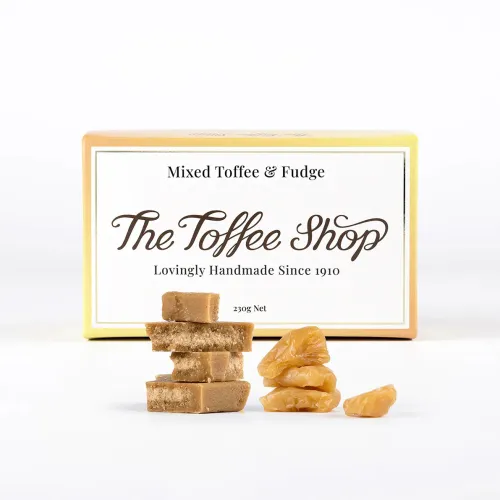
Mass-produced toffee in Britain today is a different product from the hand-cooked original — usually softer, often made with glucose syrup to control texture and shelf life, and rarely sold under the Everton name. The traditional hard butter toffee survives mainly through small independent confectioners and artisan producers still working with copper pans and marble slabs.
If you want something close to the original, look for:
- A short ingredient list with butter rather than vegetable fat
- A hard rather than chewy set
- A pale golden colour rather than the dark brown of a treacle toffee
Some producers sell it as a large flat slab, broken into irregular pieces — a format that is itself part of the sweet's history, since uniform portion sizes are a modern industrial idea.
Why it still matters
Everton toffee is a small footnote in British confectionery history, but it shows how food and place interact over time. A sweet becomes a local speciality; that speciality becomes shorthand for a neighbourhood's identity; that identity gets absorbed into something — a football club, a folk story — that outlives the original trade by centuries. The toffee may be harder to find than it once was, but the name has never been more widely known.
That is a strange kind of survival: famous by association rather than by presence on the shelf. Whether the sweet ever catches up with its own reputation depends, in some ways, on the small producers still cooking sugar in the old way.