Protected by law, not just tradition
The Cornish pasty holds Protected Geographical Indication status, which means only pasties made in Cornwall can legally carry the name — the same category of protection that covers Champagne or Stilton. The PGI specification doesn't just fix the geography; it defines the shape, the construction, and the filling in enough detail to rule out a surprising number of things routinely sold as pasties.
The Cornish pasty is not simply a pasty that happens to come from Cornwall. It is a specific object with specific rules.
Shape and structure
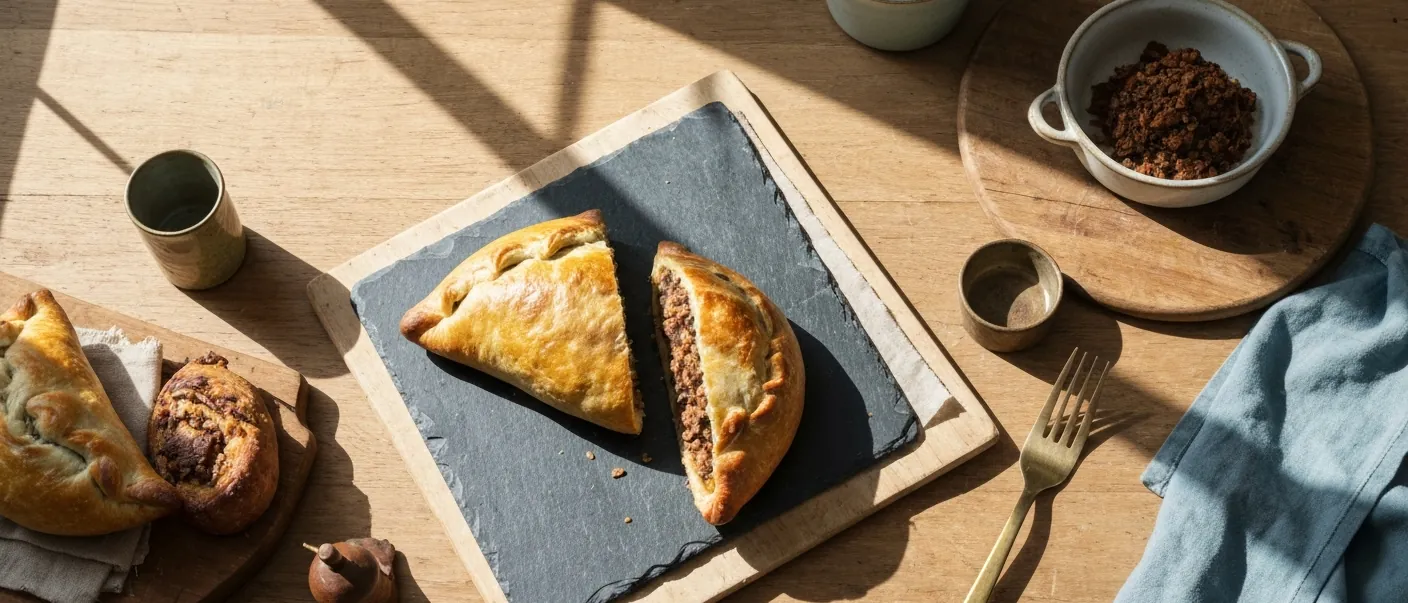
The pasty must be D-shaped — a half-circle — with the crimp running along the side, never across the top. The side crimp produces a rope-like ridge of pastry that runs from one end to the other, giving the pasty structural integrity. A top crimp produces a different object with different handling properties, and most imitations get this wrong.
The pastry should be robust enough to hold without a container. A properly made pasty is self-contained, hand-held food engineered for a working day.
The filling, and what isn't in it
The specification is unambiguous: the filling is beef (minced or roughly chopped), swede, potato, and onion, seasoned with salt and pepper. No carrots. No peas. No gravy added before baking. The vegetables go in raw alongside the meat, so that everything cooks together inside the pastry.
Swede is frequently swapped out for turnip in recipes claiming to be traditional, or quietly omitted by makers who find it divisive. But swede is doing specific work — it softens more slowly than potato, contributing a slightly sweet, earthy note and a different texture. Remove it and you have a different dish.
The beef is typically a skirt cut, which has enough fat and flavour to stand up to the baking time without drying out. The seasoning should be generous, particularly the pepper. An under-seasoned pasty is one of the more dispiriting things a hungry person can encounter.
Where the pasty came from
The pasty's origins lie in Cornwall's tin mining industry. Miners worked long shifts underground in conditions that made conventional meals impractical, so the pasty was built around those constraints. It could be carried in a pocket, held in dirty hands by the crimped edge — which some accounts suggest was then discarded rather than eaten — and consumed without cutlery or crockery.
The thick pastry shell also retained heat, keeping the filling warm for hours after baking. The form has changed very little because the solution was good.
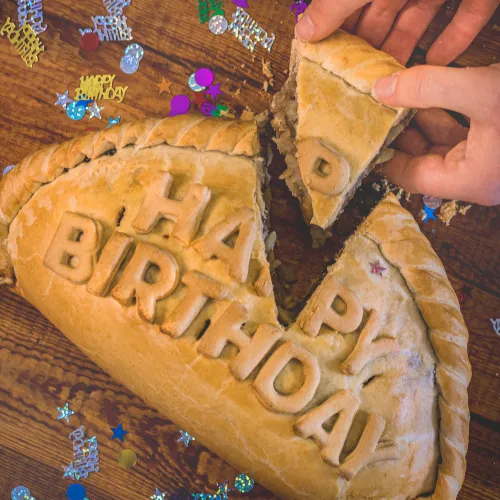
Whether the initialled pasties of mining legend — supposedly made so that miners could identify their own — are historical fact or tidied-up folk memory is hard to confirm. What is certain is that the pasty was everyday food, not a delicacy, optimised for substance and durability.
How to find a genuine one
Buy from a Cornish baker, either in Cornwall or from one of the producers who sell online and by post. The PGI mark on packaging confirms the specification has been met — look for the red, yellow and blue UK GI logo.
- Check that the crimp is on the side, not the top — this alone eliminates most pretenders.
- The filling should show clearly distinct layers of meat and vegetable when you bite in, not a homogenous mash.
- Good pastry should be short but not crumbly, pale gold rather than deep brown, and strong enough to hold its shape in one hand.
Cornwall has a number of long-established pasty makers and dedicated pasty shops in almost every town, alongside farm shops and food markets. Eating one outdoors, somewhere between a harbour and a headland, is doing it properly.