The confusion is understandable, but wrong
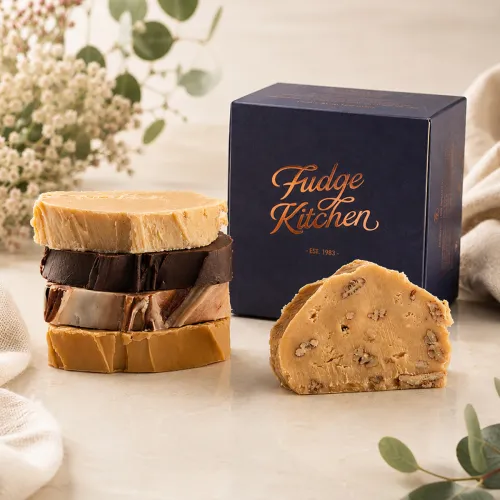
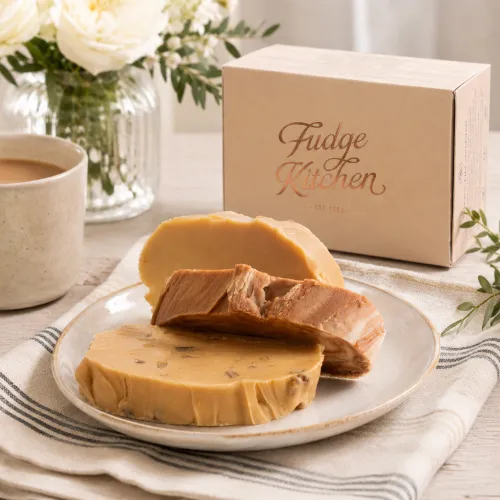
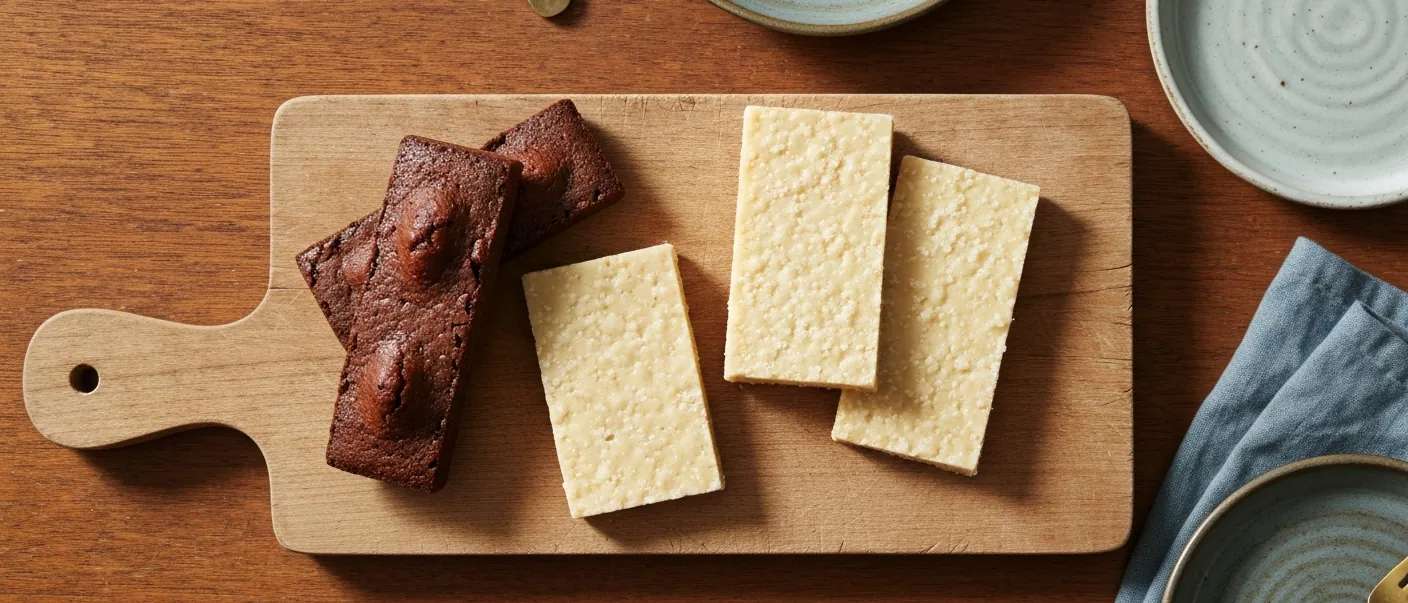
Set them side by side and the resemblance is real enough: both are pale, both are made from sugar and dairy, both are sold in small squares. But bite into each and the difference is immediate. Fudge yields — soft, smooth, almost creamy. Tablet snaps, then crumbles, then dissolves in a clean, sharp rush of sweetness that fudge never reaches. They are not the same thing made to different standards. They are different things.
The confusion tends to run one way. People who grew up with tablet know exactly what it is. People who didn't often reach for the nearest familiar category — fudge — and that is where the trouble starts. Calling tablet a kind of fudge is a bit like calling shortbread a kind of digestive biscuit: you can see the logic, but you have missed the point.
What gives tablet its character
The ingredients list is short: sugar, butter, and milk — condensed or fresh depending on the maker. What separates tablet from fudge is not what goes in but what happens during cooking and setting. Both confections involve boiling sugar with dairy to a precise temperature. The critical difference is in how the sugar crystallises as the mixture cools.
Fudge is worked to encourage very fine, small crystals, producing that smooth, fondant-like texture. Tablet is beaten as it sets too, but the process encourages larger sugar crystals to form. The result is that characteristic grain — not unpleasant roughness, but a distinct sandy texture that dissolves quickly and completely on the tongue. Tablet is also considerably sweeter than fudge, with less of the buttery richness that softens fudge's sugar hit. It doesn't linger; it arrives fast and bright and then it's gone. A small piece is genuinely satisfying in a way that a larger amount of something milder might not be.
Where it belongs
Tablet is embedded in Scottish community life in a way that's easy to underestimate if you've only encountered it in a cellophane packet. It turns up at school fetes, church fundraisers, farm shops and village halls — places where someone has made a batch at home and brought it along wrapped in greaseproof paper. That domestic, handmade quality is part of what it is. Unlike many traditional sweets, tablet has not been substantially industrialised. Commercial versions exist, but the real thing is still more likely to come from a kitchen than a factory.
Farm shops across Scotland sell it alongside other local produce, often made by small suppliers or by the farm itself. It sits alongside shortbread and oatcakes as one of those things that feels specifically and stubbornly Scottish — not in a performed, touristy way, but simply because it has always been there.
How it's eaten
There is no ceremony to it. Tablet is broken or cut into pieces — irregular chunks from a homemade batch, neater squares from a shop — and eaten as it is. It does not accompany anything particularly well; it is too sweet and too decisive to play a supporting role. A cup of strong tea is the traditional companion, and the balance works: the tannin cuts through the sugar cleanly.
Some makers flavour their tablet with vanilla, whisky or other additions, but the plain version remains the standard by which everything else is judged. Any flavouring that competes with that clean, grainy sweetness tends to get in the way rather than add to it.
Why the distinction matters
Tablet is specific. It comes from a place, a tradition, a particular way of working sugar that produces something you cannot replicate by making softer fudge or harder toffee. When it gets flattened into a generic category, something real is lost — not just in description but in how people seek it out and what they expect when they find it.
If you have only ever had fudge and someone offers you tablet, treat it as new. The sweetness will hit differently. The texture will surprise you. That is the point.