The protection behind the name
Scotch Lamb carries PGI status — Protected Geographical Indication — which means the designation is governed by law, not marketing. For a lamb to qualify, it must be born and reared entirely in Scotland, and the farms involved must operate under recognised quality assurance schemes. That combination of geography and traceable husbandry is what the mark verifies.
PGI sits within the same family of European-derived protections that covers Jersey Royal potatoes and Cornish Pasties. The geographical link is real but not as stringent as PDO (Protected Designation of Origin), which demands the most exclusive local connection. What PGI does guarantee is that no Scotch Lamb was finished elsewhere, imported at any stage, or raised outside a verified assurance framework.
Why the landscape shapes the meat
A large proportion of Scotch Lamb comes from hill and upland flocks — breeds that spend much of the year on open ground at altitude, grazing on grasses, heather, and rough vegetation that lowland animals rarely encounter. Extensive, slow rearing produces a distinctly different result from intensively managed lamb: deeper colour, a more pronounced but never aggressive flavour, and a texture that holds together well under heat.
Scotland's uplands cover an enormous share of its landmass, and hill farming has shaped both the countryside and the breeds over centuries. Hardy breeds like the Blackface and the Cheviot have been selected over generations for their ability to thrive on thin upland pasture without close management — and the meat reflects that.
Seasonality still matters
Lamb is one of the few mainstream meats that retains a genuine season. Hill flocks lamb later than lowland breeds — harsher conditions and a shorter growing season push the calendar forward — so peak availability of Scotch Lamb typically falls later in the year than many shoppers expect. Asking a butcher when their Scotch Lamb is at its best is more useful than assuming year-round uniformity.
Older lamb, sold as hogget once it passes its first year, is also worth knowing about. Some Scottish producers and butchers offer it, and the additional age brings greater depth of flavour that suits slow cooking particularly well.
How to buy it well
The PGI mark is the clearest signal to look for, but it only appears where producers have chosen formal certification. A good independent butcher with Scottish sourcing may stock qualifying lamb without displaying the mark prominently — ask directly where the animal was born and whether the farm is assurance-scheme registered.
Supermarkets do stock Scotch Lamb PGI, though availability varies by season and region. Independent butchers and farm shops in Scotland are the most consistent source, and mail-order options from Scottish farms are increasingly common for those further south. The key detail is not just the word Scottish on a label — that alone carries no legal guarantee — but the specific PGI designation or explicit assurance scheme membership.
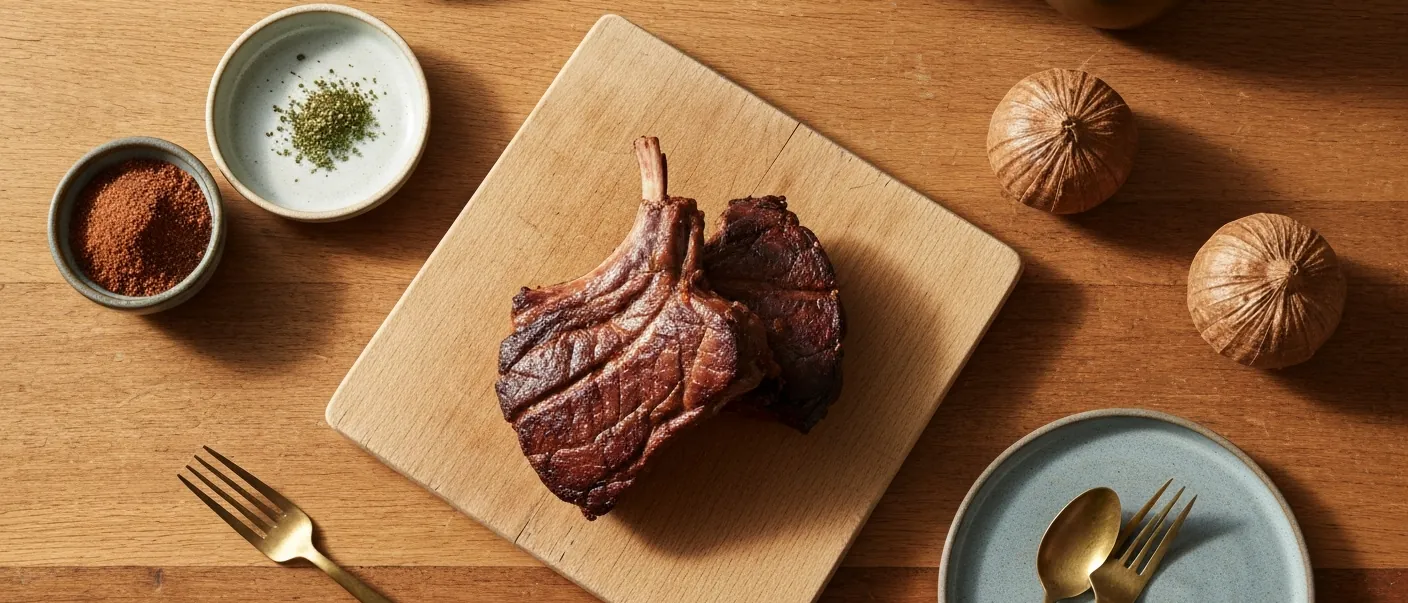
Cuts matter too. The shoulder, with its higher fat content and looser muscle structure, suits long, gentle cooking. The rack and loin are the showcase cuts when the meat itself is the point. Mince and diced lamb from the neck or leg offer a more everyday route into the same quality, at a price that makes regular buying practical.
The broader picture
Hill farming in Scotland operates in conditions that make it genuinely marginal as an economic proposition. The flocks that produce much of this lamb are maintained through knowledge-intensive husbandry that does not scale easily, on land unsuitable for most other agricultural uses. Buying Scotch Lamb PGI is not a sentimental act, but it does connect a purchase directly to that system — one that has maintained the upland landscape and the genetic heritage of these breeds for longer than most agricultural records can trace.