Derby cheese and where Sage Derby fits
Derby is one of Britain's territorial cheeses — those regional styles, like Cheshire, Lancashire, and Double Gloucester, defined by county and shaped by local milk and habit. In its plain form, Derby is a firm, close-textured pressed cheese with a mild, buttery flavour and a clean finish. Less assertive than a mature Cheddar, less crumbly than a good Cheshire, it sits somewhere between the two on a board.
Sage Derby is that same base cheese marbled with green — the result of working sage into the curd during making. The marbling is deliberate and distinctive: dark green veins and patches running through pale ivory paste, so each slice looks different from the last. The green comes from the herb, not from mould or ageing.
Sage, colour, and what the label tells you
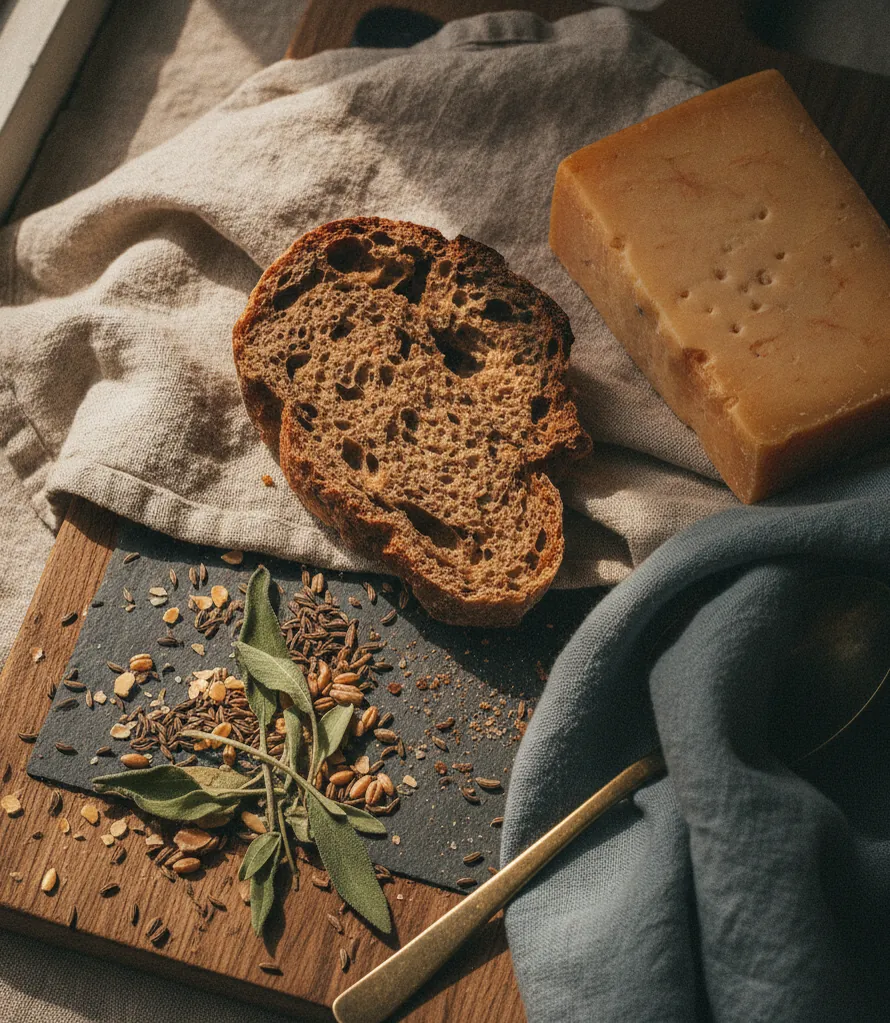
Traditionally, the green came from sage leaves or juice pressed into the curd, giving both colour and a quiet herbal note. Many makers still use sage in some form, but the depth and consistency of the green in modern commercial versions often owes something to additional colouring agents — spinach extract is common, as are other natural green colourings used alongside sage flavouring rather than the herb itself in quantity.
This matters if you're buying for flavour. A cheese made with real sage leaves or generous sage juice carries a more pronounced herbal character — slightly earthy, faintly peppery, with that cool, almost medicinal edge fresh sage has. A version relying more on colouring with a lighter touch of flavouring will taste milder and more straightforwardly creamy. Neither is wrong, but they are different cheeses to eat. Check the ingredients list before you buy.
A harvest cheese with a festive afterlife
The association between Sage Derby and celebration is claimed to stretch back centuries, though the precise history is difficult to pin down. Sage cheeses were traditionally made at harvest time, when the herb was plentiful, and became associated with feast days and communal eating. Over time, that festive association concentrated around Christmas, which is now when Sage Derby is most reliably found in British shops and markets.
The seasonal logic still holds regardless of how unbroken the lineage is. Sage partners naturally with the rich, roasted flavours of a traditional Christmas table, and a cheese that looks dramatic on a board without demanding much of its audience suits a festive spread well.
How it eats, and where it sits on the board
The flavour is mild enough for people who find strong cheese difficult, but interesting enough to hold its own alongside more characterful selections. The sage note stays in the background in most versions — present and slightly aromatic, but not sharp. The base cheese is smooth and sliceable, with none of the granular texture of an aged hard cheese, so it cuts cleanly and arranges well.
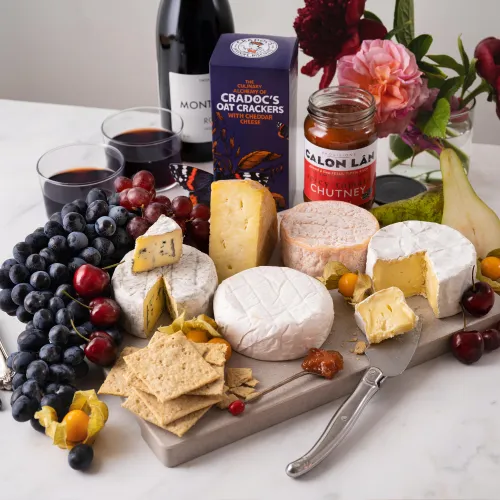
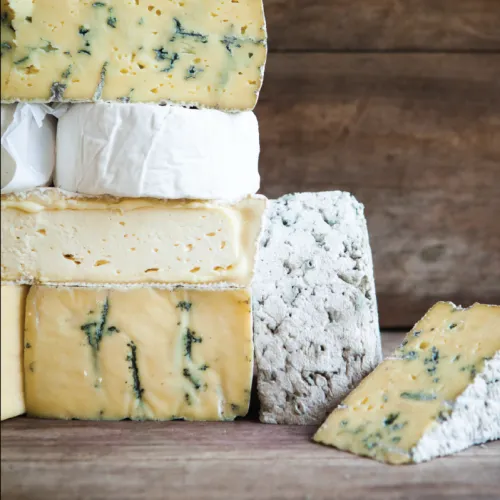
On a Christmas cheeseboard, it earns its place through contrast. Set beside a crumbly Stilton and a rugged aged Cheddar, it provides visual relief and a lighter moment between stronger mouthfuls. Plain water biscuits and oatcakes suit it better than heavily flavoured crackers, which fight with the herb. Fruit that cuts through mild fat — quince paste, tart cranberry jelly, sliced pear — pairs well without overwhelming. Cold cuts and cured meats work alongside it happily, particularly anything with its own herbal or spice notes, and the cheese has enough structure to hold up to a little chutney without collapsing.
Buying it well
Sage Derby appears in supermarkets during the Christmas period, but versions from specialist cheese shops or smaller dairies tend to show the herb more clearly and have better-developed flavour overall. If you're buying it as a centrepiece rather than a background cheese, find one made with visible sage rather than colouring alone — flecks of actual leaf in the paste are a reliable sign the herb has been used in more than token quantities.
It is a generous and uncomplicated cheese: one that rewards a little attention to sourcing but doesn't require expertise to enjoy.