Cheddar-style, but not quite cheddar
Lincolnshire Poacher follows the broad method of a traditional clothbound cheddar — milk is warmed, starter cultures and rennet are added, curds are cut, cooked and stacked through the cheddaring process, then the finished truckles are pressed and left to mature. Old and deliberate. But calling it a cheddar would be misleading, because the flavour that emerges is its own thing.
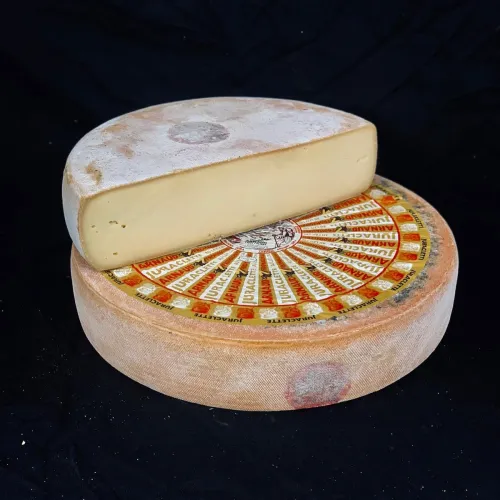
Where a well-made cheddar tends towards savoury sharpness — earthy, sometimes grassy, occasionally tangy — Lincolnshire Poacher is sweeter and nuttier, with a richness that some tasters liken to a Swiss or Alpine cheese rather than anything from Somerset or the West Country. The texture is firm and close-grained, without the crumble of an aged cheddar, and the paste has a pale gold tone that deepens as the wheel matures.
What raw milk does here
Lincolnshire Poacher is made from unpasteurised cow's milk, and that detail matters. Pasteurisation — heating milk to kill harmful bacteria — also neutralises many of the wild microorganisms that carry a farm's particular character into the finished cheese. Raw milk retains those native cultures, and over a long maturation they interact with the starter, the rennet and the rind environment to produce compounds that a pasteurised milk cheese cannot replicate with the same depth.
The flavour shifts across a wheel's life and across seasons. Milk from cows grazing summer pasture in the Lincolnshire Wolds tastes different from winter milk, and those differences survive into the cheese. A raw-milk cheese of this style is in some sense a record of where and when it was made — something a standardised, heat-treated product cannot easily claim.
Anyone with questions about raw-milk cheeses and their suitability for particular diets or health circumstances should consult the Food Standards Agency or their own GP.
The role of time
Most Lincolnshire Poacher is matured for well over a year, and it is during this extended ageing that the cheese's character consolidates. Early in maturation the paste is mild and milky. As weeks become months, enzymatic activity breaks down proteins and fats into the shorter-chain compounds responsible for the nuttiness and sweetness the cheese is known for. Amino acids crystallise into tiny white flecks — not salt, not a flaw, but a sign that the ageing process has done its work.
The rind develops naturally and the wheel is tended and turned throughout. Long maturing also concentrates the paste, which is why a properly aged Lincolnshire Poacher has such density on the palate — a little goes further than you might expect.
The name and its origins
The cheese takes its name from The Lincolnshire Poacher, a traditional English folk song sung in the county for generations. It celebrates the rural life of the East Midlands with cheerful defiance, and the name suits a cheese that is distinctly of its place — raw-milk, farmhouse, resistant to industrial shortcuts, rooted in a specific stretch of English countryside.
How to eat it
Serve Lincolnshire Poacher at room temperature. A cold piece straight from the refrigerator will taste flatter than the same piece left out for an hour, because the fat in the paste needs to soften before the full range of flavour comes forward.
The cheese's sweetness makes it a good match for fruit-forward accompaniments. Lincolnshire plum bread — a lightly spiced, fruit-studded loaf traditional to the county — is the obvious local pairing; the bread's gentle sweetness and the cheese's nuttiness complement rather than compete with each other. Apple or quince chutney sits alongside it comfortably. So does something with body to drink: a real ale, an aged cider, or a white Burgundy are all worth trying.
The density that makes this cheese distinctive also makes it useful in cooking. It melts slowly and evenly — on toast or folded through something warm — in ways that more crumbly territorials do not.