What 'plum' actually means
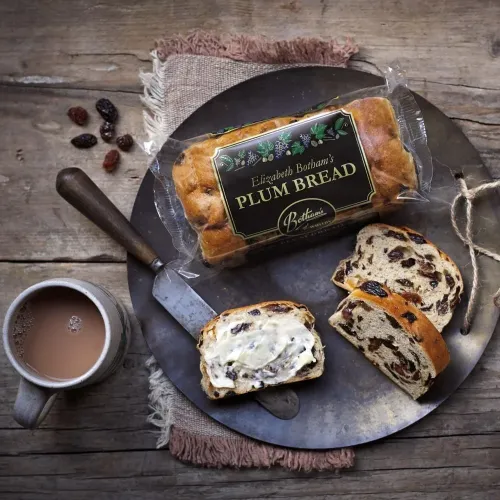
In older British recipe language, 'plum' was a catch-all term for dried fruit. Raisins, currants, prunes, sultanas — all fell under the word, which is why plum pudding contains no fresh plums either, and why a Victorian cook would have found nothing odd about the name at all. Lincolnshire plum bread carries that same linguistic inheritance: a dark, dense, spiced loaf heavy with dried fruit, sweetened and enriched, with no fresh produce of that name anywhere in the tin.
The bread belongs to a family of British celebration bakes — tea loaves, harvest loaves, festive fruit breads — built around the practicality of preserved ingredients rather than seasonal fresh fruit. Dried fruit kept well, travelled well, and could be saved for something special.
How it differs from other fruit loaves
Lincolnshire plum bread is yeast-leavened, which sets it apart from a number of its cousins. The dough is enriched with fat and egg, then packed with dried fruit before a long, slow bake that leaves the crumb close and moist. It slices cleanly, holds together well, and keeps for several days — longer if wrapped.
Compare that to Welsh bara brith, which we've written about separately. Bara brith is typically made by soaking dried fruit in tea overnight before folding it into the batter — the tea soak is central to its character, giving it a particular depth and slight astringency. Lincolnshire plum bread achieves its richness differently, through the enriched dough itself rather than a long soak. The spicing also tends to be warmer and more assertive: mixed spice and sometimes cinnamon giving it a quality that feels firmly at home in the colder months.
Other regional tea loaves — Yorkshire tea cake, Northumberland singin' hinnies, the various spiced fruit breads of the north and west — each carry their own local character. What makes Lincolnshire plum bread distinct is that combination of a genuine bread structure with the richness of a celebration cake. It occupies the middle ground deliberately.
The Christmas connection
The bread is made year-round by those who love it, but it has a particular association with Christmas and the weeks around it. The spicing, the density, the way it keeps — all of it suits a season when something substantial and warming is welcome on the table. Fruit breads of this kind were also festival foods in the practical sense: made in advance and sliced as needed across the busy days of the Christmas period.
A loaf this rich isn't everyday food. Sliced thin and buttered generously, it earns its place at a table rather than filling a lunchbox.
Serving with cheese
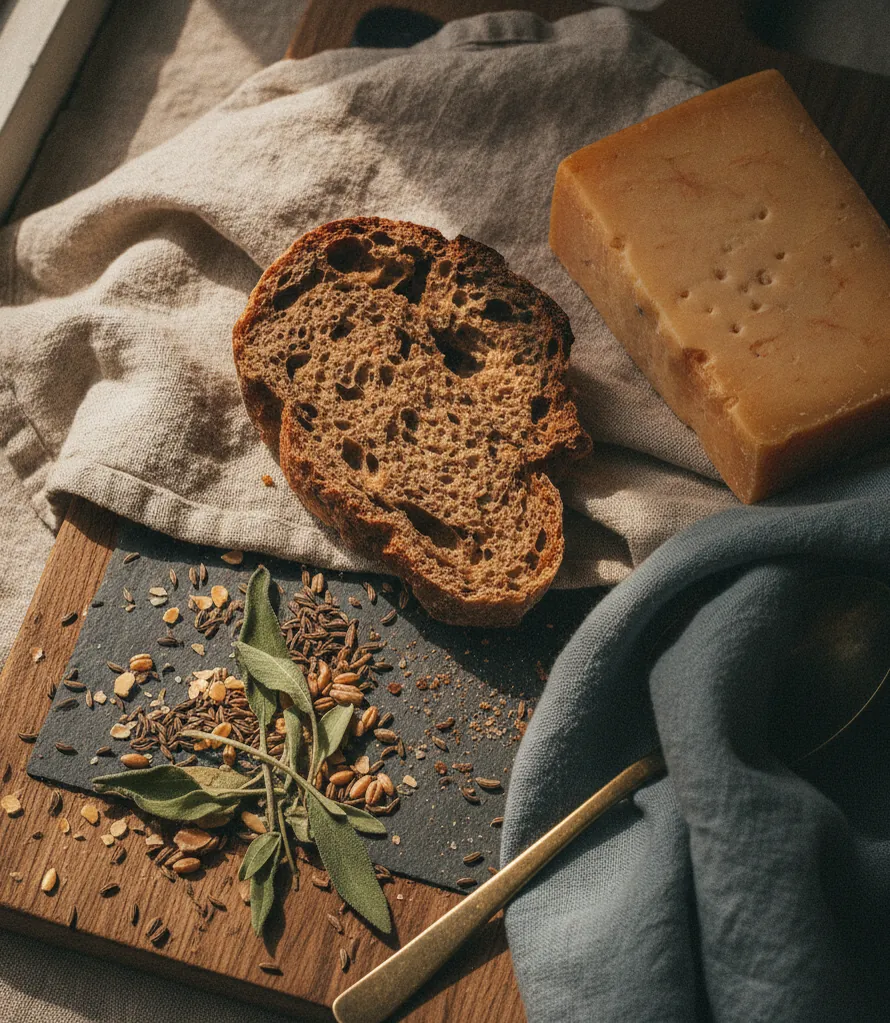
Sweet, spiced fruit bread with a hard, savoury cheese is one of those British pairings that surprises people until they try it, and then seems entirely logical. The fat richness of the butter, the dark sweetness of the dried fruit, the warmth of the spice — all cut and contrast against a cheese with sharpness and body.
Lincolnshire Poacher, which we've covered in its own article, is the natural regional pairing. It's a hard, unpasteurised cheese with a nutty, complex flavour that deepens with age — substantial enough to hold its own against the bread's sweetness. The regional logic satisfies too: bread and cheese from the same county, eaten together as they would have been for generations.
The pairing works with any well-aged hard cheese. A mature Cheddar, a good Wensleydale, or a crumbly Cheshire all do the job. The principle is the same: you want something with enough character to engage with the bread rather than disappear behind it.
Finding and buying it
Lincolnshire plum bread is produced by independent bakers and farm shops across the county, and availability is strongest in the lead-up to Christmas. Outside the region, specialist food retailers and online producers stock it year-round, though quality varies considerably. A well-made loaf should feel substantial in the hand, with a dark, close crumb and a glossy top — signs that the fruit is properly distributed and the bake has gone all the way through.
It also appears at regional food fairs and markets in Lincolnshire, worth seeking out if you're in the area — usually check local listings for dates and locations. As with most traditional regional bakes, the best versions tend to come from people who've been making the same recipe for a long time and see no reason to change it.