What a queenie actually is
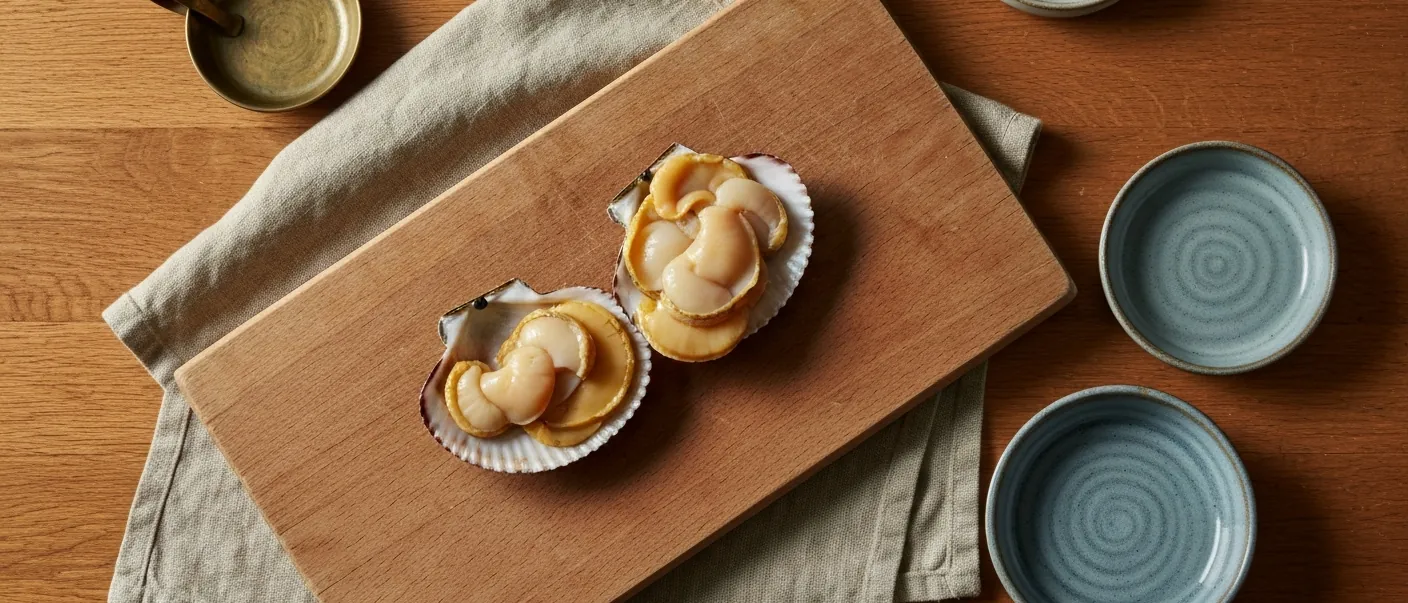
The queen scallop is a distinct species from the king scallop — smaller, rounder, with a more delicate shell — and the version fished from the waters around the Isle of Man has become the most celebrated of all. Manx queenies carry Protected Designation of Origin (PDO) status, meaning only scallops caught in defined Manx waters can legally carry the name. That protection matters because the character of the shellfish is genuinely tied to where it lives.
The cold, clean waters of the Irish Sea produce a queen scallop with a notably sweet, clean flavour and a tenderness that larger king scallops rarely match. Because queenies are smaller, the muscle — the part you eat — is proportionally more compact and fine-grained, which concentrates both flavour and texture.
A season, not a constant
Queenies are a summer delicacy, and their brevity is part of what keeps them special. Fishing is carefully managed to protect seabed populations, and on the island the scallop season is treated with the kind of attention that English asparagus growers give to their spring weeks: something to mark, not to take for granted.
During the season, restaurants across the island feature queenies prominently — pan-fried with butter, served simply so the sweetness can speak without distraction. The traditional approach leans towards restraint, which is the right instinct. A queenie dressed too heavily loses the quality that distinguishes it.
Why PDO status matters here
PDO protection is often associated with continental cheeses or wines, but British shellfish can qualify too, provided the case for geographical specificity is strong enough. With Manx queenies, it is. The argument is not one of origin for origin's sake: the particular conditions of Manx waters — water temperature, tidal movement, seabed composition — contribute directly to how the scallop develops and therefore how it tastes.
PDO status also gives buyers a practical guarantee. Queenies sold under the protected name must come from the defined area, harvested according to established practices. That traceability matters in British seafood, where provenance claims are not always easy to verify. A good fishmonger or online supplier who can confirm Manx origin will let the PDO designation do the work.
How to find them and when
Outside the Isle of Man, queenies can be harder to track down than king scallops — the season is short, and demand on the island absorbs a good portion of the catch. Specialist fishmongers and online seafood suppliers focused on British day-boat and sustainable catches are the most reliable source. Ask directly whether stock is genuinely Manx and landed in season, rather than frozen from a less specific origin.
If you are visiting the island during the summer months, the scallop season is reason enough to plan around local restaurants and harbour-side stalls. The Isle of Man has a small but serious food culture, and the queenie sits at the centre of it in the warmer months. Events celebrating the season are sometimes held — check local tourism and food festival listings before you visit, usually in summer, for this year's dates.
Queenies against the broader scallop picture
British waters produce good scallops in several places — Cornwall, Scotland, the Orkneys — and there are strong arguments for all of them. The Manx queenie occupies a specific niche: not competing with king scallops on size or yield, but on sweetness and delicacy. Chefs who work with both tend to use them differently, treating queenies as a refined bite rather than a centrepiece portion.
The temptation for home cooks encountering queenies for the first time is to treat them exactly as you would a king scallop — robust accompaniments, long cooking. Queenies need less time and less competition. A short, hot pan, good butter, and little else. Their season is brief enough that eating them with full attention is not precious. It is just sensible.