Where the name comes from
Finnan haddie takes its name from Findon, a small fishing village on the Aberdeenshire coast south of Aberdeen. The local tradition was to cold-smoke haddock slowly over smouldering green wood — peat and hardwood chips feature in most accounts — producing a fish that was lightly cured and pale gold rather than the aggressive orange-yellow dyed into much of what passes for smoked haddock on the high street. The name is a corruption of Findon haddock, worn smooth by everyday speech.
The distinction matters because the colour of commercial smoked haddock is almost always artificial. Dye is added to make the fish look more intensely smoked than it is, which misleads in at least two ways: the flavour is rarely as developed as the colour suggests, and properly cold-smoked, undyed haddock is a far subtler creature.
Cold-smoking and what it does
Cold-smoking is slower and gentler than hot-smoking. The fish is never cooked by heat during smoking; instead, it is cured beforehand in salt or brine, then exposed to cool smoke for an extended period. The result is firm but yielding flesh that flakes cleanly, with a smoke character that sits behind the flavour of the fish rather than overwhelming it. Genuine finnan haddie should smell oceanic and faintly woody, not aggressively smoky.
That restraint is the whole point. Haddock is leaner and more delicate than cod, with a finer flake and a slightly sweeter flavour. Heavy smoking would obliterate what makes it worth eating. The traditional Findon method was calibrated to complement the fish, not disguise it — which is why undyed, cold-smoked haddock tastes so markedly different from the bright yellow fillets beside it on the fishmonger's slab.
The fish itself
Haddock — Melanogrammus aeglefinus — is landed in significant quantities from Scottish waters, particularly the North Sea and around the northern isles. It has always been a working fish: plentiful, affordable and well suited to preservation by smoking or salting. The black lateral line and distinctive dark thumb-mark above the pectoral fin make it easy to identify whole.
Good finnan haddie starts with good haddock. The quality of the raw fish, its freshness at the point of smoking, and the skill of the cure all feed directly into the final result. Producers who follow the traditional method tend to work with smaller, day-boat-caught fish and smoke in small batches — worth bearing in mind when choosing where to buy.
Cullen skink and the wider table
The most celebrated use of finnan haddie is Cullen skink, the thick, creamy soup from the Moray coast town of Cullen. Warming and deeply savoury, it relies on the smokiness of the haddock softened by milk or cream and the bulk of potato. The quality of the soup depends almost entirely on the smoked haddock: undyed, cold-smoked finnan haddie makes a categorically better bowl than anything artificially coloured.
Beyond soup, finnan haddie appears in kedgeree, in egg dishes at breakfast, and simply poached in milk — perhaps the most traditional preparation, straightforward enough to let the fish speak plainly. It also turns up flaked through creamy mashed potato, though the dish goes by different names depending on where you are.
How to spot the genuine article
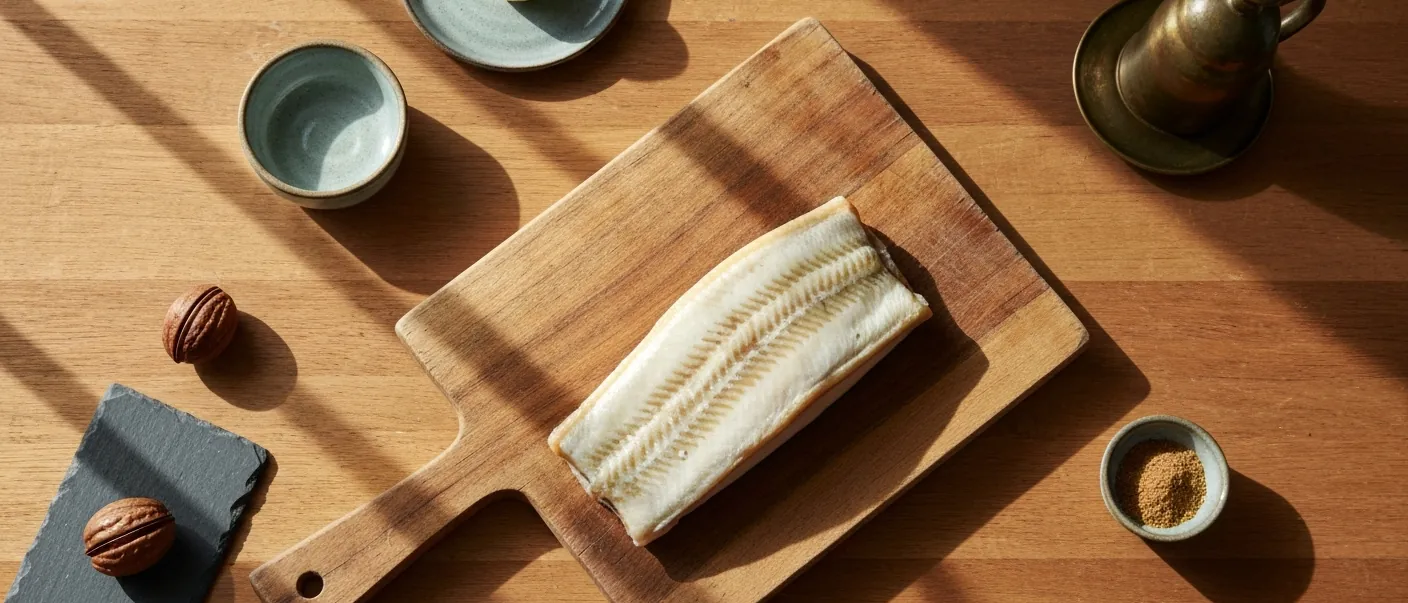
The colour is the first clue. Authentic cold-smoked finnan haddie is a quiet, straw-pale gold — not uniform, not vivid. The flesh should look faintly translucent at its thickest point, and the skin should be intact and dry to the touch. Check the ingredients: nothing beyond haddock and salt should be listed. If you see colour or annatto, it has been dyed.
Provenance labelling varies, and not all undyed smoked haddock is strictly from Findon. The name finnan haddie does not carry protected geographical status in the way that Arbroath Smokies do, so it is used relatively freely. What you are really looking for is cold-smoking, no dye, and a producer who can tell you something specific about where the haddock was caught and how it was smoked.