The bun that came first
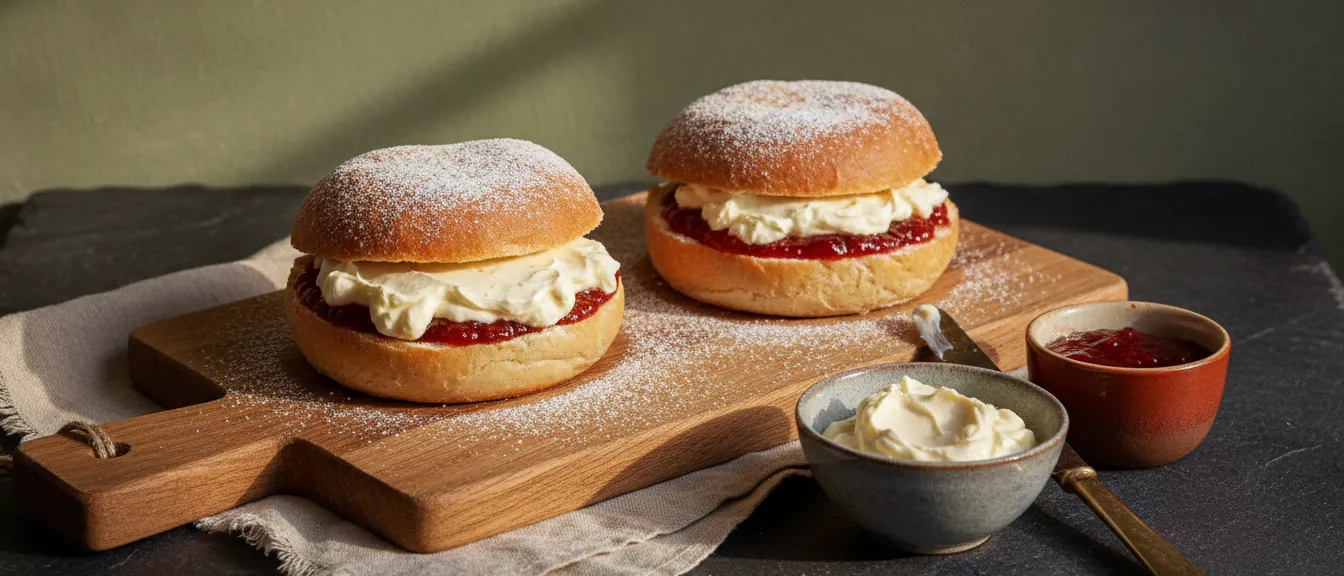
The scone gets most of the attention, but the split came first. These small, yeasted buns — pulled apart rather than cut — were the original vehicle for clotted cream and jam in the West Country, and in both Devon and Cornwall they remain a point of quiet, persistent pride.
A split is not a bread roll. It is something gentler: a lightly enriched dough, soft enough to pull apart along the natural seam that forms during baking. That seam — the split — is where the name comes from, and where everything gets loaded on. The crumb is tender and faintly sweet, closer to brioche in spirit than to anything you would spread with butter for a sandwich.
What separates the Devon from the Cornish
Both counties claim their own version, and the differences are real if modest. A Cornish split tends to be plainer — the dough less enriched, the crumb slightly more open. A Devon split leans richer, with a higher fat content giving it a closer, more pillowy interior. Neither is glazed nor topped before baking. The bun itself is meant to look unremarkable; all the character comes from what goes inside.
Where things get contentious is the order of assembly. Devon loads cream first, then jam. Cornwall goes jam first, then cream. It is exactly the same disagreement that plays out with scones across both counties, and it is no less fiercely held on a split. The logic each side offers is practical: Devon argues that spreading cream directly onto the soft crumb gives a better base; Cornwall insists the jam belongs nearest the bread. Neither side is persuadable.
Why the split matters beyond the debate
Yeasted buns enriched with fat and a little sugar sit among the oldest baked goods in British domestic tradition, and the split belongs to that lineage. It requires time — a proper prove, a careful bake — in a way that a scone, mixed and into the oven inside twenty minutes, does not.
That slower process changes how the split feels to eat. There is a faint chew that a scone never has. The crumb holds clotted cream without collapsing under it. Because the dough is already slightly sweet, the whole thing needs less jam than you might expect — the balance arrives on its own.
Independent bakers across Devon and Cornwall still make splits regularly, though you are more likely to find them in those counties than anywhere else in Britain. Tearooms that take their cream teas seriously will often offer splits alongside scones, sometimes presented as the more traditional choice.
Clotted cream and provenance
Both Devon and Cornwall produce clotted cream under protected designation of origin status, which means the cream served with a split in either county is genuinely local. The cream differs slightly between the two counties, and committed enthusiasts will tell you they can taste the difference.
What is certain is that clotted cream made in the traditional way — scalded slowly to develop that thick golden crust — is not interchangeable with whipped cream, double cream or any other substitute. A split served with anything else is not a cream tea by any reckoning.
Finding a good split
The split has never entirely disappeared, but it is quieter than it once was. Seek out independent tearooms and bakers in Devon and Cornwall rather than chains or supermarkets — it is a specialist item, made in small quantities. Farmers' markets and food festivals in both counties are reliable places to find them through the summer months. If you come across a baker who makes their own, ask about the dough: the best splits are made fresh that morning, and they show it.