One fish, two names
The Cornish sardine and the Cornish pilchard are the same creature. Sardina pilchardus, caught in inshore waters off the Cornish coast, landed at the same ports that have worked this fishery for centuries. The only thing that changed, in the early 2000s, was what the fish was called at market — and that was enough to pull a struggling industry back from collapse.
Pilchards had a reputation problem. The word conjured tins of something cheap and slightly unpleasant, a last resort rather than a choice. Meanwhile, the rest of Europe had long been eating the identical fish under the name sardine and charging accordingly. The renaming was straightforward common sense, and it worked. Demand recovered, boats kept fishing, and Cornish sardines found their way onto restaurant menus and into fishmongers that had stopped stocking them altogether.
What PGI protection means in practice
Cornish sardines hold Protected Geographical Indication status — the same European-derived designation that covers Stilton, Melton Mowbray pork pies and a handful of other British foods with a genuine link to a specific place. For sardines, that link is the landing: the fish must be caught in Cornish waters and landed at Cornish ports to carry the name.
PGI is not simply a heritage badge. It sets a floor for authenticity, giving buyers confidence that sardines sold under this designation are the real article rather than a cheaper substitute shipped in from elsewhere. For an independent fishmonger or a deli selling tinned sardines with Cornish provenance on the label, that designation is traceable and legally defined.
Why the fish itself deserves attention
Sardines are oily fish, which is precisely why they have so much flavour and why nutritionists rate them highly. They are rich in omega-3 fatty acids, the kind of fat associated with heart health and found in useful quantities in very few foods outside the oily fish family. Eaten with the soft, edible bones intact — straightforward when they are well cooked — they also deliver a notable hit of calcium.
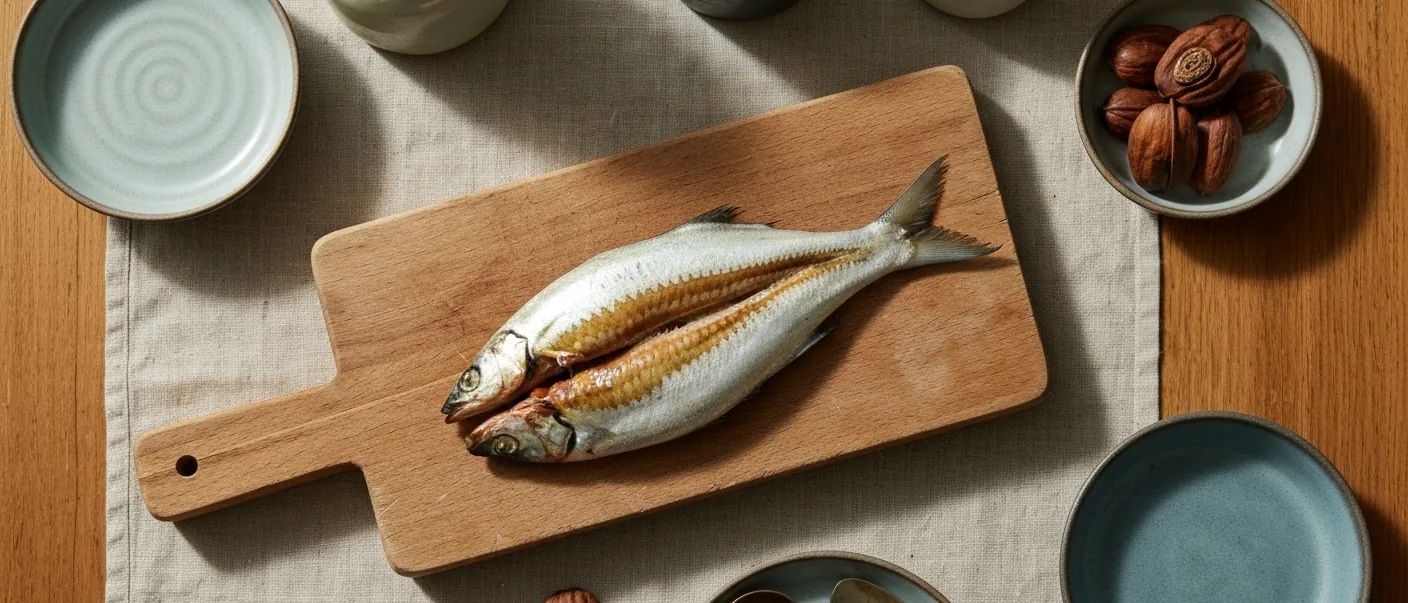
Fresh Cornish sardines have a clean, sea-bright taste with a depth that milder white fish cannot match. The texture is firm but yielding, and the skin crisps well under heat. Grilling them simply — with nothing more than good oil and a little salt — is the method that shows them off most honestly. The fish does the work.
Fresh, tinned and seasonality
The fishery follows the natural movements of the shoals, so supply is seasonal. Fresh fish, when you can find it, is the most immediate way to understand what the renaming was worth. Look for clear eyes, bright skin and a smell that is briny rather than fishy — the standard signs of freshness that apply to any good catch.
Tinned Cornish sardines are a different proposition but no less worthwhile. Several small producers along the Cornish coast make tinned sardines of a quality that bears no resemblance to the mass-market product that gave pilchards their bad name. These tins are worth keeping in the cupboard: the fish mellows and deepens in flavour over time, and good-quality tinned sardines on toast, or alongside a sharp salad with mustard and capers, constitute a meal rather than a stopgap.
Seasonality affects availability more than many shoppers realise. If you are buying fresh, ask your fishmonger when the season runs rather than assuming year-round supply.
Finding Cornish sardines
Independent fishmongers in Cornwall and along the broader South West coast are the most reliable source of fresh sardines during the season. For tinned varieties with genuine Cornish provenance, small food producers and specialist online retailers stock versions worth comparing. The PGI designation gives you something concrete to look for: if it is on the label, the fish was landed where it claims to be from.
The story behind the name, the place, the protected status — none of it is marketing noise. It is the history of a fishery that nearly disappeared and, largely because of a pragmatic decision about what to call the catch, didn't.