What the PDO actually requires
Protected Designation of Origin status is not a marketing badge. For Cornish clotted cream, it is a set of enforceable conditions: the milk must come from Cornwall, the cream must be made in Cornwall, and the finished product must reach a minimum butterfat content of 55 per cent. That last figure is worth sitting with. Standard double cream runs to around 48 per cent. Clotted cream is in a different category altogether — dense, rich, almost solid at the centre of a good spoonful.
The geographical requirement matters because it ties the product to a specific farming tradition. Cornwall's mild, damp climate and long grazing seasons have long suited dairy cattle, and the character of the milk reflects that. Strip away the PDO and you could theoretically make something called clotted cream anywhere; with it, the name carries a genuine guarantee of origin.
How the crust is formed
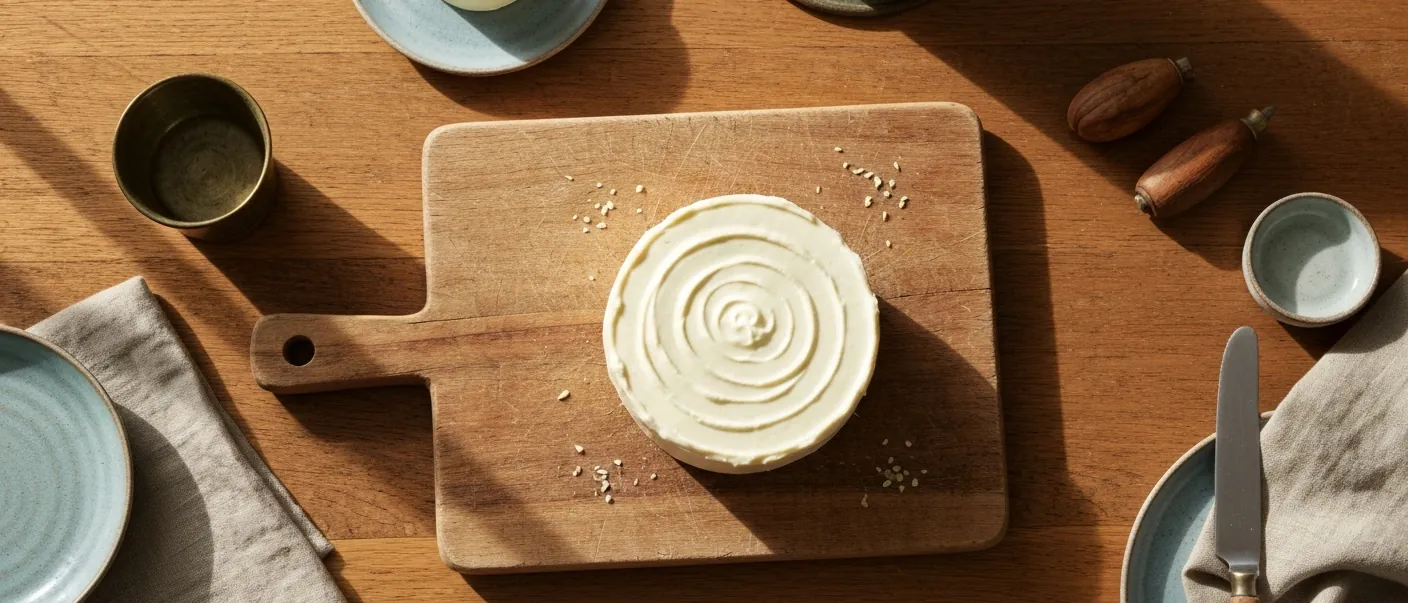
The process that makes clotted cream distinctive is the slow, gentle heating of cream until a thick, golden-yellow crust forms across the surface. This is not scalded milk or whipped cream — it is something the heat does to fat and protein over time, concentrating the cream and giving it that characteristic wrinkled, slightly nutty top layer.
The crust is not a by-product or an imperfection. It is the point. A properly made Cornish clotted cream should have that pale gold surface across the whole top, with the dense, pale yellow cream underneath. If you are buying from a good producer, that crust is your first assurance of quality. A flat, uniformly pale pot suggests the cream has been processed rather than traditionally made.
The scone debate, and where Cornwall actually stands
Ask anyone from Cornwall how a scone should be assembled and the answer is consistent: cream first, then jam. The logic, as Cornish producers have always argued, is practical — the thick cream acts as the base, the jam sits on top, and the whole thing holds together better. Devon takes the opposite view, spreading jam first and piling cream over it.
This has been framed as a gentle regional rivalry, but it runs genuinely deep. The PDO protects the cream itself, not the method of eating it, so there is no official ruling on the scone question. What the protected status does do is ensure that any cream sold as Cornish clotted cream has actually been made there — which, if you are making the effort to eat it the Cornish way, seems the least you should expect.
Buying and keeping it well
Clotted cream is perishable in the way that all high-fat dairy is, though the heating process gives it a slightly longer fridge life than fresh cream. It should be kept cold and eaten within the use-by date on the pot — there is no benefit to pushing it.
Beyond scones, clotted cream appears across traditional West Country cooking in ways that tend to surprise people who think of it only as a tea-time accompaniment. It is stirred through warm dishes, served alongside fruit puddings, and used in place of cream or butter where an especially rich result is wanted. That 55 per cent butterfat figure makes it behave differently to ordinary cream — it does not split as readily under gentle heat, though it is not intended for high-temperature cooking.
When buying, look for the PDO logo on the packaging. It is the clearest signal that what you have is the genuine article rather than an imitation made elsewhere and labelled with Cornish associations. Small Cornish dairies often sell direct or through independent food retailers, and the freshness of a shorter supply chain is usually noticeable in the flavour.