Where the obsession began
Britain's love of intensely savoury pastes and extracts has its roots in the Victorian and Edwardian fascination with food science — the idea that flavour and nourishment could be concentrated, bottled, and made available to anyone. Yeast extract emerged from the discovery that brewer's yeast, a by-product of beer production, could be processed into something edible and nutritionally useful. Beef extract followed a similar logic: take a material abundant in a meat-eating culture, reduce it to its essence, and sell that essence as both a flavouring and a tonic.
These were not products born of tradition in the way that a farmhouse cheese or a long-cured ham might be. They were modern inventions, made possible by industrialisation — and yet they embedded themselves into British life with remarkable speed and stubbornness.
Umami before anyone called it that
Both yeast extract and beef extract share an extraordinary concentration of glutamates — the compounds responsible for what we now call umami, that deep, savoury richness that makes a small amount feel like a great deal. Victorian and Edwardian food writers could not have named the mechanism, but they understood the effect perfectly well. A scraping of beef extract dissolved in hot water made a warming, sustaining drink. A little yeast extract on bread was more than it appeared.
This is part of why these products caught on so decisively among populations that could not always afford meat. The savoury jar was, in a real sense, a democratic product — cheap, long-lasting, and capable of making plain food feel more substantial. It was practical long before it became sentimental.
Love it or hate it, and nothing in between
The cultural phenomenon surrounding yeast extract — the insistence that there are only two kinds of people — is genuinely unusual. Most foods, even strong ones, soften into general acceptance over time. Yeast extract has refused. Its flavour is aggressive, fermented, and deeply bitter at higher concentrations; those who did not grow up eating it often find it genuinely difficult, while those who did tend to be fiercely loyal in a way that goes well beyond preference.
This is the pattern of a food bound up with memory and identity. The toast a parent made on a winter morning, the Bovril stirred into hot water on a cold afternoon at a football ground — these are not just flavours but occasions. The product becomes a container for something else entirely.
The polarisation has also been actively cultivated by marketing over the decades, but the underlying reality is simpler. Familiarity, introduced early, is almost always the deciding factor. Spread it on a child's toast and they will almost certainly grow up to find it comforting. Encounter it for the first time as an adult and the intensity can be genuinely confronting.
How they are traditionally used
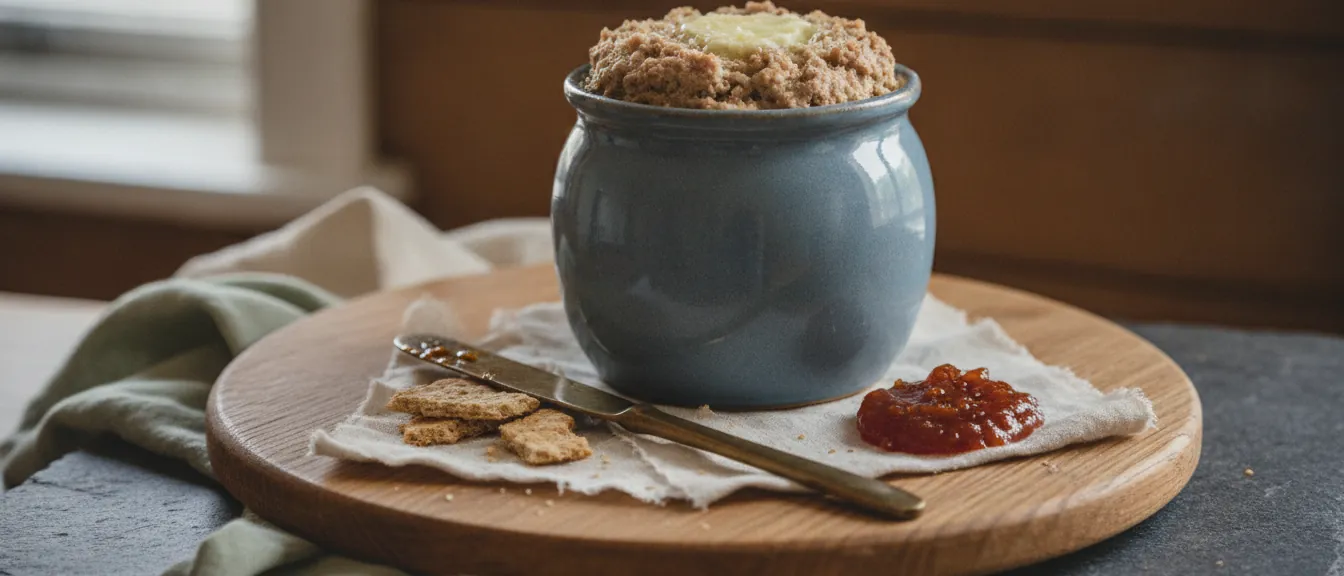
The canonical British use is on toast — white or wholemeal, well buttered, with the spread applied sparingly so that butter, salt, and dark intensity balance one another. Thinly is the operative word; a heavy hand produces something unpleasant even to devoted fans.
Beyond toast, both extracts have long lives in British home cooking. A teaspoon dissolved into a stew or cottage pie deepens flavour in a way that is hard to attribute to any single ingredient. Beef extract in hot water makes a thin, warming broth that has been carried in flasks to sporting events and building sites for well over a century. Yeast extract inside a cheese or celery sandwich remains a fairly common office lunch up and down the country, even if few people think of it as anything other than habit.
A British cupboard staple
What is perhaps most striking about these products is their longevity. Foods invented in the Victorian era very rarely survive into the present day in the same form, selling in the same basic packaging, consumed in the same ways. Most get displaced by shifting tastes or replaced by something more sophisticated. The savoury jar has simply persisted — not because it has been aggressively modernised or repositioned, but because it became genuinely necessary to the people who use it.
There is something almost archaeological about finding one at the back of a British cupboard. It sits alongside the Worcestershire sauce and the tinned tomatoes as evidence of a particular culinary character: suspicious of fuss, respectful of intensity, and deeply attached to the idea that a small amount of something very good is better than a large amount of something adequate.