The famous name and its shadow
Ask most people to name a British blue cheese and the answer comes back immediately: Stilton. It's a fair answer. The cheese earns its reputation — that slow, buttery paste, the blue-green veining worked in with metal skewers, the Protected Designation of Origin that ties its production to three English counties. But that same fame crowds out everything around it. Britain makes blues of real character and variety, from crumbly northern wheels to soft, rinded rounds from the far south-west, and most go unnoticed by anyone who hasn't deliberately gone looking.
This isn't a comprehensive list. It's an orientation — a way into thinking about British blue beyond the familiar name.
The one with the misleading name
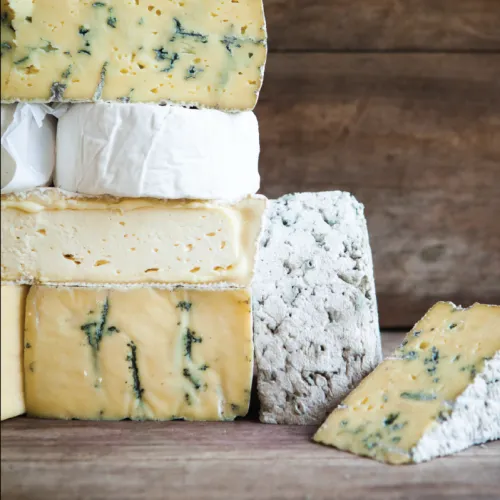
Shropshire Blue is the most instructive place to start, partly because almost everything about its name is wrong. Despite the county it evokes, the cheese was originally developed in Scotland. It has since been made by Stilton producers in the English Midlands and carries no protected geographic tie to Shropshire whatsoever. What it does have is a striking appearance: a deep amber-orange paste, stained with annatto in the same way a Red Leicester is coloured, threaded through with blue-green mould. The flavour sits somewhere between Stilton and a milder, creamier blue — the sharpness is there, but it doesn't dominate. It makes a useful bridge for anyone finding Stilton a touch intense.
What the north is doing
Yorkshire has become one of the more interesting counties for blue cheese in recent decades. Several small creameries and farmhouse operations have developed blues that reflect the character of northern milk — often fuller in fat, with a richness that carries well into the cheese. Styles vary considerably: some are firm and crumbly with a clean, mineral sharpness; others are creamier and more yielding, closer in texture to a young Gorgonzola. The county's long dairy tradition gives makers something solid to build from, and the better Yorkshire blues have a distinctiveness that goes beyond local pride.
Lanark Blue, from Scotland, occupies a different position. Made from unpasteurised ewes' milk in Lanarkshire, it draws comparison to Roquefort — fair in certain respects, though the cheese is its own thing. Ewes' milk brings particular richness and a slightly mineral, almost lanolin-edged quality that cows' milk blues don't have. It tends to be sharper and more assertive than its pale, almost white paste might suggest. For anyone who has assumed Scottish cheese means cheddar-adjacent hard cheese, Lanark Blue is a useful correction.
Blues from the south-west
Cornwall and Devon have their own contributions. Devon Blue is made from cows' milk and has a softer, more open texture than many northern blues — the paste breaks apart easily rather than crumbling, and the flavour is mellow enough to appeal to people who'd describe themselves as not really liking blue cheese. It converts people quietly, without announcing itself. Cornish blues, depending on the maker, can range from gentle and buttery to more robustly veined rounds with a pronounced tang.
The south-west's reputation for dairy is long established — the cream, the clotted cream, the cheddars. The blues feel like a natural extension of that tradition rather than an outlier, even if they've attracted less attention.
The farmhouse revival
Across Britain, small producers have been returning to farmhouse blue-making with seriousness and ambition. This is not purely a nostalgia project. Makers are working with raw milk, developing their own cultures, ageing cheese in conditions specific to their buildings and climates. Results are often inconsistent in the way that handmade things are inconsistent — a wheel made in autumn may differ noticeably from one made in spring — and that variability is, to anyone interested in food, a feature rather than a flaw.
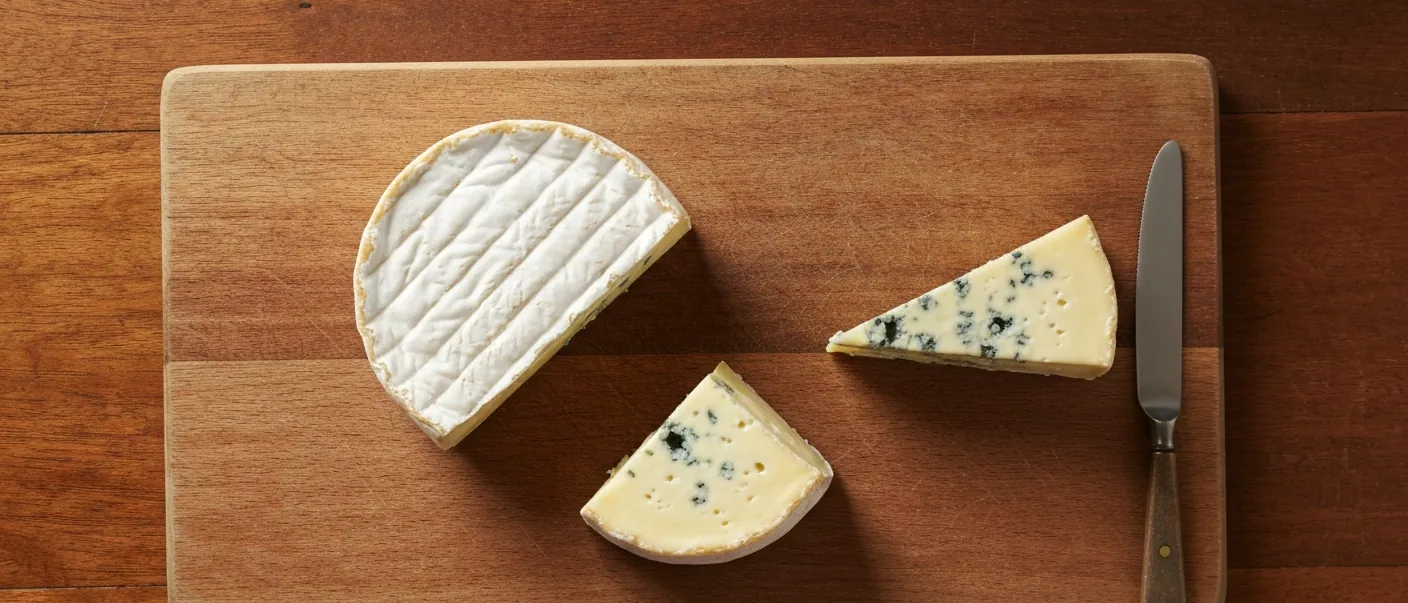
What the revival has demonstrated is that blue cheese is not a single flavour profile. The mould — usually Penicillium roqueforti or a close relative — is one variable among many: the animal, the milk's fat content, the acidity of the curd, the salt level, the humidity of the ageing room, how long it rests. Two cheesemakers using similar methods can arrive at completely different results.
The best approach, if you're new to this, is to find a cheesemonger willing to let you taste before you buy, and to ask what's come in recently. Farmhouse blues in particular change with the season and the batch. A good cheesemonger will tell you when something is at its peak. That conversation, more than any guide, is where the real discovery happens.