A city that suits this sort of thing
York has the bones for a great food festival. The streets are compact and walkable, the architecture gives everything a sense of occasion, and the city already draws people who are disposed to slow down and look around. When producers from across Yorkshire set up in that environment, usually each September, the effect is less trade show and more collective celebration. Check the official festival website for this year's dates before you plan travel — timing can shift slightly from one edition to the next.
The festival spreads through several sites in and around the city centre rather than concentrating everything in one field or car park. That matters. It means you move through York as you explore, which is half the pleasure.
Yorkshire producers, in breadth and depth
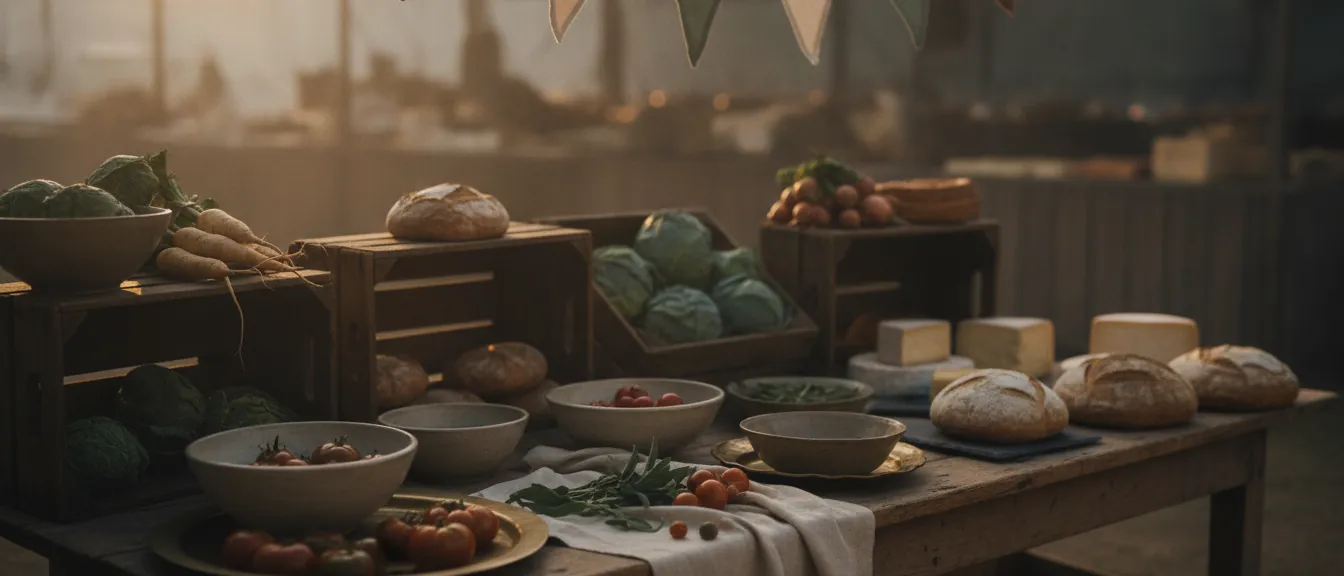
The county has a serious larder to draw from. Yorkshire's food and drink spans everything from small-batch spirits distilled in converted farm buildings to aged territorial cheeses, heritage-breed charcuterie, artisan breads, raw honeys, and fermented drinks that have only recently found a wider audience. A festival like this is one of the more efficient ways to get a sense of that range without driving from producer to producer across a very large county.
What tends to make these encounters useful is the directness. The person behind the stall is often the person who made the thing, which means you can ask real questions — about animal welfare, about seasonal variation, about how something is traditionally eaten — and get an informed answer rather than a sales script. For anyone who buys artisan food seriously, that kind of access is genuinely hard to replicate online.
More than shopping
Tastings, demonstrations, and talks are usually woven through the programme alongside the market element. The calibre of these varies, as it does at any festival of this scale, but the best sessions tend to involve working producers or chefs who have something specific to say rather than a general platform to fill. It's worth looking at the programme in advance and arriving with a loose plan rather than hoping to catch everything on the day.
Street food is typically well represented too, which means you can eat properly while you're there rather than surviving on samples. For a city-centre festival running through the day, that's a practical consideration as much as a culinary one.
Getting the most from the visit
Go early if you can. The first hours of the morning tend to be quieter, producers are fresh, and the more popular lines — a particularly good raw-milk cheese, a small-batch hot sauce with a loyal following — can sell out before the afternoon. Bringing a cool bag is not as eccentric as it sounds; it's the difference between buying something perishable and having to leave it behind.
York itself rewards time either side of the festival. The city has a strong permanent food scene in its own right, with independent delis, bakeries, and wine merchants that stock regional producers year-round. A Saturday at the festival followed by a Sunday morning exploring the permanent market and the independent shops along some of the smaller streets makes for a weekend with some real substance to it.
Why it stays on our radar
There are a lot of food festivals in Britain, and the format has become familiar enough that the weaker ones can feel interchangeable — the same franchise street food operators, the same imported goods dressed up in local branding. York's festival earns its reputation by keeping the focus on genuine Yorkshire provenance. That's not a small thing in a county with as much food culture as this one.
We'd suggest treating it less as an event to consume and more as an introduction. The producers you meet there are, for the most part, making things year-round and selling through their own websites, local stockists, or farmers' markets closer to where you live. The festival is a good door in.