Why the Midlands market scene rewards attention
Great food markets are not confined to London or the coastal counties. The Midlands has been trading seriously since the medieval charter towns were founded, and the range of produce reflects its geography — beef and game from the Welsh borders, rare-breed pork from Leicestershire, orchard fruit from the Vale of Evesham. The markets listed here are ones we return to ourselves, or hear recommended consistently by producers who sell at them.
Birmingham's markets quarter
Birmingham has one of the largest open-air markets in Europe. Its markets quarter in the city centre brings together everyday trading and specialist food. The indoor market hall is the place for things you won't easily find in a supermarket — unusual cuts of meat, live shellfish, Caribbean and South Asian ingredients alongside more familiar British produce. The outdoor Bullring market is busier and louder, but worth the noise for seasonal British vegetables at prices that reflect what things actually cost to grow.
It is not a farmers' market in the strict sense — not every stall is producer-led — but the concentration of independent food traders is genuine, and the market has been central to how the city eats for generations. Go early, go hungry, and don't ignore the fishmongers.
Ludlow — the market the producers trust
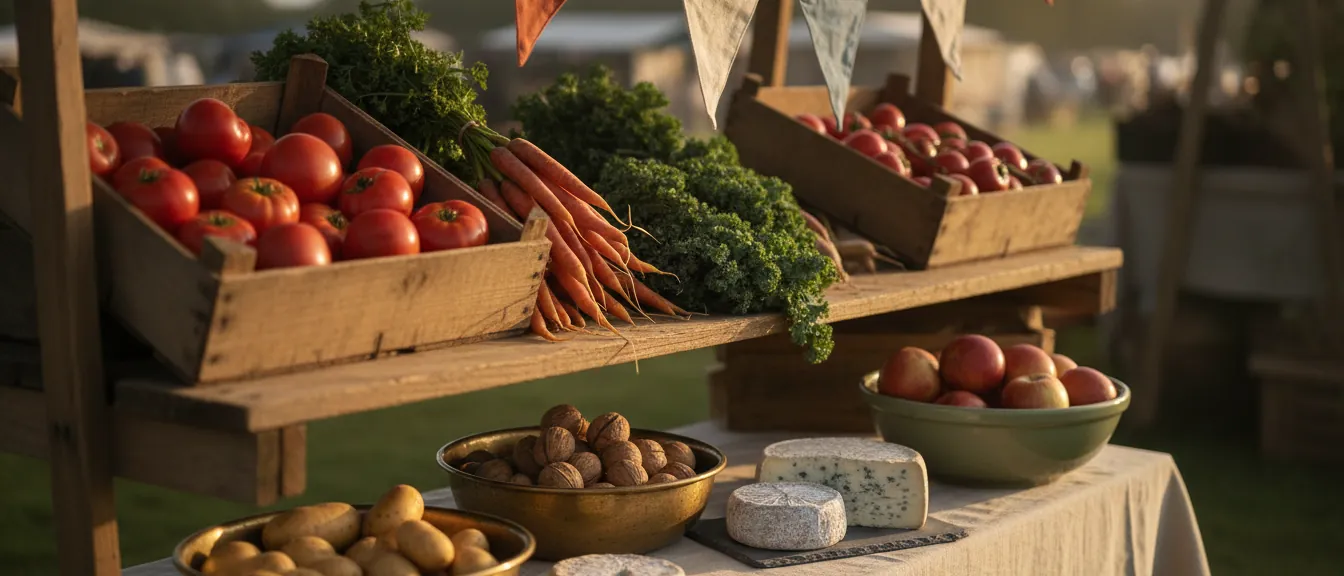
Ludlow's reputation is mostly deserved. The produce market in the town's historic square draws growers and small-scale food makers from across Shropshire and the wider Marches. The proximity to some of the best pastoral farmland in England shows in what's on the stalls — raw-milk cheeses, properly hung beef, heritage vegetables, perry made from old orchards most people have never heard of.
Producers here tend to sell their own goods rather than buying in from wholesalers. That directness matters: you can ask how the lamb was raised or where the apples came from and get an answer from someone who actually knows. The town also hosts a food festival, usually held in September — check the official site for this year's dates before planning a trip around it.
Stratford-upon-Avon and Leamington Spa
Both Stratford and Leamington run regular farmers' markets with a loyal local following. Stratford's market occupies the town centre on set days each month, attracting producers from the surrounding Warwickshire countryside — honey, preserves, artisan bread, and seasonal vegetables are reliable fixtures. The scale is manageable, which means you can actually talk to the people selling.
Leamington's farmers' market has a slightly more polished feel, but the produce is serious. Look out for local charcuterie makers and small-batch preservers who use this market as their main retail outlet — no shop, no website, just a stall and word of mouth. Both markets run on a monthly rather than weekly schedule; check local council and market websites for current dates.
Melton Mowbray — a market town that means it
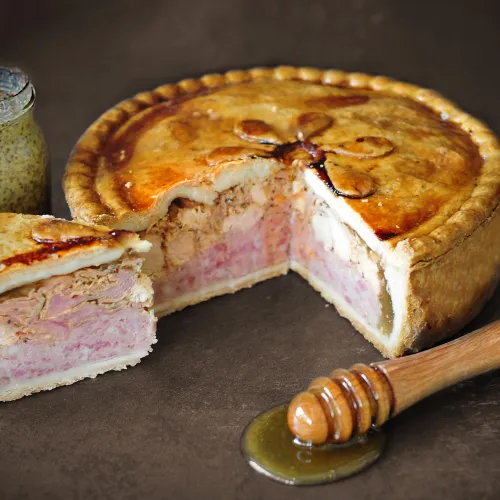
Melton Mowbray's claim to market-town status is not nostalgic branding. It remains one of the most active markets in the East Midlands, and the food connection runs deep: this is the town that gave its name to the pork pie, and Stilton-making country surrounds it. The market operates on several days through the week, with the larger general market drawing producers and traders from across Leicestershire.
The Melton Mowbray Farmers' Market is the event most worth timing a visit around. It focuses on local producers and has built a strong reputation for meat and dairy — which makes sense given the landscape. Rare-breed pork, farmhouse Stilton, and game in season are the things to look for. Confirm current market days on the official town or market website before making a journey.
Getting the most from a market visit
Arriving in the first hour is always better — not just for choice, but because producers are willing to talk, which is half the point of buying direct. Bring cash; not every stall takes cards, and outdoor connectivity is unreliable. A cool bag in the car is worth the minor embarrassment of looking prepared.
Walk the whole market once before spending anything. Resist buying everything from the first stall and missing the rest. The geography of who is where, and what looks best that particular morning, will change your route entirely.