Why Stroud stands apart
Most towns have a market. Far fewer have a producers' market in the proper sense: one where the person selling you cheese made it, where the baker behind the stall baked the bread, where the gap between field and table can be measured in miles rather than supply-chain abstractions. Stroud, a mill town in a fold of the Cotswold escarpment in Gloucestershire, has that kind of market — and has had it long enough that its reputation now reaches well beyond the county.
It runs on Saturdays in the town centre, and it has accumulated a standing among food writers, chefs, and serious shoppers that few comparable markets in Britain can match. That reputation was not built on quaintness. It was built on rigour: the rules about who can trade mean that producers must have genuinely made, grown, reared, or caught what they sell. That single requirement changes everything about the experience.
What a true producers' market feels like
The difference becomes obvious quickly. When you ask a question at a stall — how was this aged, what breed is the pork, how much rain did the growing season bring — you get a real answer, because the person in front of you already knows it. That directness is rarer than it should be in British food retail, and it is the quality Stroud has consistently protected.
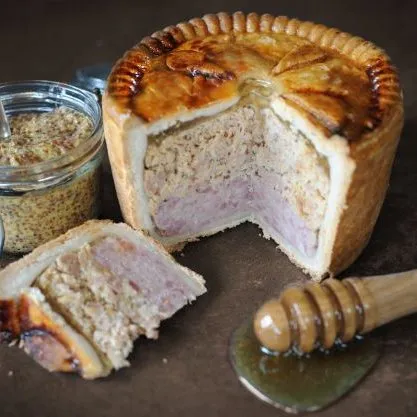
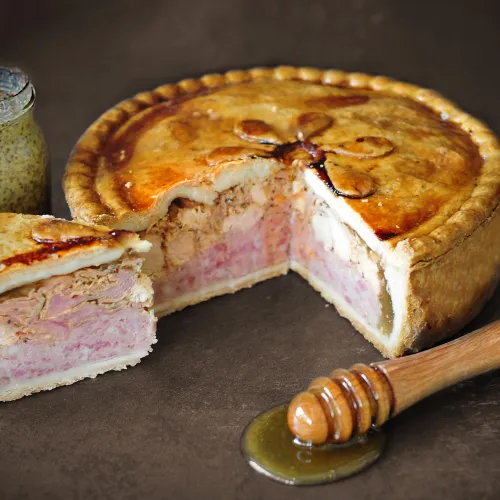
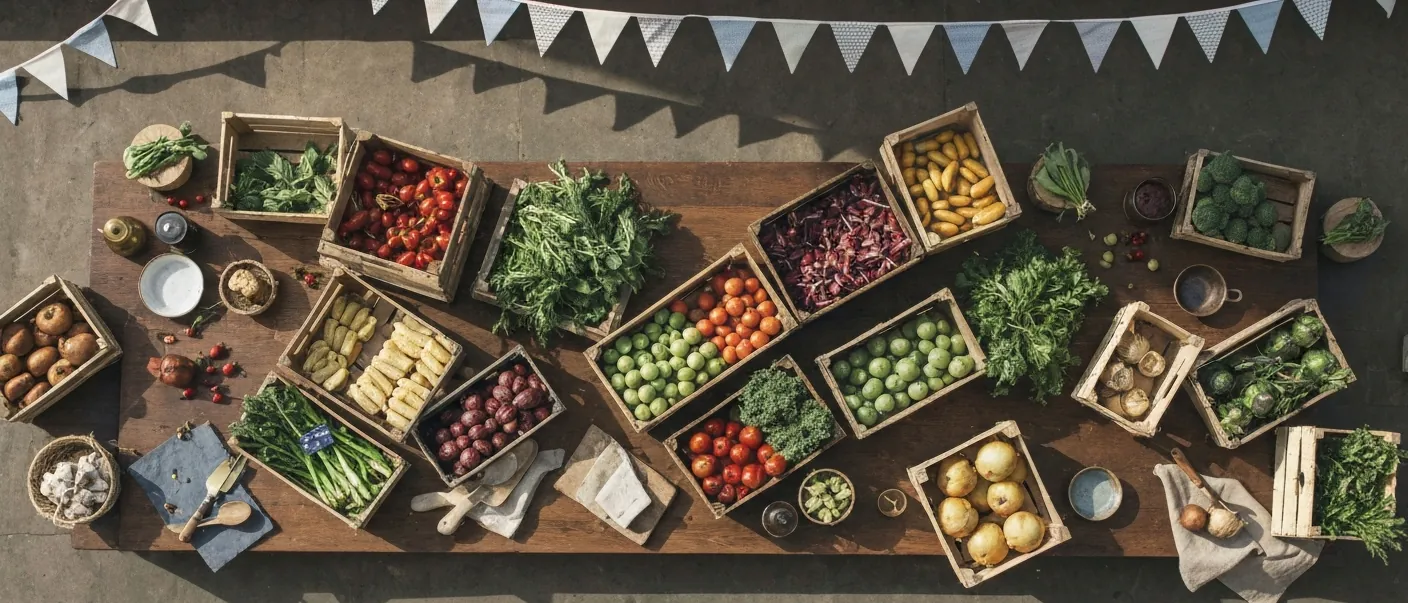
The market draws producers from across the Stroud valleys and the wider Cotswold and Severn Vale region, so the range reflects genuine local agriculture rather than a generic collection of artisan goods that could have come from anywhere. Rare-breed meats, raw-milk cheeses, sourdough loaves, heritage vegetables, small-batch preserves — the specifics shift with the seasons, as they should, but the underlying character holds.
The town around the market
Stroud rewards time beyond the Saturday stalls. It has developed a food culture that the market helped seed: independent shops, small producers with local retail presences, a general atmosphere of people taking what they eat seriously without making a performance of it. The town's geography — steep streets, former mill buildings, the canal running nearby — gives it a distinct physical character that sets it apart from the smoother Cotswold tourist towns further east.
If you are travelling from outside the area, arrive early. The better stalls sell out, and the energy of the first hour is hard to replicate later in the morning. Parking and public transport are worth checking in advance, particularly on busy late-summer or autumn Saturdays when the market draws larger crowds.
What makes it a benchmark
Stroud is not the largest market in Britain by stall count, and its setting is not the most picturesque on offer. What it demonstrates, more clearly than almost anywhere else, is that a farmers' market run to proper producer standards creates a different quality of food community around itself. Shoppers return week after week because they are buying from people whose livelihoods depend on the quality of what they produce, not on the slickness of the display.
That distinction matters. The term farmers' market has been stretched by usage to cover a wide range of setups, some of which have very little to do with farmers. Stroud is a reminder of what the original idea was — and of how well it works when it is upheld.
For anyone with a serious interest in British food and where it comes from, it belongs on the list of places worth making a journey for. Check the official market listings before you visit to confirm current dates and any seasonal changes to the schedule.