A town that took its identity seriously
Malton wears the title 'Yorkshire's food capital' without embarrassment, and if that sounds like branding that usually means very little, the town has the bones to back it up. What's happened in the old market town is less a reinvention than a slow, deliberate act of becoming — independent makers setting up around the market place, a monthly market drawing people in from across the region, and an annual festival that fills the streets with an atmosphere that's hard to manufacture.
What makes it stick is that the producers are actually here. You're not visiting a food event dropped into a neutral venue; you're walking streets where things are made, matured, smoked or brewed nearby. That proximity matters, both for freshness and for the conversations you end up having.
The monthly market
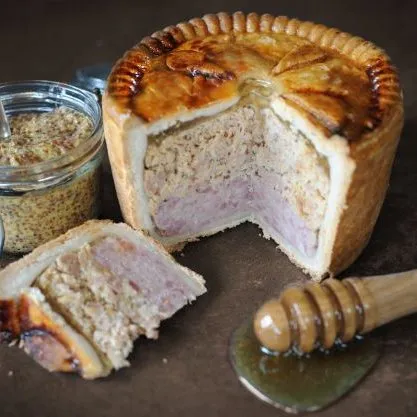
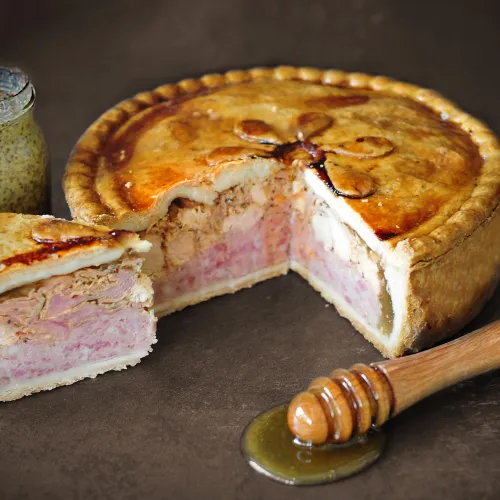
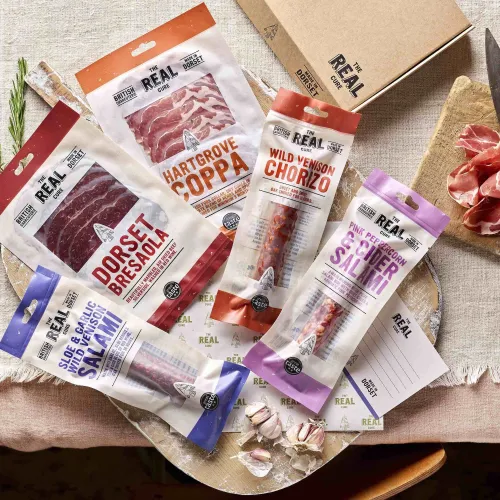
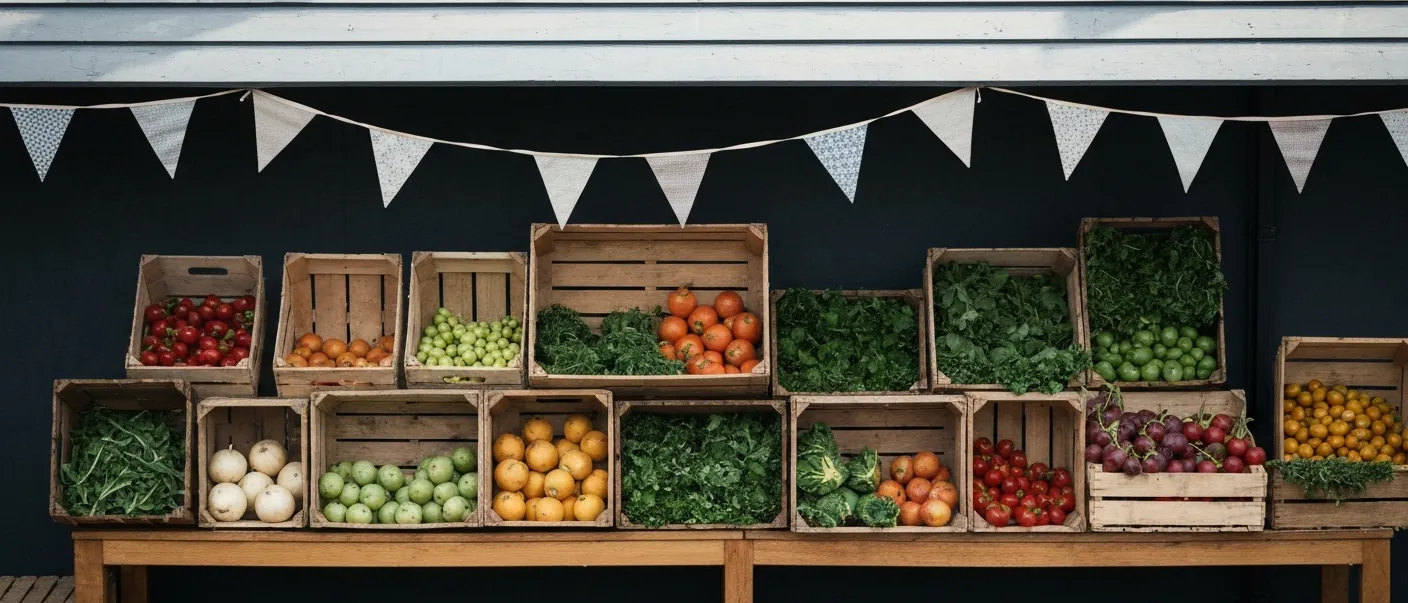
The market runs on roughly the second Saturday of each month — confirm exact dates on the official site before you travel. It takes over the old town centre, with stalls from local and regional producers selling charcuterie, farmhouse cheese, bread, preserves, and street food drawing on both Yorkshire tradition and further afield.
What distinguishes this from a generic farmers' market is the consistency of the producers. Many of the makers who appear on the stalls have a permanent base in or around Malton, so the market functions more like an open day for the town's food community than a collection of travelling traders. If you're after something specific — a particular cheese, a small-batch spirit — arrive early. These are not operations with warehouse quantities behind them.
The annual food festival
The festival is the larger, louder version of everything the monthly market does quietly. Dates shift year to year, so checking the official Malton Food Lovers Festival pages before planning a trip is essential. At its best, the festival uses the whole town as its venue — courtyards, car parks and shop fronts all pressed into service. There are demonstrations, tastings, and the kind of informal producer conversations that get squeezed out of bigger events where scale has overtaken intimacy.
It draws a serious crowd, so accommodation books up fast. The town is small enough that arriving by train is practical, which is worth remembering if you plan to do any drinking.
The producers in the old town
Between market days, Malton is worth visiting for the cluster of independent food businesses that have made it their home. Producers working in premises around the town include a chocolate maker, a brewery and a smokehouse, among others — some open on market days, some on their own schedules.
The concentration of makers in a small area means a short walk can take you from a tasting room to a deli counter to a bakery. It's an unusual thing to find at this scale outside a city, and it's the result of a food identity built from the inside rather than imposed from without.
A few things worth knowing before you go:
- The town centre is compact and walkable, but parking fills quickly on market days — public transport or an early start are both sensible.
- Many smaller producers keep irregular hours outside market days, so if you have a specific destination in mind, check directly with them beforehand.
- The surrounding area — the Vale of Pickering, the edge of the North York Moors — produces strong local ingredients, and several of the market's best stalls are run by farmers and growers from just beyond the town boundary.
Why it holds together
Plenty of places have tried to build a food identity around a market or a festival and found it fades once the initial enthusiasm does. Malton has lasted because the making and the selling happen in the same place. The producers have committed to the town, not just to the event, and that changes the quality of what you find. Go for the festival or on a quiet market morning — either way, you're encountering a community that decided food was worth taking seriously and got on with it.