Why Armagh is different
Most people encounter Bramley apples as a supermarket staple with no particular postcode attached. Armagh changes that. The county's orchards cover the drumlin countryside south and west of the city, and the Bramley grown here carries protected geographical status — meaning that name, on an Armagh apple, is a guarantee of origin in the same way that Champagne is for sparkling wine. We've covered that designation in detail in our piece on Armagh Bramley apples; the short version is that the county's particular combination of soil, rainfall and frost patterns produces something worth protecting.
What sets Armagh apart from England's apple-growing counties isn't just the variety. The Bramley is grown here as a serious working crop, not a heritage curiosity. There are pressing facilities, cold-storage operations, and a cider and juice industry that developed alongside the orchards rather than being imported from elsewhere. The apple shaped the county's economy before it shaped its food culture, and that order of precedence still shows.
Blossom season
For a few weeks in late spring, the Armagh landscape does something that stops people mid-sentence. The orchards come into flower more or less simultaneously — Bramley blossom is white with a pale pink flush — and on a clear morning, looking across a hillside thick with it, the effect is less like a food-producing county and more like something from a Japanese woodblock print.
The blossom period has become an occasion in itself. Farms open their gates for orchard walks, local producers set up at markets and food events, and visitors who make the trip specifically for the sight of it tend to return the following year. Check the Bramley Experience and local tourism sites for what's running — events and open-farm dates shift around, and the blossom itself doesn't consult a calendar.
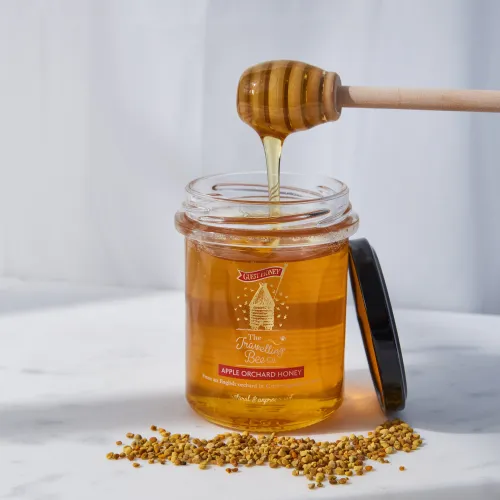
What's happening agronomically during this window is worth understanding. Pollination depends largely on bees, and the relationship between orchard keepers and beekeepers in the county is a practical one. A cold or wet blossom period can affect fruit set for the whole season, which is why growers watch the weather with particular intensity in May.
Summer thinning and the long wait
Once the blossom drops and the tiny fruitlets appear, the work turns quiet but exacting. Thinning — removing a proportion of young fruit by hand so that the remaining apples develop properly — looks simple and is actually skilled, time-consuming work. Too little thinning and you get a glut of undersized fruit; too much and you've sacrificed yield unnecessarily. Most Armagh orchards are on family farms where this knowledge has been accumulated across generations.
Through midsummer, the trees are largely left to do their work. The Bramley is a cooking apple rather than an eater, and it develops its characteristic sharpness — the high acidity that makes it collapse to a froth when cooked — over a long, slow growing season. By late summer the apples are the size of a large fist, still hard and green, and they'll stay that way until harvest.
Harvest and what follows
Picking runs from late summer into autumn. Some of the Armagh crop is harvested by hand; some orchards use mechanical aids for the commercial volumes involved. Either way, it's a concentrated period of work, and the county takes on a different energy — farm traffic on the lanes, the sweet-sharp smell of bruised apple around the processing yards.
Much of the Bramley crop goes into controlled-atmosphere storage, which slows the apples' respiration and allows them to be sold and processed over many months. It's why you can buy Armagh Bramley well into the following year and still get fruit with the firmness and acidity the variety is known for.
The harvest also feeds the county's cider and juice production. Armagh cider is made primarily from Bramley rather than the dessert varieties common in English cider, which gives it a tartness and structure that producers have learned to work with rather than mask. We've covered the cider tradition separately, but the industry grew out of surplus and practicality: apples that couldn't be sold fresh needed somewhere to go. That pragmatic origin hasn't stopped producers from making something genuinely worth seeking out.
How to visit and when
The orchard year offers two obvious windows: blossom in late spring and harvest through autumn. Both seasons bring organised events — apple weekends, farm open days, cider tastings — though specifics change year to year. The Armagh City, Banbridge and Craigavon Borough Council tourism pages are the most reliable starting point for current programming, as is the Bramley Experience in Loughgall.
Outside event weekends, the orchard roads south of Armagh city are worth driving or cycling at almost any time of year. The landscape — old trees on sloping ground, the distinctive drumlin hills — is unlike anywhere else in Britain or Ireland.