A festival shaped by its setting
Snape Maltings sits on the River Alde in a stretch of Suffolk that feels genuinely remote — reed beds, wide skies, the faint tang of the estuary in the air. The buildings themselves are Victorian brick, built to malt barley and now home to one of Britain's most celebrated concert halls. That combination of industrial heritage and serious cultural purpose gives the Aldeburgh Food & Drink Festival a character that's hard to replicate elsewhere.
The festival is usually held in late September, when the Suffolk countryside is at that particular amber-and-gold moment before the season turns. Check the official site for this year's exact dates before you travel.
East Anglian produce at the centre
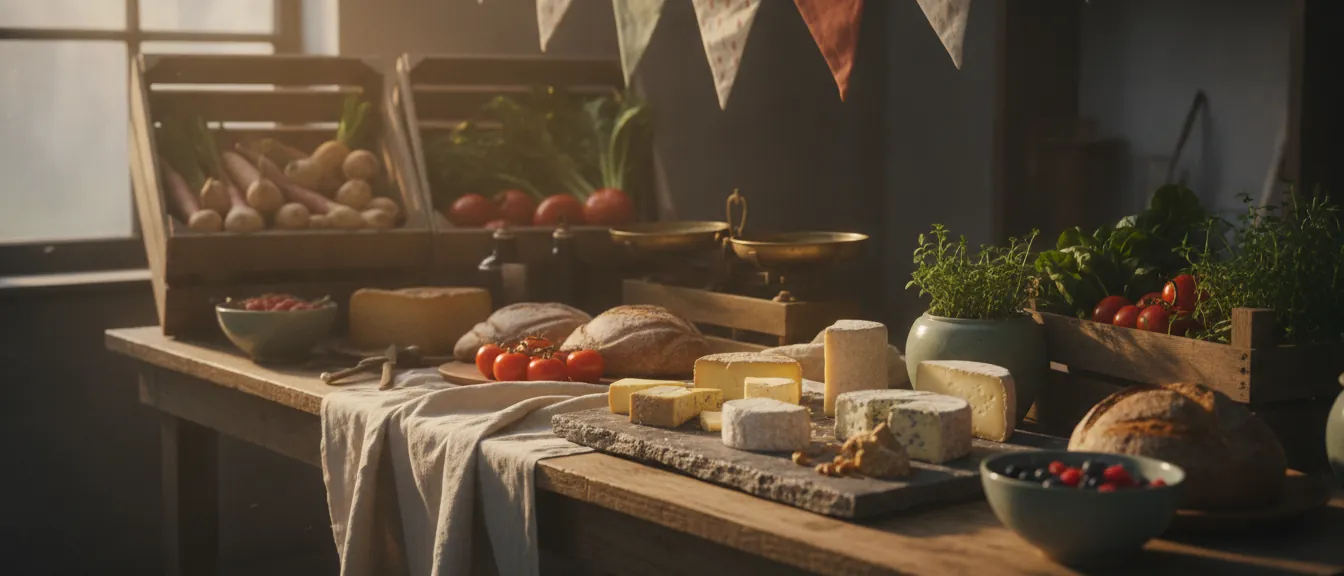
What distinguishes the festival from the generalist food fairs that fill the autumn calendar is its regional focus. Suffolk, Norfolk and the broader East Anglian larder are genuinely well-represented — this is a county with serious food credentials. The area produces outstanding malted barley (fitting, given the venue), excellent pork and game, fine-textured root vegetables from some of the most productive arable land in Britain, and a coastline that yields crab, lobster, and some of the North Sea's best fish.
Producers who show here tend to be smaller operations: family smokeries, independent cheesemakers, micro-breweries working with local grain, vineyards whose bottles rarely travel far beyond the county border. For anyone who lives outside the region, the festival is one of the most practical opportunities to encounter this produce in quantity, talk directly to the people who made it, and buy things that simply don't appear in shops further afield.
More than a market
The Maltings site lends itself to the kind of programming that lifts a festival above a straightforward trade show. Demonstrations, tastings, and talks tend to use the performance spaces and the open grounds with some imagination — the architecture does a lot of the work. There's usually a programme of chef demonstrations and producer conversations running alongside the market stalls, though the lineup changes each year and is worth checking in advance.
The atmosphere is distinctly Suffolk: unhurried, knowledgeable, not especially showy. The crowd skews towards people with a genuine interest in what they're eating rather than those chasing spectacle, which keeps the conversation on the stalls honest and specific.
Getting the most from the day
The Maltings is most easily reached by car, but it's worth knowing that the Alde Valley is the kind of place that rewards a slower approach. Villages along the coast — Aldeburgh town itself is a short drive away — have good fishmongers and independent food shops that are worth folding into a visit if you're making a weekend of it. The town's famous fish and chip tradition, eaten from the paper on the shingle beach, is as good a way as any to end a day spent thinking about food.
Snape Maltings also has its own shops and café on site year-round, so arriving early or staying after the festival proper closes gives you an excuse to explore the broader complex at a quieter pace.
Why it holds its place in the autumn calendar
Britain has no shortage of food festivals, and many have grown into events that prioritise scale over substance. Aldeburgh has stayed relatively compact, which means the producer access is real and the conversations are genuine. The regional focus gives it an editorial coherence that broader events often lack — you leave with a clearer picture of what this particular corner of England actually grows, catches, and makes.
For anyone with an interest in British regional food, or in the specific traditions of the East Anglian coast and countryside, it's one of the autumn season's more rewarding days out.