Why the right blade makes a difference
Cheese defeats ordinary kitchen knives in specific ways. A soft brie drags and smears; a mature Lancashire crumbles rather than slices; a wedge of parmesan resists cutting altogether and needs breaking along its natural grain. Each problem has a blade designed around it. The trick is knowing which ones to bother with.
For most households the answer is two, possibly three specialist knives — and a sharp cook's knife from the block handles everything else. What follows is a frank account of what each type actually does.
The knives that do their job
The open-work blade — the one with holes or slots cut into it — is the most useful dedicated cheese knife in most kitchens. That perforated surface reduces contact between blade and cheese, so soft varieties like brie, camembert or a ripe goat's log release cleanly instead of collapsing onto the knife. Without it, you're tearing rather than slicing.
For hard cheeses, the narrow, sharp-tipped knife with a curved or forked end earns its place twice over: the rigid blade cuts through firm cheddar or gruyère with control, and the pointed tip doubles as a prising tool for breaking away a piece or lifting a portion onto the board. That dual function makes it the most versatile specialist knife of the lot.
Crumbly territorial cheeses — Cheshire, Lancashire, a well-aged cheddar — need something different. A flat, broad cleaver-style blade divides them with a single downward press rather than dragging through. Less lateral movement means fewer ragged, collapsed pieces and more intact portions.
The wire and the parmesan spade
A cheese wire might seem like a single-purpose extravagance, but if you buy Roquefort, Stilton or any delicate blue regularly, it's worth having. Blues are fragile — pressing a blade through them crushes their internal structure and disrupts both texture and the distribution of those flavoured veins. A wire glides rather than pushes, leaving the interior intact. For firm or semi-firm cheeses it's largely unnecessary, but for blues it's the kindest tool available.
The parmesan knife — short-handled, stubby, with an almond-shaped blade — is essentially a small chisel, because that's what the job requires. Parmesan, aged pecorino and similar hard-grained cheeses aren't meant to be sliced. Press the blade into a natural seam or crack, lever gently, and the cheese splits into rough, irregular pieces that carry far more flavour and texture than a clean slice. It is a specific technique for a specific category of cheese, and the right tool makes it considerably easier.
What you can skip
Most of the rest. Spreaders are only necessary if you're serving very fresh cheeses directly from the board rather than pre-cut — a butter knife does the same job. Novelty shapes and decorative handles often compromise the blade itself. Buying a full set because it looks good in a box is how drawers fill up with things nobody reaches for.
A sharp chef's or paring knife, properly maintained, will handle anything from a medium-hard gouda to a piece of firm cheddar. The specialist knives above are worth owning because they solve problems that general kitchen knives genuinely cannot. Beyond that, the case gets thin.
Board sense
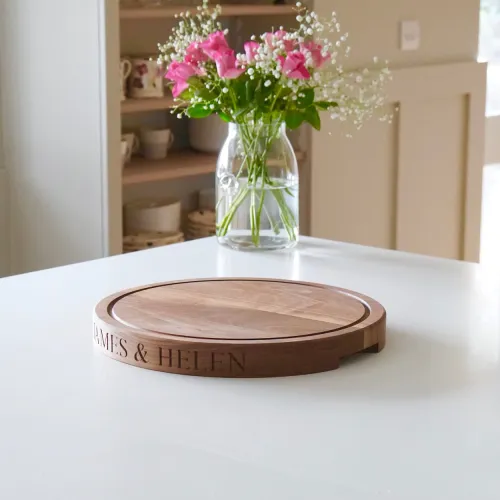
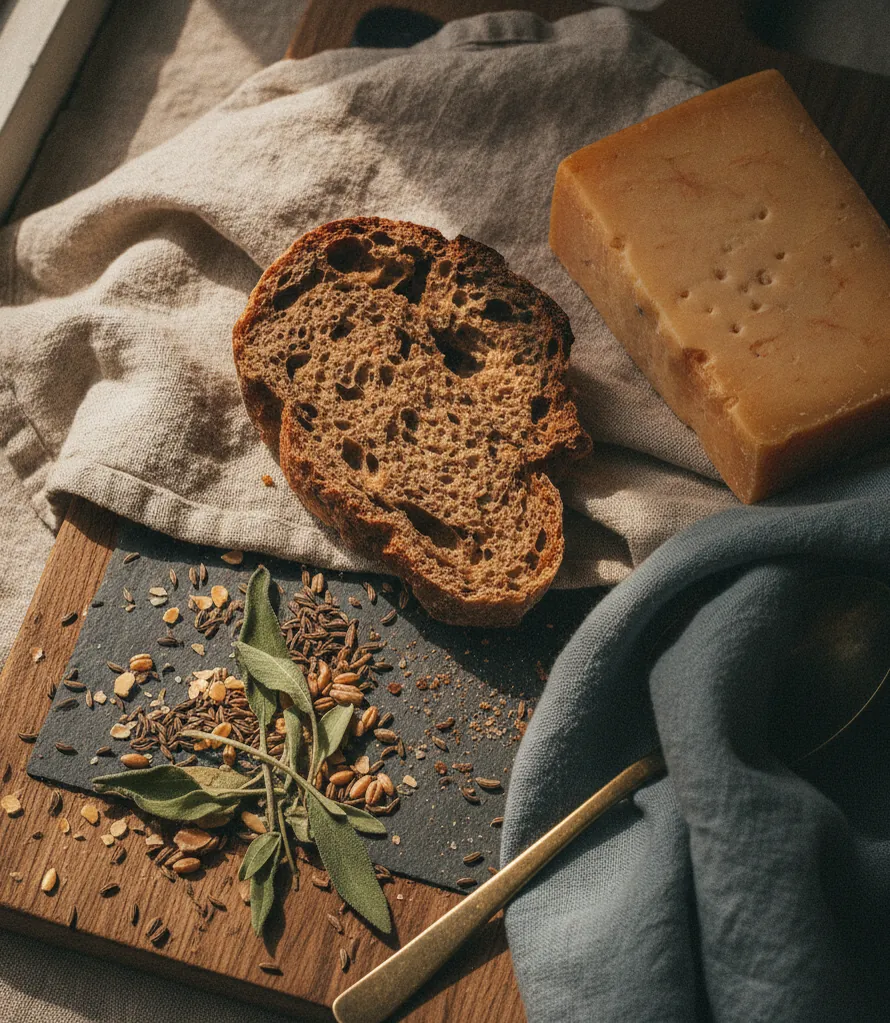
Wood and slate are both practical choices — wood is gentle on blades; slate looks clean and keeps cheese cool. Whichever you use, the principle of one knife per cheese is worth taking seriously. Blue cheese has a pronounced flavour that transfers easily to a neutral brie or mild goat's cheese. A dedicated knife per variety is simpler and more reliable than wiping between uses, though wiping is better than nothing.
For more on cutting angles and how to work through a whole piece without wasting the best of it, our piece on cutting cheese correctly covers the technique in detail.