Ask first, guess never
Before buying anything, ask the recipient directly. People routinely skip this — out of a wish to surprise, or vague confidence that they already know enough. Neither holds up when the stakes involve an allergic reaction.
A quick message — "I'd love to send you something edible; can you remind me what's off-limits?" — takes thirty seconds and removes almost all the risk. It also shows more care than any amount of careful label-reading on your part.
If you cannot easily ask — a colleague's leaving collection, a postal gift for a distant relative — lean on the categories below or choose something non-edible. A beautiful piece of kitchenware, a food-themed book, or a well-chosen tin sidesteps the problem entirely.
Allergy, intolerance, preference: why the difference matters
These three things are not interchangeable, and which applies to your recipient changes how strictly you need to approach the label.
A food allergy involves an immune response. Even trace amounts of the allergen can trigger a reaction, and for some people that reaction is severe. Cross-contact — where a tiny amount of one food ends up in another during manufacture — is a genuine danger, not a theoretical one. This demands the most rigorous approach to labels and sourcing.
A food intolerance is a digestive response rather than an immune one. Symptoms and thresholds vary significantly between individuals, and it is never your place as a gift-giver to judge what level of risk is acceptable for someone else.
A dietary preference — veganism, or avoiding an ingredient for personal reasons — matters and should be respected, but the consequences of getting it wrong are not medical.
When in doubt, treat the situation as though it were the most serious category. You cannot always tell from conversation how severe someone's sensitivity is, and they may understate it to avoid making you feel awkward.
What 'may contain' actually tells you
Reading labels, you will encounter "may contain" fairly quickly. It is easy to dismiss this as cautious boilerplate, but it has a specific meaning: the product is made in a facility or on equipment shared with the named allergen, and cross-contact cannot be ruled out during production.
For someone with a serious allergy, "may contain" is usually a no. We have covered the mechanics in more depth in our piece on may-contain labelling — worth reading before you shop, because the phrasing varies and is not always where you expect it on the pack.
Small independent producers — precisely the sort of makers this publication follows — are often working in multi-use or shared facilities. That does not make their products unsafe in any absolute sense, but cross-contact is harder to rule out, and many will tell you so if you contact them directly. Certified free-from producers exist specifically to address this: dedicated lines, rigorous allergen controls, and labelling that reflects that process. If the recipient's allergy is serious, certified free-from products are worth seeking out.
Categories most likely to work
Some gift choices are structurally easier than others. Single-ingredient products — a jar of raw honey, a bag of whole nuts, a bottle of cold-pressed oil — carry the simplest labels and the fewest hidden allergens.
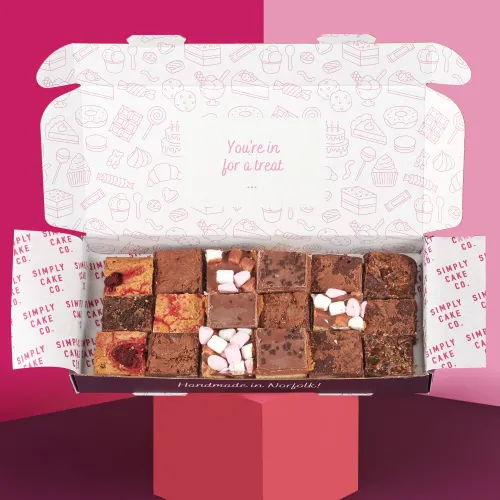
Highly processed or composite products (biscuits, confectionery, sauces, flavoured snacks) carry more variables: emulsifiers, flavourings, and multiple components that each add label complexity. They are not impossible to get right, but they require more careful reading and greater confidence in the producer's allergen controls.
- Drinks — many single-origin teas, coffees, and soft drinks are naturally free from the most common allergens, though always check flavoured or blended versions.
- Oils and vinegars — a high-quality extra virgin olive oil or a good cider vinegar usually has a clean label and makes a generous gift.
- Honey and preserves — straightforward ingredients, though check for "may contain" in nut-adjacent facilities if tree nut allergy is the concern.
- Fresh or dried fruit — whole or minimally processed, with few hidden ingredients.
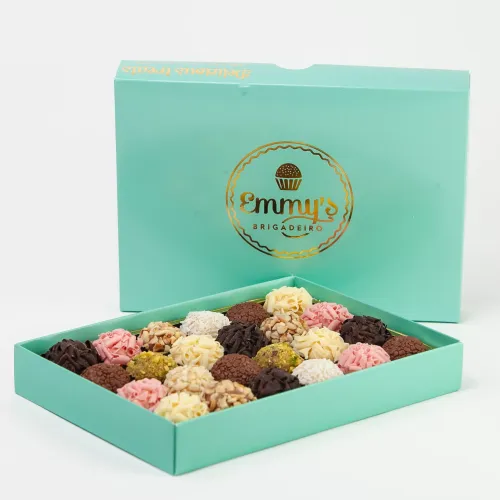
Chocolate deserves its own mention: one of the most popular food gifts and one of the most cross-contact-prone categories, given how often it is produced alongside nuts. Certified dairy-free or nut-free chocolate exists, but the standard assortment box is rarely appropriate for a recipient with multiple allergies.
When food is too complicated
There is no shame in deciding that, for this particular person, a food gift is not the right move. Pairing something edible with something non-edible — a cutting board alongside a bottle of oil, or a handwritten card explaining that you did not want to guess — is thoughtful rather than defeatist.
The recipient is the authority on what they can eat. Their own medical team, the NHS, and organisations such as Allergy UK are the right sources of guidance for anyone navigating a serious allergy. Your job as the gift-giver is to ask, listen, and act on what you are told.