Why real bread stales differently
A supermarket loaf and a proper sourdough behave like different materials once they leave the oven. Mass-produced bread relies on added fats, emulsifiers, and various processing aids to slow staling. Real bread — made from flour, water, salt, and a live culture or yeast — has none of those buffers. It does have a more complex crumb structure and, in the case of sourdough, a lower pH from fermentation that resists mould. It won't go green in two days, but it will go stale.
Staling is mostly about starch. As a loaf cools, the starch molecules begin to recrystallise — a process called retrogradation — stiffening and shedding moisture into the crust. The crumb firms and dries; the crust, paradoxically, softens as it absorbs that moisture. Temperature is the critical variable: retrogradation happens fastest at fridge temperature. The fridge, far from preserving your bread, accelerates staling dramatically. This is as well-established as food science gets, and yet it remains the most common mistake people make.
Where to keep it
At room temperature, a real loaf will stay good for two to four days depending on the flour, the hydration, and the warmth of your kitchen. The goal is to slow moisture loss without trapping humidity that encourages mould.
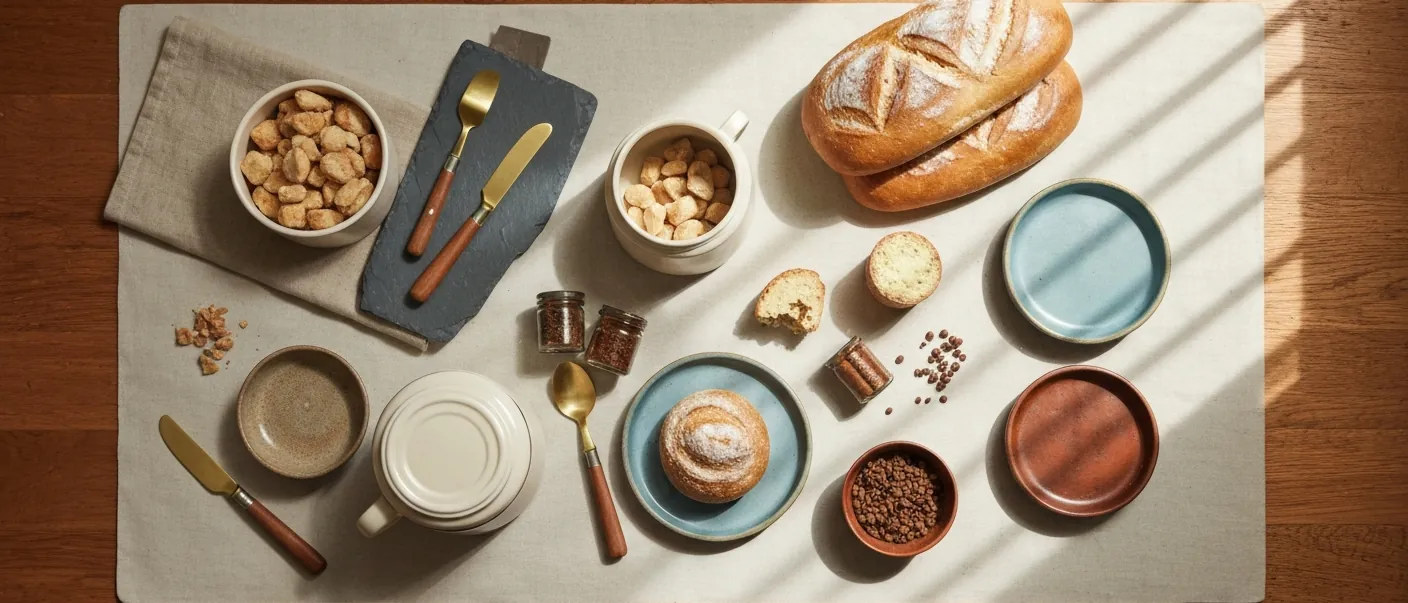
A bread bin — wooden or enamelled — does this well, keeping the air around the loaf slightly humid without sealing it entirely. Ceramic crocks work on the same principle. Without one, a paper bag is the next best option: it lets the loaf breathe while buffering it from dry air. Plastic bags are a compromise — they hold moisture in and keep the crumb softer briefly, but the crust turns leathery almost immediately and the humid interior accelerates mould.
Always store the loaf cut-side down on a board or flat surface. The crumb exposed to open air dries faster than anything else; the crust acts as a natural seal, so use it.
Freezing properly
The freezer is not a last resort — it's a genuinely sensible strategy if you buy or bake in bulk. Freezing arrests staling almost entirely. Slice before freezing rather than after, so you can take out exactly what you need. Slices go directly from freezer to toaster without defrosting, which suits sourdough used mainly for toast.
Wrap slices tightly — a freezer bag with the air pressed out, or baking paper inside a bag — to prevent freezer burn. A whole unsliced loaf can be frozen too, but it needs to be well wrapped and brought fully to room temperature before cutting, otherwise the crumb can be gummy at the centre.
Reviving a stale loaf
Staling is partly reversible. If your loaf has gone dry but hasn't moulded, a short spell in a hot oven can bring it back close to fresh. Run the crust under a cold tap — just enough to dampen it — then bake in a hot oven for ten to fifteen minutes. The moisture from the crust drives steam into the crumb, and retrogradation partially reverses as the starches warm. The result isn't identical to a loaf from the baker, but it's remarkably good.
A loaf that has gone beyond stale into hard territory is still worth keeping. It's on its way to being something else: breadcrumbs, a thickener for soups, or something to put out with cheese at the end of an evening.
A note on sourdough
Sourdough's natural acidity slows mould, but it doesn't make the loaf immune to staling — the same rules apply. Sourdough does have a slightly longer window of palatability at room temperature than a comparable yeasted loaf. Its crust also tends to be thicker, holding structure a little longer as moisture redistributes. These are tendencies, not guarantees; a draughty kitchen will still dry a sourdough out fast. Keep it wrapped, keep it out of the fridge, and eat it within a few days.