The order matters more than most people think
Savoury first, scones in the middle, sweet things last. This is the traditional sequence, and it holds up for practical reasons as well as ceremonial ones. A sandwich anchors the appetite; finishing on a petit four or a slice of cake is a pleasure. If guests load their plates with cake first and then feel obliged to eat a sandwich, the whole thing collapses into polite obligation.
The three-tier stand reflects exactly this order: sandwiches on the bottom, scones in the middle, pastries and sweet things on top. Work from the bottom up and you are following the logic of the meal, not just a display convention.
What to buy and what not to bother making
Finger sandwiches are worth making yourself — freshness matters and a sandwich held for more than a few hours loses its point. The fillings are simple: cucumber with a little white pepper, egg mayonnaise, smoked salmon with cream cheese. Use thin-cut white or brown bread, remove the crusts, and cut into neat rectangles or triangles. This is easy to do the morning of.
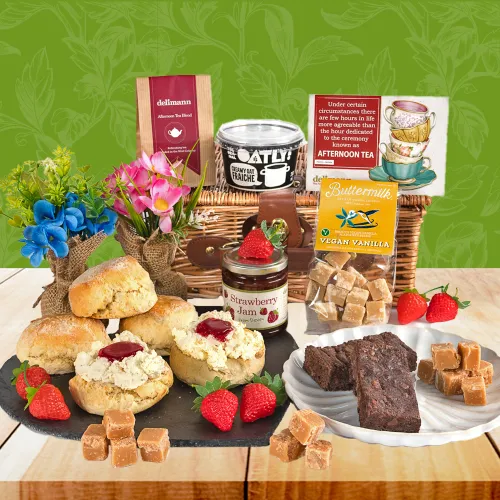
Scones are a different calculation. A good bakery scone, bought that day and warmed briefly before serving, will beat a home-baked scone that went wrong. Unless you have a reliable recipe you have made many times, buy them. What you cannot compromise on is generous quantities of clotted cream and jam alongside — proper amounts, not token accompaniments. The Cornish versus Devonian question of cream first or jam first can be left to your guests to argue over.
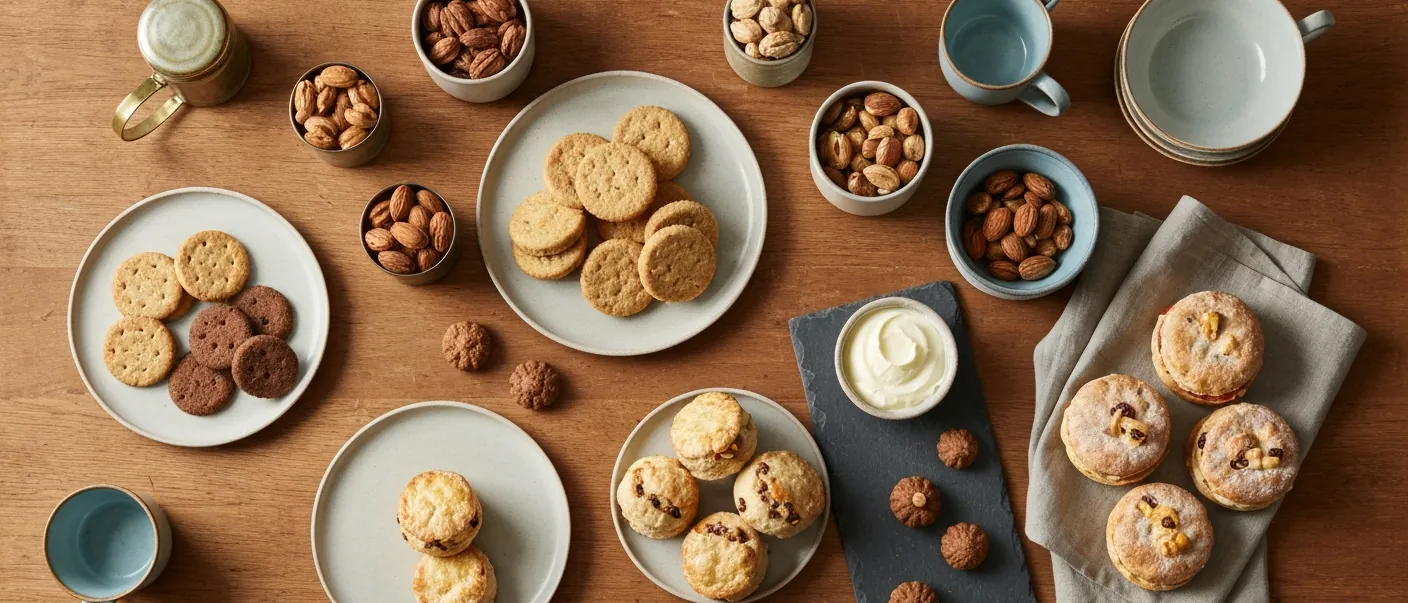
For the sweet tier, patisserie from a good independent baker tends to look and taste considerably better than home-baked miniatures attempted under pressure. Small éclairs, fruit tartlets, thin slices of Victoria sponge or lemon drizzle — everything should be small enough to eat in two or three bites. This is not the moment for a generous wedge of cake.
How much of everything
A reasonable quantity per person: three or four finger sandwiches (one to two full rounds of bread, cut down), one to two scones, and two or three small sweet items. This sounds modest written down, but across an hour or more with tea flowing throughout, it is about right. Afternoon tea should leave people satisfied, not searching for somewhere to lie down.
If you are serving a mixed group with dietary needs, separate plates per person are considerably easier than adapting a shared stand. A dedicated plate allows you to swap in gluten-free bread or dairy-free cream alternatives without the whole arrangement becoming complicated.
The tea itself
Tea strong enough to take milk is the baseline requirement — for afternoon tea that typically means Assam, a robust Darjeeling, or a classic English Breakfast blend. Delicate green teas and florals are better suited to drinking without milk. If you want variety, a second pot of something lighter works well alongside the main brew, but the anchor should be a full-bodied leaf tea.
Loose leaf brewed in a warmed pot, with a strainer, gives a noticeably better result than bagged tea — not for ritual's sake, but because the leaves have room to expand and the flavour develops more evenly. A good independent tea merchant will often sell small quantities, making it easy to try a few blends before committing. Brew to the recommended time for the specific leaf; over-steeping turns even good tea bitter, which milk cannot rescue. Keep the pot warm with a tea cosy and have a second pot ready. Running dry of tea halfway through is the one failure mode that is entirely avoidable.
Sourcing well without overcomplicating it
A strong afternoon tea at home draws on a small number of good independent suppliers rather than covering everything from one place. A local bakery for scones and patisserie, a deli or cheesemonger for smoked salmon and good butter, a tea specialist for the leaf — these are the three relationships worth having. Many such suppliers now offer online ordering and postal delivery, so geography is less of a constraint than it once was.
Presentation does real work here. A white or cream tablecloth, mismatched vintage china, small vases of whatever is in season — none of this costs much, but it signals that this is an occasion rather than a snack, which is what afternoon tea is supposed to be.