Why dietary gifting needs more care
Food gifts feel personal in a way that candles and vouchers rarely do. That intimacy is also their risk. Someone who receives a beautiful hamper they cannot eat will smile graciously, but the moment is quietly deflating. Avoiding this takes less effort than most people assume — it is mostly a matter of knowing which categories are naturally safer, and which demand closer reading.
One principle worth holding from the start: if you are not certain of someone's needs, ask. Framing it as wanting to get something they will genuinely enjoy is not awkward; it is considerate. People with serious allergies or intolerances field accidental mistakes constantly, and a quick message before you buy is far more welcome than a gift chosen in hopeful ignorance.
Vegan gifting goes further than animal products
The obvious pitfalls — milk, eggs, honey, gelatine — are well known, but vegan label-reading goes a layer deeper. Many apparently plant-based products are made on shared equipment with dairy or eggs, which matters greatly to some recipients and less to others. Look for a certified vegan logo rather than relying on the ingredients list alone; it signals that the manufacturer has considered cross-contact as well as formulation.
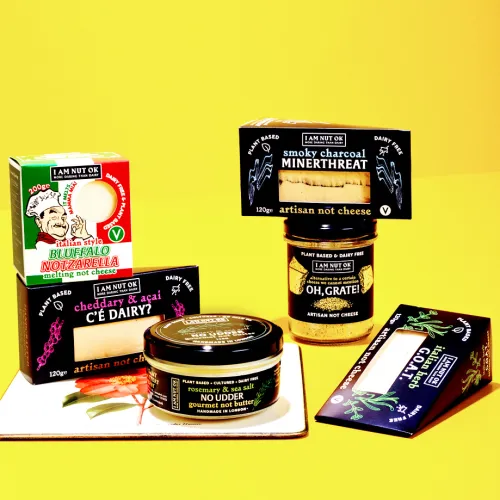
Safe categories for vegan gifting include good-quality preserves and condiments, single-origin chocolate clearly labelled vegan, loose-leaf teas, and cold-pressed oils. These are rarely ambiguous. Where things get complicated is chocolate (many dark bars contain milk solids or share lines with milk chocolate), biscuits (often buttered or egg-washed), and anything described as "artisan" without further detail — craft producers are wonderful, but their labelling is not always thorough.
Gluten-free: certified versus naturally free
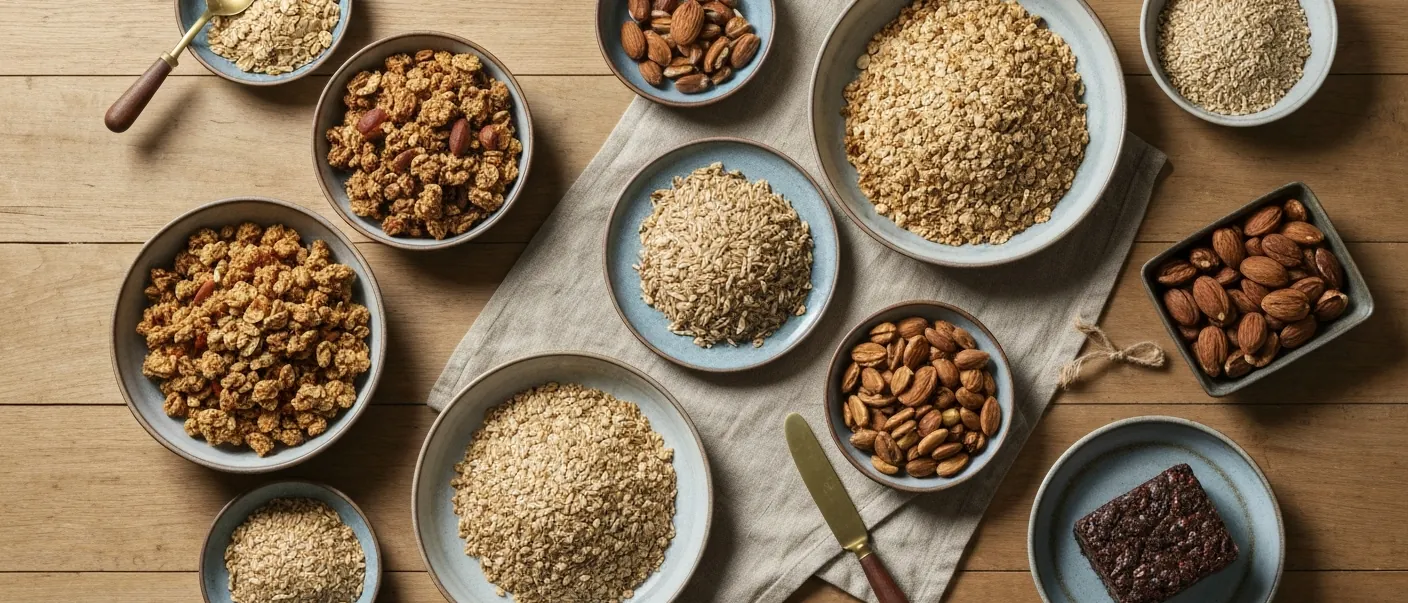
There is a meaningful difference between food that is naturally gluten-free and food that is certified gluten-free, and it matters enormously if your recipient has coeliac disease rather than a general preference for avoiding wheat. Oats are the classic example: nutritionally gluten-free, but processed in facilities so frequently shared with wheat that they trigger reactions in many coeliac sufferers unless specifically certified.
For coeliac recipients, look for the crossed grain symbol or an equivalent certification — not just an absence of wheat in the ingredients. Naturally safe categories include whole foods in sealed packaging: good honey, fruit preserves, spice blends (check for anti-caking agents), single-estate olive oils, and most quality confectionery that is not baked. For non-coeliac gluten sensitivity, the bar is lower, but ask before you assume.
Dairy-free and nut-free: the hidden-ingredient problem
Dairy turns up in places that routinely surprise people: crisps, dark chocolate, some margarines, certain tinned soups, and a wide range of biscuits and crackers. "Dairy-free" as a claim is not legally standardised in the same way that allergen labelling is, so read the allergen panel — the bold-type ingredients in the list, or the "contains" box — rather than relying on any front-of-pack claim.
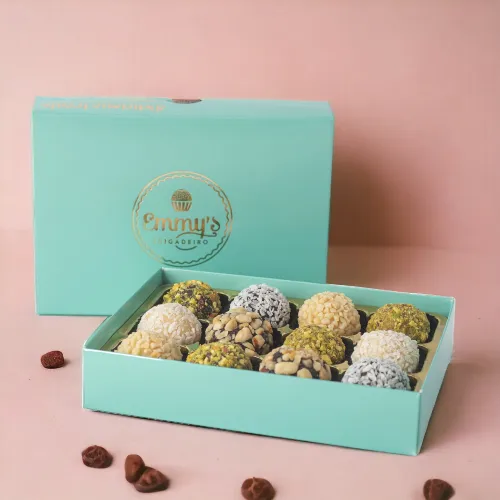
Nut allergies require the most caution of any category here, because the consequences of getting it wrong can be severe. Even products containing no nut ingredients may carry a "may contain nuts" or "made in a facility that handles nuts" advisory, and for someone with a serious allergy, that advisory is a genuine risk flag, not a formality. Safe categories for nut-free gifting include fruit preserves, most condiments, tea and coffee, and plain dried fruit (check the label). Avoid gifting anything from a chocolatier or bakery unless you can confirm directly with the producer that nut cross-contact is controlled.
Alcohol-free gifting has improved considerably
Alcohol-free is one of the easier requirements to accommodate well, and the category has grown in both quality and range. Botanical soft drinks, non-alcoholic spirits designed for sipping or mixing, premium fruit cordials, loose teas, and good coffee all make genuinely satisfying gifts that feel considered rather than compensatory.
One thing to check: "low-alcohol" and "alcohol-free" are not the same thing. In the UK, alcohol-free means no more than 0.05% ABV; low-alcohol covers anything up to 1.2% ABV. For someone who avoids alcohol for religious or health reasons, or during recovery, the distinction is real. Read the small print on the label, not just the front-of-pack description.
Across all these categories, the principle is the same. Dietary-conscious gifting is not restrictive — it requires choosing with a little more precision. A single well-chosen jar, correctly labelled, is a far better gift than a hamper full of things your recipient has to sort through and discard.