A different kind of bread country
Travel across Britain and the bread you encounter is almost always yeasted and oven-baked: a tin loaf, a sourdough, a cottage or a bloomer. Cross into Northern Ireland and the logic shifts entirely. Here the raising agent is bicarbonate of soda, the liquid is buttermilk, and the cooking surface is a flat iron griddle rather than an enclosed oven. The results — soda farls, wheaten bread, potato bread — are softer, quicker and far more perishable than anything produced by a yeast-and-heat process. Eaten fresh and still warm, they are something else altogether.
These breads are not a regional quirk preserved for tourists. They remain everyday staples, bought from local bakeries and supermarkets in quantities that would surprise visitors from elsewhere. Ulster's relationship with the griddle is embedded in domestic life in a way that has no real equivalent in England, Scotland or Wales.
Why the griddle, and why it stuck
The answer lies in the open hearth. For most of Ulster's rural history, domestic cooking happened over a turf or peat fire rather than inside a closed range. A griddle — a heavy, flat iron plate suspended over the flames — was the practical solution. You could bake directly on it without managing the contained, regulated heat an oven demands. Bicarbonate of soda reacts with the acidity of buttermilk to produce carbon dioxide quickly; the dough rises fast and needs no proving time. The whole process suits an open fire far better than any yeast-based method.
When closed ranges and later gas and electric cookers arrived, the tradition was already too embedded to dislodge. Families kept making bread the same way because it worked, because it tasted right, and because the ingredients — wholemeal flour, buttermilk, potatoes — were always to hand. The chemistry of soda and buttermilk is forgiving in a way that yeast never quite is, which gave home bakers a confidence that yeast-based baking rarely affords.
The breads themselves
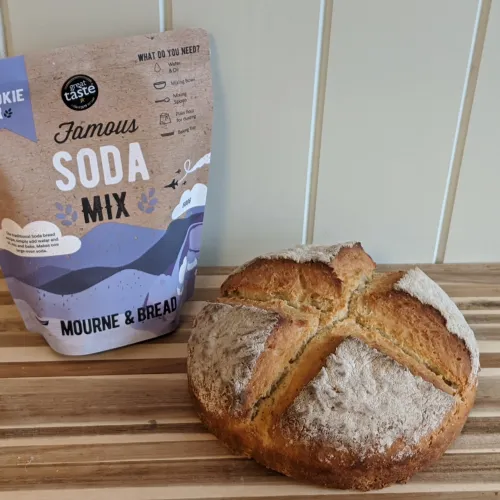
Soda farls are the most immediately recognisable. A round of soda bread dough is divided into four quarters — farls, from the Scots word for a fourth part — and cooked directly on the griddle. The outside develops a pale, floury crust with characteristic scorch marks; the inside stays soft and slightly dense. Eaten fresh with butter melting into the cut face, they need nothing else. Left even a day, they begin to dry and lose that particular tenderness, which is why a good local bakery matters here more than almost anywhere.
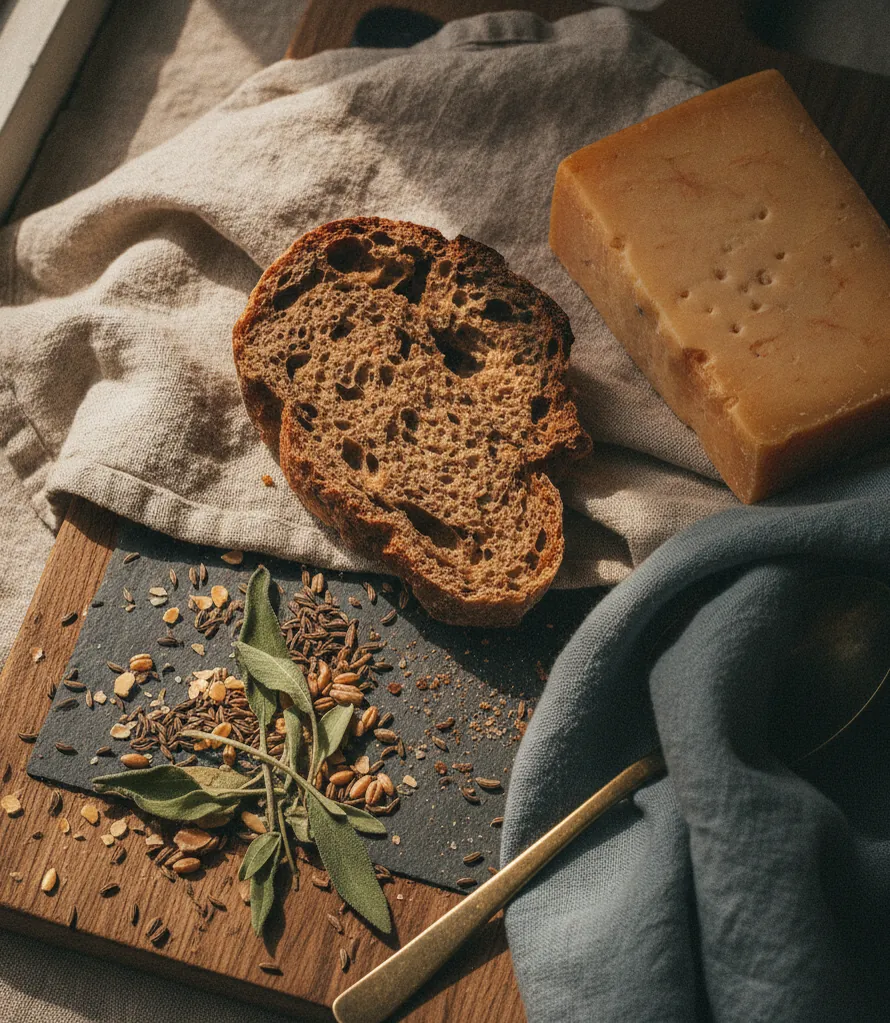
Wheaten bread uses stoneground wholemeal flour with buttermilk and soda, producing something darker and nuttier than a white soda farl. It is often shaped as a round loaf rather than cut into farls, though griddle versions exist. The crumb is open and slightly crumbly, with a flavour that reflects the whole grain in a way refined white flour cannot match.
Potato bread — sometimes called fadge — is its own category. Mashed potato is combined with a small quantity of flour, rolled very thin and cooked on the griddle until golden patches appear on each side. The potato content makes it denser and moister than any flour-based bread; the flavour is mild and slightly earthy. It goes stale faster than almost anything else in the baker's repertoire, so it is almost always eaten the day it is made.
Thick buttermilk pancakes complete the repertoire, though they lean towards breakfast or tea rather than the full fry.
The Ulster fry and beyond
All of these breads converge in the Ulster fry, which assembles soda farls, potato bread and sometimes wheaten alongside the cooked meats and eggs of the full breakfast. We have written separately about the Ulster fry and what distinguishes it from other full breakfast traditions across these islands. What matters here is that the fry did not create a market for these breads; the breads already existed and the fry simply recognised what was already good. The griddle marks on a farl fried briefly in bacon fat are not an affectation — they are the logical end point of a cooking culture that has used the same surface for generations.
Outside breakfast, soda and wheaten bread appear wherever you might otherwise reach for a sandwich loaf: with smoked salmon, with chowder, with a wedge of aged Cheddar. Potato bread, slightly crisped on a pan, sits under a poached egg as naturally as an English muffin does elsewhere.
Finding the real thing
Most good Ulster bakeries produce these breads daily — turnover is fast enough that freshness is rarely an issue if you buy locally. A few producers now ship farls and potato bread chilled across the UK, vacuum-packed to extend the window slightly, though something is inevitably lost in transit. Farmers' markets and food festivals across Northern Ireland remain reliable places to find bread made with buttermilk from a known source and wholemeal flour that hasn't sat in a warehouse. If you are visiting, asking a local bakery what came off the griddle that morning is never a wasted question.