A county shaped by water
The north coast and Lough Foyle have long been the county's most productive stretches of food-producing country. Salmon run the rivers here, and the lough itself yields shellfish — the kind of catch that has sustained fishing communities for generations rather than decades. Eels, too, are part of this watery inheritance. The Lough Neagh fishery just over the county's southern boundary is the largest wild eel fishery in Europe, and its influence on the wider Ulster table is hard to overstate; if you want to understand what that trade looks like, our Lough Neagh Eels piece goes into the detail.
The Bann and Roe valleys, running inland from the coast, shift the register from sea to soil. Both are serious arable country — the kind of flat, fertile ground that produces good grain and, crucially, very good potatoes. In a county where the potato has shaped the diet for centuries, these river valleys remain the engine room.
Upland meat and the Sperrin hills
The Sperrin Mountains occupy the county's interior, and they do what uplands across Britain and Ireland do best: produce beef and sheep reared on rough, herb-rich pasture. The flavour of hill-grazed lamb in particular carries a depth that lowland meat rarely matches — the animals work harder, eat more widely, and it shows on the plate. Sperrin beef follows a similar logic: slower, more traditional rearing on grass rather than grain.
Northern Ireland as a whole has built a strong case for the quality of its grass-fed meat, and the county's upland farms sit squarely within that story. Several Northern Irish food products carry protected status at a UK level, and while the designations shift with regulation, the underlying principle — that provenance and method matter — is one County Londonderry producers have long understood.
The bread tradition, denser here than almost anywhere
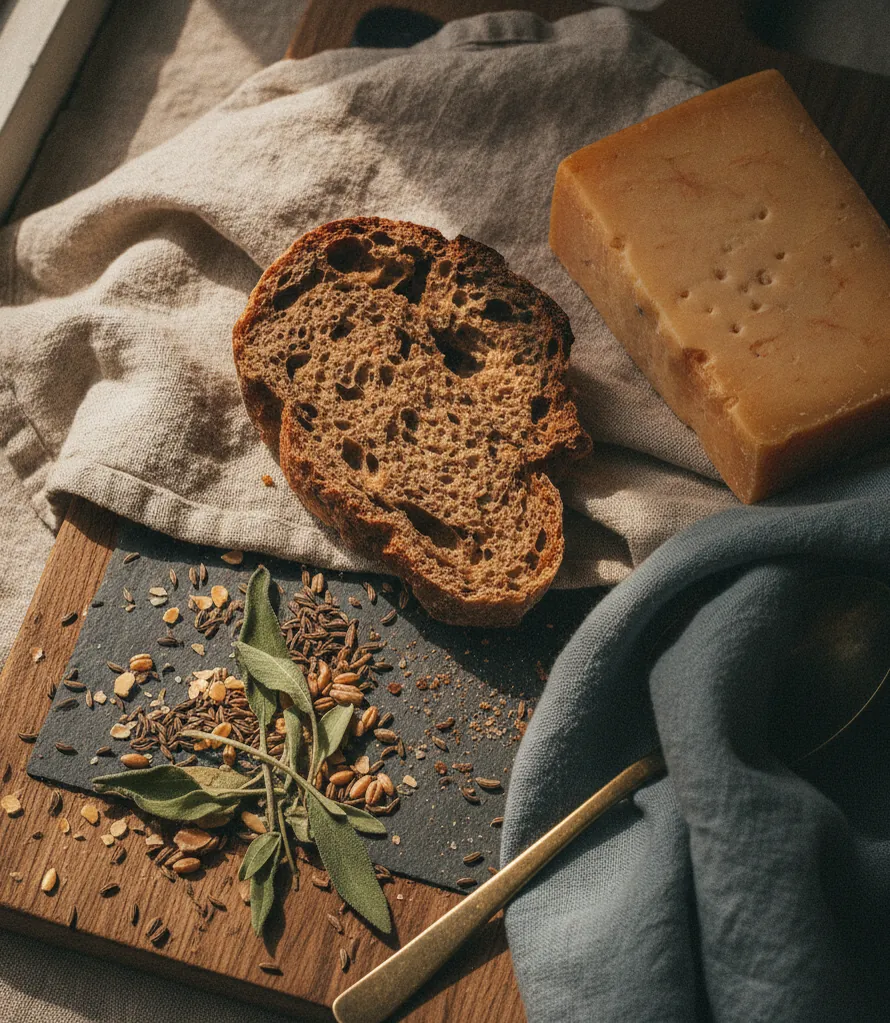
If there is one thing that genuinely distinguishes the county's food culture from much of the rest of Britain, it is bread — specifically the concentration of Ulster's soda-leavened baking tradition that you find here. Soda farls, wheaten bread and potato bread are not museum pieces or novelty items; they are everyday staples, bought from bakeries and made at home with a familiarity that has never really wavered.
The Ulster fry brings them together on a single plate in a way that is quite different from a full English or a Scottish breakfast. Potato bread and soda farls, cooked on a griddle or in the pan, sit alongside bacon, egg and sausage — it is an assembly of things that are each made, not processed, and the bread is as central as any of the meat. We cover the history and the distinctions of this tradition in more depth in our Ulster Bread article, but County Londonderry is as good a place as any to understand why it matters.
Derry city and the market culture
Derry city has a covered market tradition with real roots — not a pop-up or a weekend reinvention, but a sustained, established part of how the city feeds itself. That foundation has supported a broader market and street-food culture that continues to grow around it. Independent producers from across the county and beyond bring their goods in, and the result is one of the more interesting food-buying environments in Northern Ireland.
Street food in Derry leans on the county's own larder in the best cases: local beef, shellfish from the coast, baked goods that carry the soda-bread tradition forward in new directions. It is a city that has learned to talk about its food with more confidence in recent years, and the market scene is where that confidence is most visible.
What holds it together
County Londonderry's food identity does not rest on a single famous product the way some counties do. What it has instead is coherence — a landscape that moves logically from coast to valley to upland, each zone producing something that makes sense in the context of the others. Salmon and shellfish from Foyle, grain and potatoes from the Roe and Bann, lamb and beef from the Sperrins, and a bread culture that ties the whole county's table together. That kind of joined-up larder is rarer than it looks.