A county shaped by its landscape
Denbighshire sits in north-east Wales where the land shifts between two worlds: the broad, well-watered Vale of Clwyd and the upland country climbing into the Clwydian Range to the east. That contrast — lush valley floor, windswept hill pasture — explains what gets grown and reared here, and why the county's food has a character distinct from coastal or south Welsh traditions.
The Vale of Clwyd is mixed-farming country: hedgerow-edged fields, old orchards, livestock on good grass. The uplands are sheep country, as they have been for centuries. Between them, they produce ingredients that local makers and cooks have long known how to use well.
The Denbigh plum
If the county has a single signature food, it is the Denbigh plum. This is not merely a local variety with a local name; it carries protected status that recognises its specific character and ties it firmly to this part of Wales. The harvest comes in October — later than most European plums — which gives it a depth of flavour that sets it apart from the ubiquitous Victoria. The skins tend towards dark purple, the flesh is firm and moderately sweet, and the fruit holds together well whether eaten fresh or cooked into preserves.
For much of the twentieth century the Denbigh plum was close to disappearing, with old orchards grubbed out and the variety largely forgotten outside the immediate area. Its recovery is an ongoing story, and the protected status has helped anchor both growers and public awareness. We have covered it in full in our dedicated article — worth reading alongside this one for the detail of what makes it so particular.
Vale of Clwyd lamb and beef
The valley pastures support both cattle and sheep. Vale of Clwyd lamb, grass-fed on river-meadow grazing, tends to be mild and well-marbled without the intense gaminess that hill lamb can carry. The beef from the same country follows a similar logic: unhurried growth on good pasture produces meat that rewards straightforward cooking.
Welsh hill farming above the valley tells a different story. Lambs raised on the Clwydian Range graze rough, herb-rich upland vegetation, producing leaner, more assertively flavoured meat. Both traditions have their advocates, and in the county's butchers and farmers' markets you will often find both side by side — a useful reminder that Welsh lamb is not a single thing but a spectrum shaped by altitude and ground.
Honey, preserves and hedgerow produce
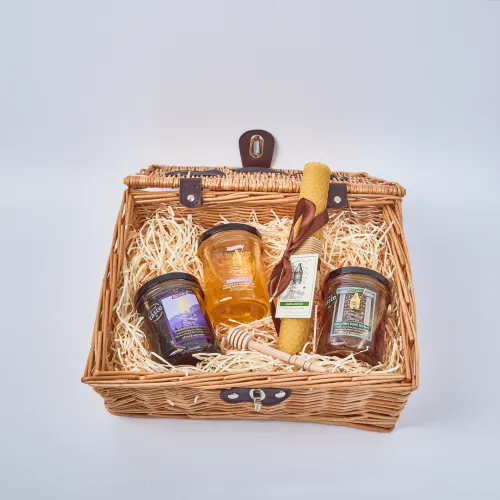
The dense boundaries of hawthorn, blackthorn, elder and wild fruit dividing the Vale support beekeeping and small-batch preserve-making that rarely travels far beyond the county. Hedgerow honey here can carry notably floral notes depending on the season, reflecting the diversity of flowering plants in an agricultural landscape that has not been entirely rationalised. Elderflower cordials, sloe gins, crab apple jellies and bramble preserves are the kind of produce you find at farm gates and market stalls rather than in supermarkets — which is precisely why they are worth seeking out.
The Denbigh plum feeds naturally into this preserve-making tradition. Plum jams and chutneys made from the October harvest appear each autumn, and a good one — made with fruit from an established local orchard — has a richness that commercial plum products rarely approach.
Market towns and food culture
Ruthin, Denbigh and Llangollen are the county's main market towns, and all three have food cultures worth knowing about. Ruthin has a long market tradition and its farmers' market draws producers from across the vale and the surrounding hills. Llangollen, on the River Dee at the county's southern edge, sits at a crossroads that has always brought visitors through; its food festival draws producers and traders from across north Wales — check the official festival sites for current dates before you plan a visit.
Welsh baking is woven into everyday life across Denbighshire as it is across Wales broadly. Bara brith and Welsh cakes are made in homes, bakeries and cafés throughout the county; we have written about both at length elsewhere. Denbighshire, with its strong chapel and farmhouse baking tradition, is as good a place as any to find them made with proper care.
What holds these threads together is not a single celebrated dish or a formal regional cuisine, but a landscape farmed thoughtfully for a long time. The Denbigh plum is the most vivid expression of that — a fruit so tied to a specific place that it earned legal protection — but the lamb from the valley floor, the honey from the hedgerows, and the market culture in the old towns all point to the same underlying story.