A county of distinct landscapes
Moray occupies a sheltered corner of north-east Scotland, caught between the Cairngorm uplands to the south and the Moray Firth coastline to the north. That contrast — high grazing land dropping to fertile lowland straths and then to the sea — gives the county its food character. Few Scottish regions manage such variety within a compact area.
The climate here is, by Scottish standards, unusually dry and sunny. The valley floors and coastal plain support arable farming that would surprise anyone who assumes the north of Scotland is all bog and heather. Barley grows well in these conditions, which has long shaped what Moray produces and what it is known for.
Farming the straths and glens
The lower ground around the River Spey and its tributaries carries a productive mix of dairy and arable farming. Cattle are a constant presence — on the richer lowland pastures and on the rougher ground further upland, where hill breeds graze open moorland. Slow growth on a varied, grass-based diet produces beef with depth of flavour, the sort that independent butchers in the market towns take some pride in sourcing locally.
Elgin is the county town, and like other Moray market towns it serves as a hub for the surrounding agricultural community. These towns support a modest but genuine network of farm shops, butchers and local food businesses that reflect the region's farming base rather than chasing food trends.
The coast and its catch
Along the Moray Firth, fishing has shaped communities for generations. The harbours of the north-east Scottish coast were once among the most productive in Britain, particularly for herring. The industry is a fraction of what it was, yet fishing remains part of local identity. Smaller boats still work these waters, landing white fish and shellfish that reach local fishmongers and restaurants.
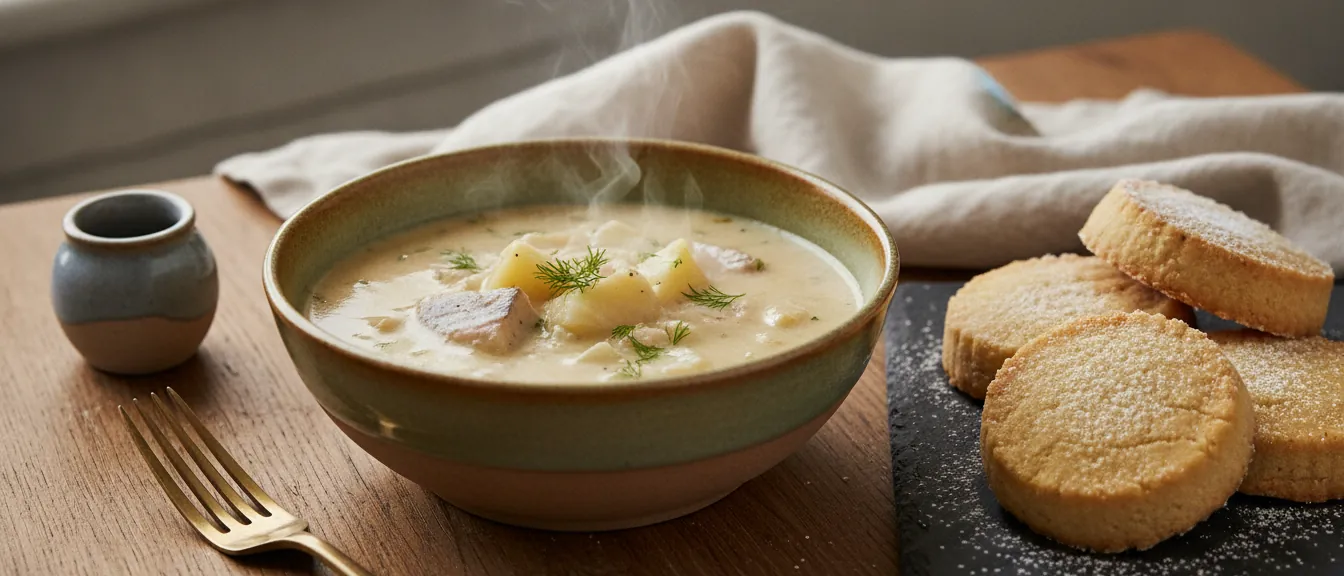
The Moray Firth's resident bottlenose dolphins are a reminder that these are rich, cold, well-oxygenated waters — conditions that produce good fish. Smoked fish has a long tradition across the north-east Scottish coast, and smoking haddock and other catches in the traditional manner persists in the region, even if fewer producers now do it.
Whisky and the landscape it needs
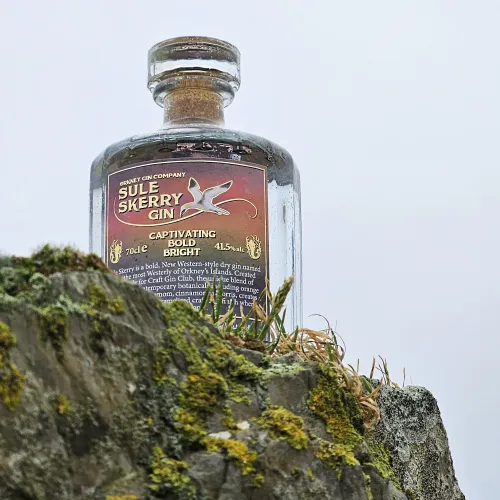
Moray contains a remarkable concentration of Scotch whisky distilleries. The Speyside region, which sits largely within Moray, is celebrated for single malts that tend toward the elegant, fruited end of the flavour spectrum — though styles vary considerably from one distillery to the next. Locally grown barley, soft water from Highland springs and burns, and accumulated craft knowledge all feed into what comes out of the cask.
Whisky tourism draws visitors to the county in a way that few other food or drink industries manage. Distilleries range from large, well-resourced operations to smaller, more characterful ones. The Malt Whisky Trail — a self-guided route through the area — is usually held open throughout the season; check the official site for this year's dates and access details.
What to look for as a visitor
Moray rewards anyone who goes looking for food that is direct and unfussy. Local butchers stocking properly hung beef, fishmongers with connections to the Firth's working boats, farm shops selling dairy from surrounding farmland — these are the things that make the county's food culture worth seeking out.
Farmers' markets and local food events, particularly in and around Elgin, bring together a cross-section of what the county actually produces. Check locally for current market days and seasonal events. Whisky aside, Moray is not loudly famous for any single dish or product — but that is, in a sense, its strength. The larder is broad, the sourcing is close, and the cooking traditions are grounded in what the land and sea here actually provide.