A dish that defies a single birthplace
Chicken tikka masala occupies a peculiar position in British food culture: simultaneously one of the most ordered dishes in the country and one of the most argued-over. Ask where it came from and you will get different answers — and that disagreement reflects something genuinely unresolved.
The most prominent British claim traces the dish to Glasgow, where a restaurateur is said to have added a sauce of tinned tomatoes and cream to chicken tikka after a customer complained the dish was too dry. The story rang true enough to earn the dish an unofficial Scottish identity for a while, and Glasgow's curry mile took pride in it. The claim has never been proven, and it has never gone unchallenged.
What the dish actually is
Chicken tikka masala begins with chicken tikka: pieces of chicken marinated in yoghurt and spices, cooked in a tandoor oven until they carry some char and smoke. That element is unambiguously of South Asian origin. The masala — the sauce — is where the questions start.
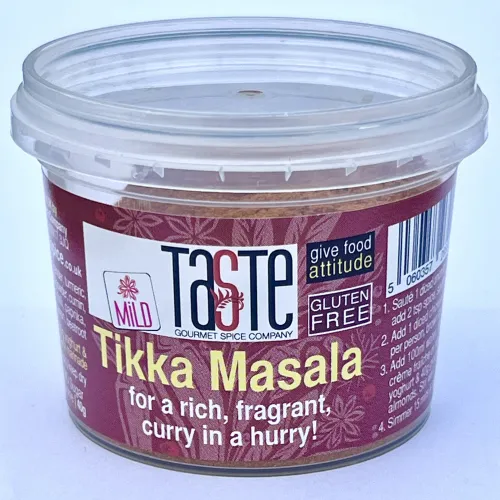
The sauce is built around tomatoes, cream, and a spiced base that typically includes cumin, coriander, paprika, and garam masala. The result is rich, mildly spiced by subcontinental standards, and balanced between sweet acidity and dairy fat. Some food historians argue that its approachability is itself evidence of British influence: the sauce softened what is already a relatively mild preparation to suit an audience enthusiastic about curry but not always comfortable with heat.
The relationship with butter chicken — murgh makhani — is worth understanding. Butter chicken is an older dish from northern India built on a similar framework of tomato, cream, and warm spice. Some argue that chicken tikka masala is essentially a British interpretation of butter chicken, the tandoori chicken adapted and the sauce recalibrated for a different market. Others maintain the two dishes are distinct enough that the comparison obscures more than it clarifies. Both have ardent defenders.
What it says about British curry culture
Chicken tikka masala did not emerge from nowhere. It arrived during decades of rapid expansion in British South Asian restaurants, many run by Bangladeshi and Pakistani families who shaped the "Indian restaurant" format that became a fixture of every British high street. Those menus were a creative hybrid — sauces adjusted, new dishes invented to suit local appetite. Chicken tikka masala fits that pattern whether it was first made in Glasgow, Birmingham, or somewhere on the subcontinent before being popularised here.
We have written elsewhere about the balti, another dish whose precise origins remain contested but whose identity is bound up with a specific British city and a specific wave of restaurant culture. The pattern repeats: a dish becomes iconic, a place claims it, the claim attracts scrutiny, and the scrutiny reveals something more interesting than a clean origin story — a process of exchange and adaptation that no single anecdote can contain.
That exchange was not always equal. South Asian cooks and restaurateurs did much of the creative work while the dishes were often framed in the popular imagination as simply "Indian food" — a flattening that ignored the extraordinary regional and cultural range of the subcontinent. Chicken tikka masala's rise happened within that context, which makes it both a story about culinary creativity and a story about how Britain chose to receive and describe it.
The Glasgow claim, assessed honestly
No one has produced definitive evidence for any single point of invention. The Glasgow story has been repeated often enough to carry cultural weight, and it is plausible — the kind of practical improvisation it describes happened in restaurants across Britain throughout the latter half of the twentieth century. But similar tomato-and-cream spiced dishes existed in India before the dish became famous here, and the burden of proof for a specific origin has never been met.
What can be said with confidence is that chicken tikka masala, whatever its precise origin, became distinctly British in its appetite. It was embraced, standardised, and eventually sold in supermarket jars and airline meals in a way that few dishes still tethered to a single country's tradition quite manage. That process of adoption — messy, affectionate, commercially driven — is its own kind of history.