A county that lets its produce do the talking
Shropshire sits in the Welsh Marches, that broad border country where England softens into something wilder. Hill farms, river valleys, and ancient woodland shape what gets grown and made here more directly than in most English counties. The food culture is genuinely rooted rather than performed, which makes knowing where to look all the more satisfying.
The county's producers tend to be small, selling at local markets or through farm shops rather than into supermarket supply chains. That's partly geography — Shropshire is rural in a serious way — and partly disposition. Eating well here still feels like discovery.
Shrewsbury biscuits and what they actually are
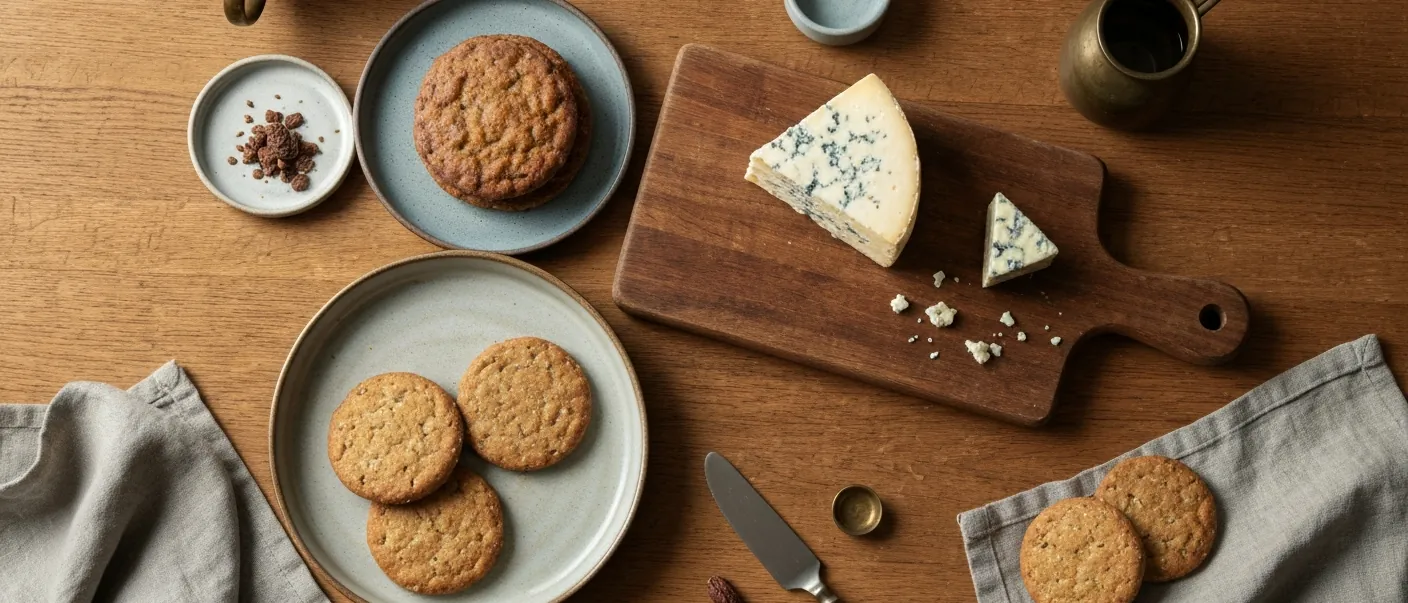
The Shrewsbury biscuit is probably the county's most widely known speciality, and also one of the most frequently misunderstood. These are not the thin, snappy biscuits of most British tins. A proper Shrewsbury is thick, short, and buttery — closer to a rich shortbread than a cracker — traditionally flavoured with spice, sometimes rosewater, occasionally dried fruit. The texture should be crumbly rather than crisp.
The recipe is an old one, associated with the town long enough that it appears in historical cookery writing across several centuries. Different bakers have their own versions, some leaning sweeter, some more spiced, and there is no single protected standard — so quality varies considerably depending on where you buy. The best are still found at independent bakers in and around Shrewsbury itself, not from generic gift shops.
Shropshire Blue — the cheese that borrowed a name
Shropshire Blue is not, and arguably never was, a Shropshire cheese. It was developed in Scotland, then produced for some years in Nottinghamshire, before the industry largely settled in Leicestershire and Nottinghamshire — the same creameries that make Stilton. Yet the name stuck, and the cheese is now firmly part of how the county is understood from the outside.
What distinguishes it from Stilton is colour. Shropshire Blue is dyed with annatto — the same natural colouring used in Red Leicester — giving the paste a deep amber-orange that makes the blue-green veining visually striking in a way Stilton simply is not. The flavour is generally milder and creamier than Stilton, with less mineral sharpness.
Whether Shropshire should feel aggrieved or quietly pleased about this arrangement is open to debate. The cheese carries the county's name to delicatessens and cheesemongers across Britain and beyond — not a bad kind of accidental ambassadorship. Seek it out on a British cheeseboard alongside something with more acidity, or eat it simply with good bread and a piece of fruit.
Ludlow and the market town food tradition
Ludlow's reputation in British food circles rests on its food festival, which drew serious attention to the town and helped establish a broader culture of independent producers, restaurants, and specialist food shops in the area. The festival — usually held in September, though check the official site for this year's dates — was among the earliest of its kind in England, and its influence on how small food festivals are organised elsewhere has been considerable.
Beyond the festival, Ludlow functions as a market town in the proper sense: a place where the surrounding agricultural countryside meets buyers who want to know where their food comes from. The produce market and the permanent independent shops reflect the quality of what is grown in the surrounding hills and valleys. It rewards a slow visit rather than a rushed one.
Wenlock Edge and the landscape behind the food
Wenlock Edge is a long limestone escarpment running diagonally across the county. It shapes drainage, soil type, and therefore what grows well. The land around it supports sheep farming, orchards, and market gardening in a way that more intensively farmed counties often do not. Small producers working these slopes tend to grow for flavour rather than yield, partly because the land demands it and partly because their markets — farmers' markets, local restaurants, direct sales — reward it.
The broader Shropshire countryside follows a similar pattern: a county where geography has, almost by accident, preserved agricultural diversity that more accessible or heavily developed counties have lost. That is what gives Shropshire food its particular character — less a defined regional cuisine than a collection of honest, well-made things that taste strongly of where they come from.