The crab that made Cromer famous
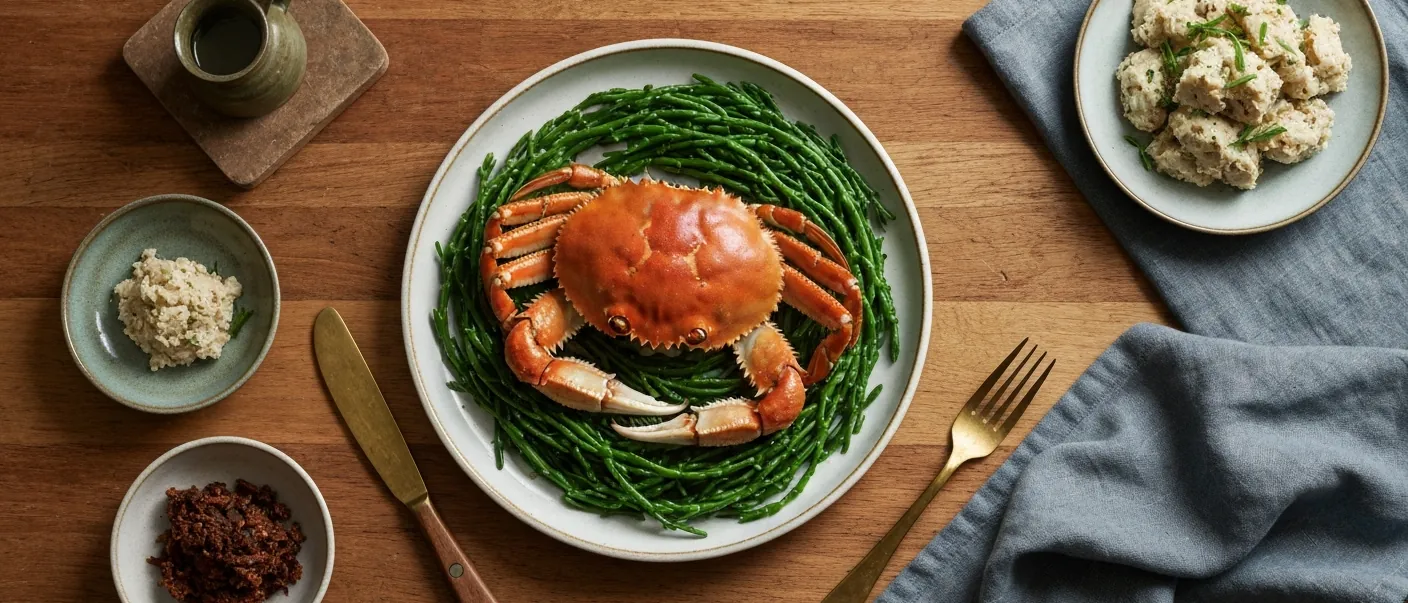
Ask anyone with a passing interest in British seafood and Cromer will come up within moments. The brown crabs landed here are smaller than those caught further along the coast, but that compact size concentrates the flavour. The ratio of white to brown meat is generous, and local fishermen — many from families who have worked the same stretch of sea for generations — bring them in using small boats launched directly from the beach. Dressed Cromer crab, served simply with brown bread and a squeeze of lemon, is the classic preparation, and for good reason.
The season runs roughly from spring into autumn, with the sweetest crabs generally those caught in the warmer months. Buying directly from a crab stall in Cromer is still very much possible and, in our view, the right approach if you find yourself on the North Norfolk coast.
Samphire from the salt marshes
Norfolk's coastline produces more than crab. The salt marshes fringing the north coast are rich in marsh samphire — the glassy, bright-green coastal plant gathered here for centuries. It is sometimes called glasswort, a name pointing to its historical use in glass-making, but its culinary identity is entirely its own.
Raw samphire is intensely salty and slightly astringent. Briefly blanched or steamed, it softens into something tender and brine-sweet, pairing naturally with the fish and shellfish it grows alongside. In Norfolk it appears on menus from early summer, bundled on market stalls and in farm shops through the season. Seek it out fresh rather than jarred: the texture and colour are in a different category entirely.
Colman's and the mustard tradition
Norwich is home to one of Britain's most recognisable condiment stories. Colman's built its name on a finely milled, sharp English mustard powder that became a fixture of the British kitchen — and, through export, of tables far beyond these islands. The double superfine milling gave the powder its characteristic heat and vivid yellow colour, and was a point of real distinction.
The mustard tradition has shaped how Norfolk approaches food more broadly: sharp, direct, unfussy. English mustard made in the Colman's style remains one of the few condiments that can genuinely transform cold beef or a cheese sandwich rather than merely accompany it.
Turkey and the farming tradition
Norfolk has reared turkeys since long before the bird became synonymous with Christmas. The county's farmers developed a reputation for slower-grown, traditionally reared birds — breeds carrying more flavour and a firmer texture than intensively produced alternatives. Norfolk Black and Bronze turkeys are among the varieties that have made the county's name in this respect.
Historically, birds were walked to London markets over many weeks, fitted with small leather boots to protect their feet on the drove roads. That detail says something about how seriously the trade was taken. Today, Norfolk free-range turkeys are sought by cooks who want the bird to be the centrepiece rather than a background protein.
Norwich market and the wider food culture
Norwich has one of the largest and oldest open-air markets in England. It operates six days a week in the city centre, and its stalls have always reflected the county's produce: local cheeses, fresh fish, seasonal vegetables, and the kind of straightforward food that feeds a working city rather than performing for visitors.
The market repays a visit not only for what you can buy but for what it reveals about how Norfolk eats. There is relatively little pretension. Good raw ingredients, sold by people who know them, is the consistent logic — one that runs through the county's food identity from the crab boats at Cromer to the mustard mills of Norwich.