A landscape that shapes what people eat
Newport sits at the mouth of the River Usk, where it joins the Severn Estuary — one of the most dramatic tidal ranges in the world. The broad, fertile lowlands of Gwent, fanning out behind the city, have supported mixed farming for centuries, while the estuary itself has always provided a harvest of its own.
Monmouthshire — the county of which Newport is the principal city — is predominantly pastoral. Dairy farming runs through the gentler valleys; beef cattle graze the lower slopes; and where the land rises towards the Brecon Beacons National Park boundary, sheep take over. This is countryside that produces good milk, good meat and, on smaller holdings, decent kitchen gardens.
The estuary and its catch
Few things are more particular to this stretch of Wales than the fishing traditions of the Severn Estuary. Communities along these mudflats developed highly specific methods for working with the enormous tides, using fixed putcher traps and basket weirs to catch migratory fish — most notably salmon and elver, the tiny juvenile eels that once ran up the Usk and Wye in considerable numbers each spring.
Elvers were a genuine local food, eaten fried or potted, taken seriously in the way that only something caught practically on your doorstep ever is. The fishery has diminished sharply, but the tradition remains part of the area's food identity. The Wye, marking the eastern edge of Monmouthshire along the English border, was similarly celebrated for its salmon — a fish that still matters here, even if landed quantities have changed.
Market towns and the producer network
Abergavenny, the most prominent of Monmouthshire's market towns, has long served as a commercial centre for local produce. Its food market is well regarded among those who follow such things seriously, and the town draws independent food producers from across the region. Seasonal farmers' markets elsewhere in the county give smaller dairy, meat and vegetable producers a direct route to customers, bypassing the supermarket entirely.
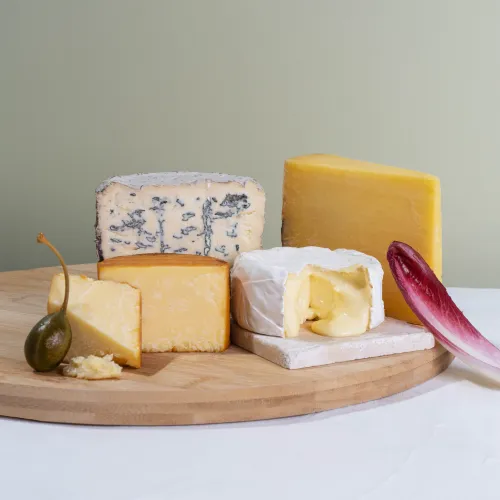
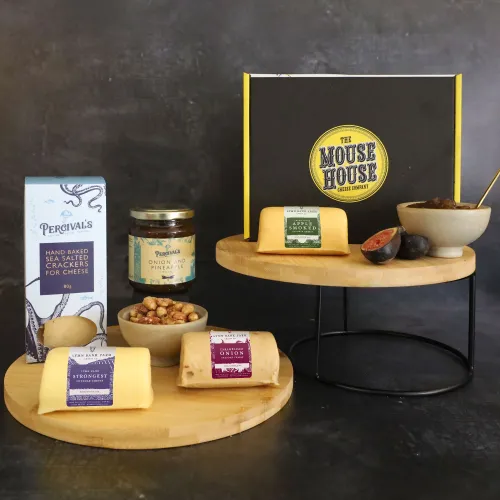
The producers you find at these markets reflect the farming character of the land: raw-milk cheeses from small dairies, rare-breed beef and lamb from upland farms, preserves and chutneys built around orchard fruit that grows well in the sheltered valleys. Monmouthshire's relative shelter compared with higher ground to the north makes soft fruit and apple orchards a credible part of the agricultural picture.
Food culture in a border county
Monmouthshire spent centuries in an ambiguous position — at times administered as part of England, at times clearly Welsh — and that border quality still shapes its food culture. Laverbread, the intensely savoury preparation of dried seaweed that is as Welsh as anything, sits comfortably alongside products that would be equally at home across the River Wye. It is a county at ease with both identities.
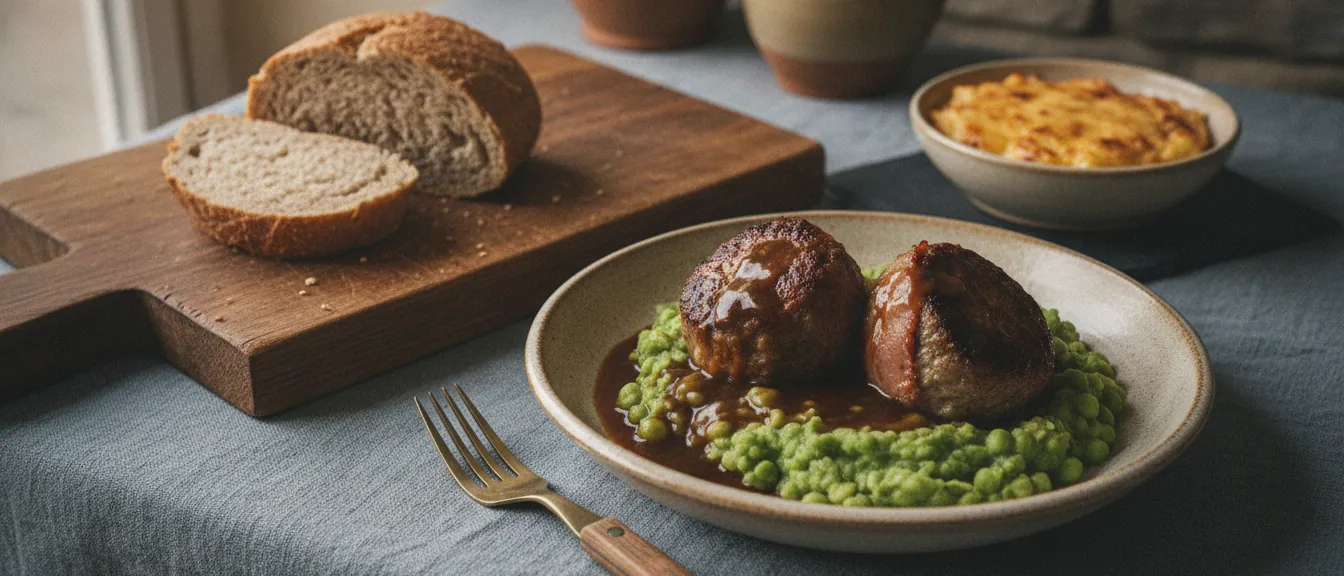
Lamb runs through Welsh cooking as a whole. From the upland grazing around the county it tends to carry the depth of flavour that comes from slower growth on rough pasture — the kind of meat that needs very little done to it. Leeks, the national vegetable, appear in farmhouse cooking from simple to elaborate, always grounded in respect for the ingredient itself.
Where to find what the county makes
The best route into Newport and Monmouthshire's food character is through markets and farm shops rather than restaurant menus. What the county makes well tends to be sold close to where it is produced. Abergavenny's food festival, usually held in September, draws producers from across the region — check the official site for this year's dates, as arrangements vary.
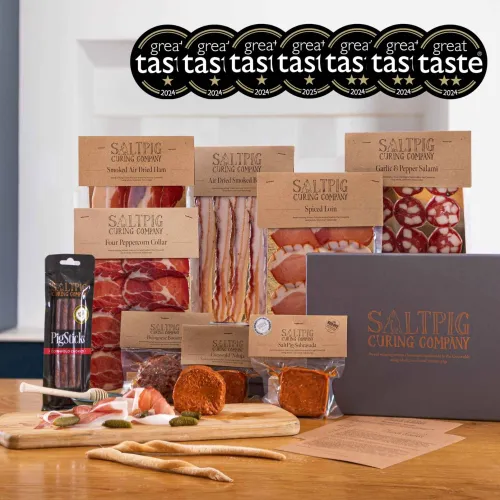
Independent delis and farm shops scattered through the county's villages are worth seeking out, particularly for cheese and charcuterie from smaller producers with no wider distribution. This is food that does not travel far by design.