A question of texture, not vocabulary
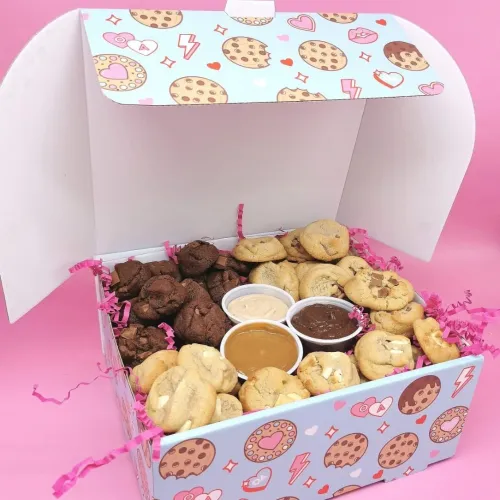
Ask a British baker for a biscuit and you'll receive something that snaps cleanly, holds its shape on a plate, and goes crisp with tea. Ask for a cookie and what arrives is wider, softer, with a yielding chew at the centre and usually studded with chocolate, nuts or dried fruit. The two things look related but eat quite differently.
That difference is structural. A biscuit's crispness comes from low moisture and a bake taken far enough that all steam escapes. A cookie is often pulled from the oven while the centre is still slightly underdone, allowing it to firm to a chew rather than a snap. A higher proportion of brown sugar — more hygroscopic than white — and melted rather than rubbed-in butter keep the crumb dense and soft. These are not the same baked good in a different wrapper.
Where the American biscuit fits in
The confusion sharpens when you cross the Atlantic. In the US, biscuit means a soft, leavened bread roll, closer to a British scone, eaten alongside savoury food. An American walking into a British tea shop and asking for biscuits might expect bread and receive a tin of digestives. Both sides have been using the same word for unrelated things long enough that neither finds it remarkable.
The American-style cookie — soft, chunky, generous — arrived in Britain during the latter decades of the twentieth century, carried by fast-food chains, imported grocery products and the spread of American food culture. Before that, the British baking tradition ran firmly towards the crisp end of the spectrum. Shortbread, ginger nuts, custard creams, bourbons, digestives: these tin staples all share the defining quality of snapping rather than bending, and they shaped what British bakers and buyers expected a biscuit to be.
The Jaffa Cake ruling and what it reveals
The most telling illustration of how seriously Britain takes biscuit taxonomy is the legal dispute over Jaffa Cakes. The argument was precise: a biscuit goes soft when stale, while a cake goes hard. Jaffa Cakes harden with age — behaving like cakes — and the tribunal agreed. A tax classification turned on the texture science of aged baked goods. It sounds absurd until you think it through, at which point it becomes entirely sensible.
The same logic applies to the biscuit-cookie divide. Softness in a cookie is intentional and structural, baked in from the start. Softness in a biscuit is a sign of age, humidity or a tin left open too long. One is a feature; the other is a fault. The two categories have fundamentally different relationships with moisture.
What the biscuit tin tells us
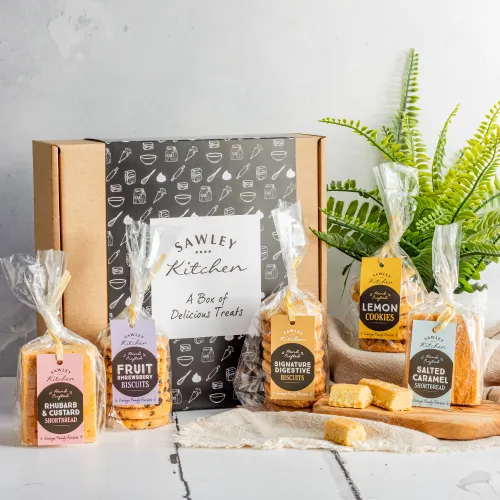
The British biscuit tin is a cultural institution in a way the cookie jar is not. Digestives — slightly wheaten, lightly sweet — remain one of the country's great everyday biscuits, plain for dunking or chocolate-coated for a small treat. Shortbread, particularly associated with Scotland, is richer and more buttery, with a sandy crumble. Custard creams and bourbons are sandwich biscuits, the filling a soft contrast to the crisp shell. Ginger nuts are the hardest and most snappable of all, a challenge even to a confident dunker.
None of these would be called cookies in common British usage, and rightly so. They belong to a tradition that values precision of texture, long shelf life and a certain restraint. The cookie — American in origin, increasingly British in adoption — now sits alongside them on the same supermarket shelves without having replaced them. It has expanded the category.
How the line is drawn today
Most British consumers draw the line intuitively. If it snaps, it's a biscuit. If it bends or yields, it's a cookie. Size plays a role — cookies tend to be larger — but texture decides. A thin, crisp chocolate chip biscuit is still a biscuit, even if it shares ingredients with a cookie. What it doesn't share is the method or the result.
Bakeries across Britain now make both with confidence, and the overlap has produced some interesting hybrids: things that snap at the edge and chew in the middle, or that borrow the flavourings of one tradition and the technique of another. The distinction still holds, though. Biscuits snap, cookies chew, and the British biscuit tin remains one of the more quietly specific expressions of a national food culture.