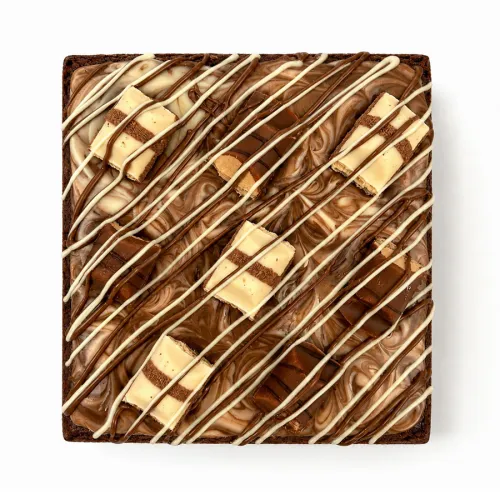
Structure that works in their favour
A brownie is essentially chocolate, butter, sugar and egg held together with the smallest amount of flour the recipe can get away with. That low flour content is not a shortcut — it is what defines the whole thing. Where a sponge cake relies on air trapped in its batter and gluten networks to hold itself upright, a brownie does neither. It is dense and self-supporting from the moment it cools. There is nothing to collapse, no delicate crumb to shatter, no dome to cave in under the pressure of a postal sack.
That density also means brownies cut into neat squares that stack cleanly and absorb minor shocks without disintegrating. A slice of Victoria sponge would not survive the same journey. A brownie barely notices it.
Sugar does most of the preservation work
The high sugar content in a brownie is not just about sweetness — it actively holds onto moisture. Sugar is hygroscopic, meaning it draws water molecules to it and keeps them bound within the mixture. The practical result is that a well-made brownie stays soft and fudgy for several days after baking, often noticeably better on day two once the texture has settled and the flavours have had time to come together.
This is exactly what a postal bake needs. By the time a parcel clears the sorting office and lands on a doorstep, a brownie is frequently at its best. A delicate macaron or a cream-filled choux would be a sorry sight in the same circumstances.
Fudgy versus cakey — what actually differs
The fudgy-versus-cakey distinction comes down to ratio. More fat and chocolate relative to flour pushes a brownie towards the dense, almost molten end of the spectrum. Pull back the fat or add more flour and the texture opens up, becoming lighter and more cake-like, with a crumb rather than a set ganache interior. Neither is wrong; they are simply different targets.
The shiny, crackled top — the feature that makes a brownie look so distinctive — forms because the sugar dissolves thoroughly into the eggs during mixing and the surface dries out in the oven before the inside sets, creating a thin, meringue-like skin that cracks as the brownie rises slightly then settles. It survives packaging well because it is firm rather than fragile.
Blondies and flour-free variations
The blondie takes the same logic and strips out the cocoa entirely, relying instead on brown sugar — with its deeper, more caramel character — and white chocolate for richness. The result sits in a different flavour register but travels just as well, with the same dense structure and high sugar content doing the same work.
Brownies are also among the most naturally adaptable bakes for those avoiding wheat. Because the flour contributes so little to the structure, substituting it with ground almonds, rice flour or other alternatives tends to work more reliably here than in recipes where gluten is load-bearing. The chocolate and eggs do the heavy lifting regardless. This makes them a practical choice for makers producing letterbox ranges that need to cover a broader range of dietary requirements — though anyone with a specific allergy should always check individual producer labelling carefully.
What to look for when buying
A good letterbox brownie should arrive in a rigid or semi-rigid box rather than just a padded envelope — the packaging matters as much as the bake itself. Look for brownies that are individually wrapped or separated, which protects that crackled top and prevents the squares from fusing together in transit.
The ingredient list tells you a great deal. Butter, real chocolate and eggs as the first entries suggest a properly made brownie rather than one built on vegetable oils and cocoa powder alone. A short shelf life — several days rather than several weeks — is usually a good sign; it generally means the baker has not had to compensate for a weaker recipe with preservatives or excess sugar.
The best letterbox brownies are the ones that reach someone on a birthday, a bad day, or for no particular reason, and taste as though they were made that morning. The science makes that possible. The baker just has to execute it.