The case against rushing
Most supermarket bread is made fast. Speed is efficient, and the results are consistent — but something is lost when fermentation is compressed from many hours into a fraction of that time. The microbes and enzymes that transform dough don't work to a tight schedule, and no additive or technique convincingly replicates what they do given sufficient time.
Long fermentation covers everything from an overnight room-temperature rise to a cold retard in the fridge lasting a day or more. What matters is duration, not any particular temperature or flour. The common thread is that the dough is given enough time for slow biological activity to run its course.
What the microbes are doing
Two things happen in a fermenting dough that don't happen much in a quick one. Bacteria — principally lactic acid bacteria in a sourdough culture, but also naturally present in any dough left long enough — produce acids. Those acids are the source of slow-fermented bread's depth: a faint tang in a long-proved yeasted loaf, a more pronounced sourness in a mature sourdough. Neither is better in the abstract; both are more interesting than bread that tastes mainly of flour and yeast gas.
Enzymes in the flour also get to work on its proteins and starches. Protease enzymes break down some of the gluten network, which changes the dough's handling and affects the final crumb structure. Amylase enzymes convert some of the starch into sugars — feeding fermentation, encouraging deeper crust colour during baking, and contributing sweetness to the finished loaf. None of this happens meaningfully in a two-hour prove.
Crust, crumb and keeping quality
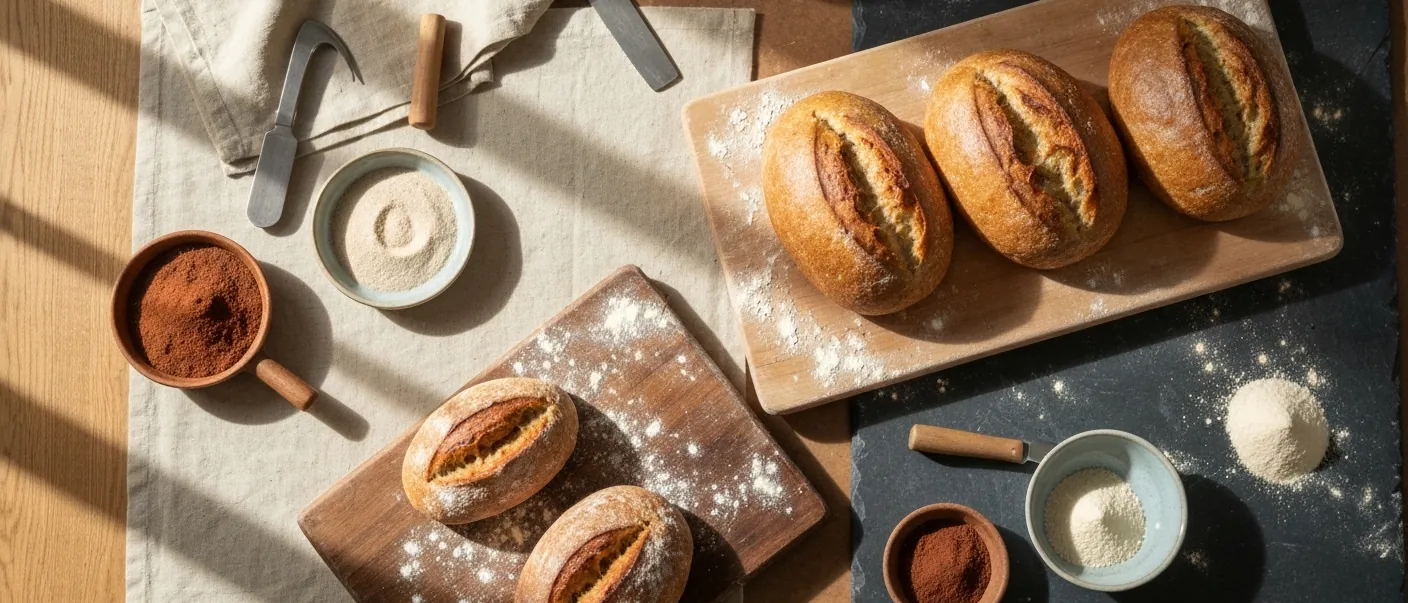
The physical differences in a long-fermented loaf are real and observable. The crust colours more readily and with more complexity — the additional sugars developed during fermentation caramelise under heat in a way a fast loaf's crust doesn't quite achieve. Blisters on a sourdough crust, the kind that shatter when you cut through, are partly a product of extended cold fermentation: gas accumulates slowly under the surface during a long, slow prove.
The crumb is typically more open and irregular, though this varies considerably by hydration, shaping and baking method. The texture tends to be more cohesive — less prone to the cottony softness that collapses into paste when chewed. The bread also keeps better. The acid environment slows mould growth, so a well-made sourdough left on a board will still be worth eating days later, where an equivalent quick loaf would not.
On digestibility — the honest version
It is often claimed that long-fermented bread is easier to digest, or more suitable for people who struggle with conventional bread. The reasoning is not baseless — partial breakdown of gluten proteins and the acidic environment both affect how the loaf behaves biologically. But the evidence is still developing, the picture is complicated, and it would be misleading to present long fermentation as a remedy for specific digestive conditions. The flavour benefits, by contrast, are certain and immediate, and they are reason enough.
Why this matters for buying bread
Understanding fermentation gives you better tools for choosing bread. A loaf described as long-proved, cold-retarded or slow-fermented has been given time — and that time costs the baker something, usually reflected in price. When an independent bakery explains how long their dough ferments, they are telling you where the flavour comes from.
The simplest test is to eat the bread over two or three days. A long-fermented loaf changes more gracefully — a day-old slice toasted is often better than a fresh one from a fast loaf. The crust may tighten and lose its shatter, but the crumb holds, the flavour persists, and sometimes intensifies slightly. That staying power is built in at the fermentation stage. You cannot add it later.