Three ingredients, one living culture
Genuine sourdough is made from flour, water and salt. That's it. The leavening comes not from commercial yeast bought in a sachet but from a live starter — a fermented mixture of flour and water that the baker feeds and maintains over time. Inside it, wild yeasts and lactic acid bacteria work together: the yeasts produce the rise, the bacteria produce the acids that give the loaf its characteristic depth of flavour and its keeping quality.
The process is slow by design. A long, cold fermentation — often overnight — allows those acids to develop properly. That extended ferment is what makes real sourdough easier to digest than conventionally yeasted bread, gives the crumb its open, irregular structure, and produces a crust that stays crisp rather than softening the moment it cools.
Why 'sourfaux' exists
Sourdough has become one of the most commercially attractive words in British baking, and with no legal definition protecting it, manufacturers are free to use the name however they like. A loaf sold as sourdough in a supermarket may contain added commercial yeast to speed the process, along with vinegar or other acidulants to mimic the sour note that slow fermentation would naturally produce. The result looks similar on the shelf — but the process behind it is fundamentally different.
This has become known as sourfaux in the baking community, and it matters for more than pedantic reasons. A loaf made with a quick yeast method and a dash of vinegar hasn't undergone the long fermentation that breaks down gluten and phytic acid. The flavour is a simulation; the digestive benefits are largely absent.
Reading the label honestly
The ingredient list is the most reliable tool you have. A genuine sourdough should show nothing beyond flour, water, salt and — sometimes — a mention of the starter culture itself. The moment you see dried yeast, vinegar, ascorbic acid or any emulsifiers, you are holding a loaf that has taken shortcuts the name doesn't advertise.
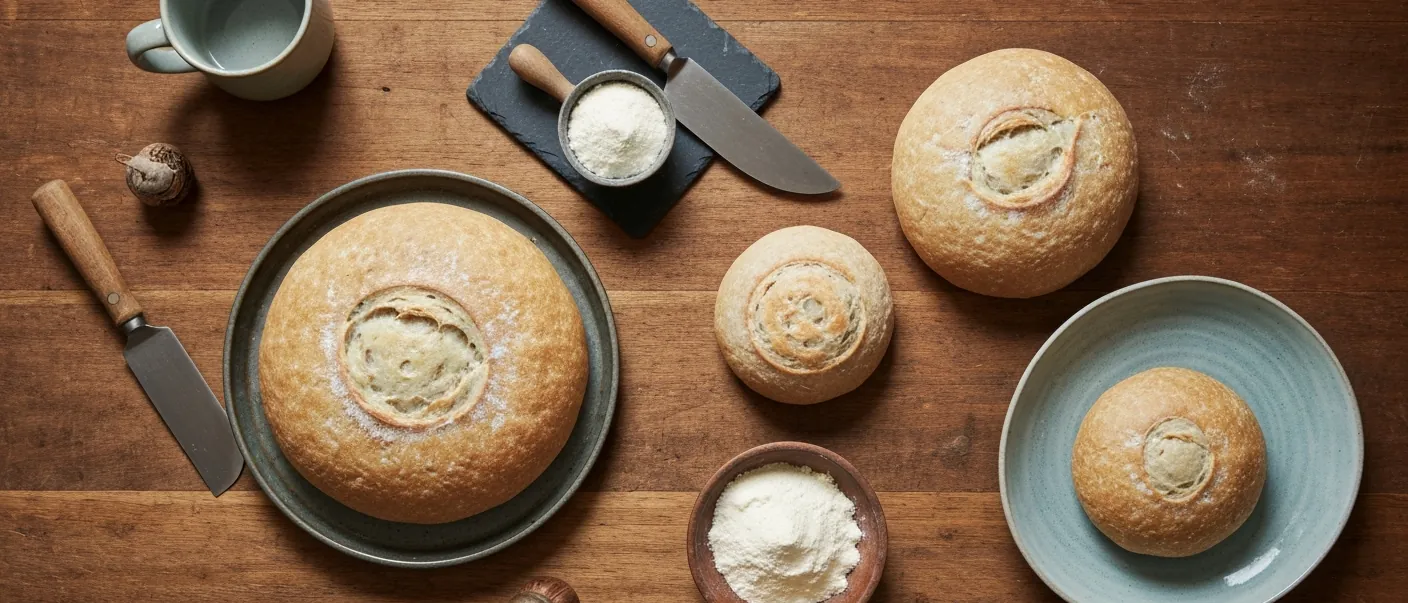
Real sourdough tends to have a thicker, harder crust that audibly crackles when squeezed — a result of proper oven spring and the caramelisation of natural sugars during a longer bake. The crumb is rarely uniform: air bubbles vary in size rather than forming a neat, even grid. The flavour has layers — not just sour, but wheaty and slightly nutty, with the sourness varying depending on the flour used and how long the dough was fermented.
A sliced loaf sold in a sealed plastic bag and stamped with a multi-week shelf life is almost certainly not the real thing. Properly made sourdough contains no preservatives, so it stales and moulds on a natural timeline — usually staying good for several days at room temperature, longer if kept in a cloth or paper bag rather than sealed plastic.
Where to find the genuine article
Independent bakeries, farmers' markets and specialist online bakers are the most reliable sources. A baker working with a live starter will usually be happy to talk about it — the starter is, in a real sense, the heart of their practice, and most are proud that it may have been in continuous use for years.
Some supermarkets do stock honest sourdough, typically from artisan suppliers, but it tends to sit in the in-store bakery or chilled section rather than the ambient bread aisle. Again: check the ingredients.
Why the difference is worth caring about
Real sourdough costs more to make because it takes longer and requires skill that commercial yeast baking simply doesn't demand. When you pay for it, you're paying for that time — and for a loaf that, torn alongside good cheese or butter, or toasted until the crust blisters, is a genuinely different thing from what passes for it in most wrapped-bread aisles.
Leavening bread with a wild starter predates commercial yeast by thousands of years, and bakers across Britain are now reviving that tradition with real seriousness. Knowing what you're looking for is the first step to finding it.
_q1cw-ps_jpgq80.webp)