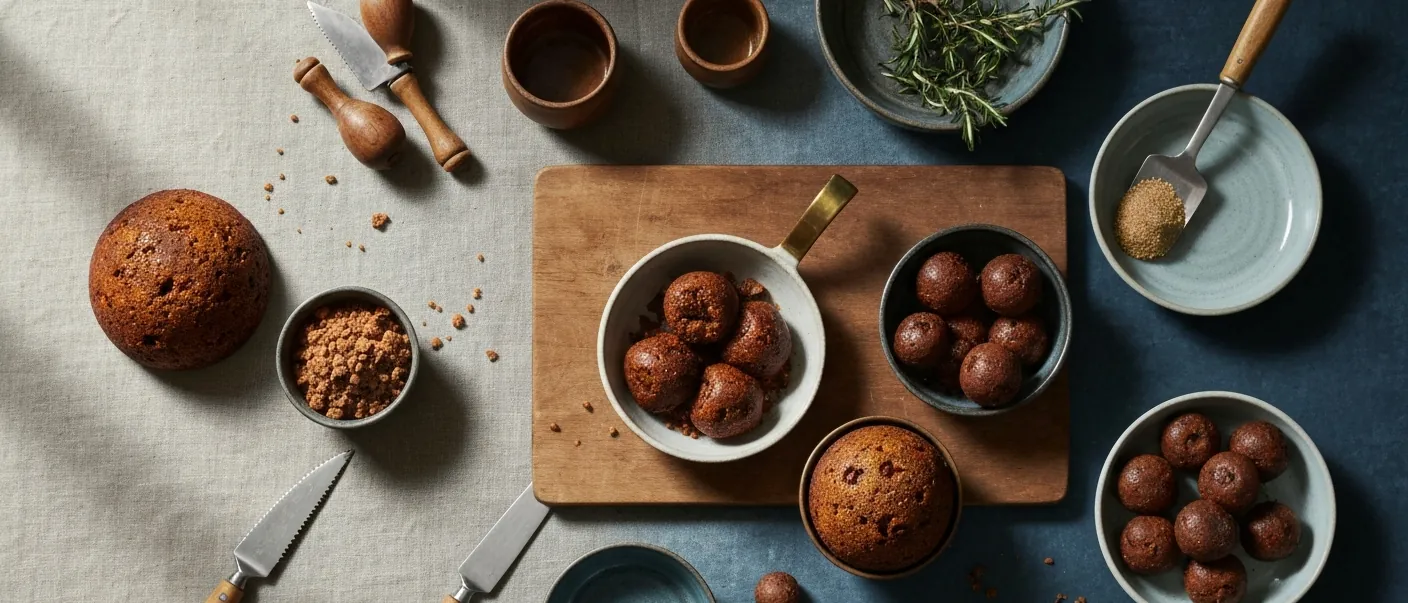
Why the calendar matters
The Christmas pudding is one of the few dishes in British food culture genuinely inseparable from the time it's made, not just the time it's eaten. Serious pudding makers — home cooks and small artisan producers alike — have their puddings steamed, cooled and stored well before the first mince pie appears in the shops. This isn't tradition for tradition's sake. It's chemistry.
During a long maturation, dried fruits soften and swell, spices knit together and mellow, and the alcohol acts as both preservative and slow flavour-transformer. A pudding made in late October or November and eaten at Christmas is a substantially different thing to one made the week before. The difference shows in the texture — dense but yielding rather than stodgy — and in a depth of flavour that no amount of extra spice can shortcut.
Stir-up Sunday
The traditional start date for pudding-making is Stir-up Sunday, the last Sunday before Advent. The name is thought to derive from the collect for the day in the Book of Common Prayer, which begins "Stir up, we beseech thee, O Lord" — though whether Victorian households were genuinely making the connection or simply enjoying the coincidence is a matter of debate. Either way, the timing stuck.
Stir-up Sunday acts as a useful prompt: make the pudding now, and it has the best part of a month to mature before Christmas. Each family member stirring the mixture and making a wish is the kind of ritual that sounds faintly absurd when written down and feels entirely right when you're actually doing it. The tradition has survived because it gives people a reason to gather around the making of something, not just the eating of it.
Feeding and maturing
Once steamed and cooled, an artisan pudding isn't simply put away and forgotten. Feeding — spooning a small measure of brandy, rum or whisky over the pudding at intervals — is what separates a pudding made with care from one that merely sat on a shelf. The spirit seeps through the cloth or paper covering and into the pudding itself, keeping it moist and continuing to develop the flavour.
The choice of spirit matters to small producers in a way it rarely does in mass manufacturing. Brandy is the classic, bringing warmth without sharpness. Dark rum adds a treacly depth that suits a heavier, fruit-forward pudding. Some makers use a mixture, or favour a particular aged whisky that reflects where they're based. These decisions compound over weeks of maturation, which is why artisan puddings tend to taste distinctly of something — a considered choice — rather than generically of Christmas.
What artisan makers do differently
The economics of industrial pudding production push towards short timelines and standardised ingredients. An independent maker working in small batches has neither the pressure nor the inclination to rush. Autumn production runs are planned well ahead; the fruits may be soaked in spirit before the pudding is even assembled, adding another layer before formal maturation begins.
There's also the question of method. Traditional puddings are made in ceramic or plastic basins, covered and steamed for many hours — a process that cannot be meaningfully accelerated. The long, slow steam produces the characteristic dark colour and tightly bound texture. Some makers still use cloth-lined pudding cloths for a rounder shape, though the basin method is more common. What doesn't change is the time involved: this is one of the more labour-intensive things a small food business can make, and the autumn calendar exists to absorb that effort without panic.
What to look for when buying
If you're buying rather than making, the maturation question is worth asking. A pudding made in autumn will have had weeks of feeding and resting behind it. Look for makers who mention their production timeline, list recognisable dried fruits and a named spirit, and package the pudding in something breathable rather than a sealed plastic tray — it should be able to continue developing right up to the moment it goes on for its final steam.
- Check whether the pudding has been fed with spirit during maturation, not just flavoured with alcohol in the mix itself.
- The ingredient list should read like a store cupboard, not a chemistry set — dried fruit, suet, eggs, flour, spice, spirit.
- A pudding that has matured well will have a dark, almost mahogany colour throughout, not just on the surface.
Given time and a little attention, a Christmas pudding arrives at the table as something genuinely worth the wait.