Two processes, not one
Smoking covers two quite distinct things. Cold smoking adds flavour — and, traditionally, some preservation — without applying enough heat to cook the food. Hot smoking does both at once: the food sits in a chamber where temperatures are high enough to cook it through while smoke works on the surface. The difference sounds simple, but it produces results so unlike each other that they are barely comparable.
What cold smoking actually does
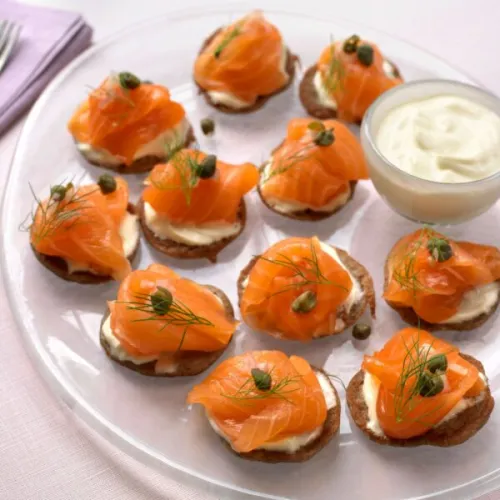
In cold smoking, smoke is generated away from the food and cooled before it arrives, keeping the chamber temperature low enough that proteins don't set. The food stays raw, or very close to it. Smoked salmon is the example most of us know best: those translucent, yielding slices are cold smoked, which is why they have that silky, almost buttery texture. Kippers are another classic — whole herrings split and cold smoked over smouldering wood, the flesh still delicate rather than flaky.
Because the food is not cooked, cold smoking demands impeccable sourcing and handling. The process also takes considerably longer than hot smoking, often running through the night in traditional smokehouses. The result is a subtle, pervasive smokiness that works its way into the flesh without dominating it — you taste the fish as much as the smoke.
What hot smoking does differently
Hot smoking is closer in principle to low-and-slow barbecue. The food sits directly in the smoke at a temperature high enough to cook it, so by the time it comes out, it is ready to eat. Hot-smoked salmon — firmer, flakier, with a more pronounced smoky crust — is the most familiar British example. Smoked chicken, smoked mackerel, smoked duck: all are hot smoked, which is why they can be eaten straight from the packet without further preparation.
The texture change is significant. Cold smoking leaves flesh supple and almost raw-feeling; hot smoking firms it, breaks down connective tissue, and produces that characteristic flake. The smokiness tends to be more assertive too — partly because heat drives it deeper into the food, and partly because hot smoking often uses denser, more aromatic wood.
Wood matters, but not in the way people think
Both methods use hardwoods — fruitwoods such as apple and cherry, or denser woods like oak and beech. Resinous softwoods are avoided because they produce harsh, acrid smoke. Beyond that, the differences between wood types are real but subtle. Skilled smokers tend to match wood to produce through long experience rather than any fixed formula: oak is traditional for salmon; fruitwoods suit poultry and pork well. The quality and moisture of the wood matters as much as the species.
The character of the finished product comes as much from the quality of the raw ingredient, the length of time in the smoke, and any cure applied beforehand — usually salt, sometimes sugar or molasses — as it does from which wood is burning.
How to eat each one well
Cold-smoked fish is best treated with restraint. The classic pairings — cold-smoked salmon with brown bread and lemon, kippers with butter — work because they let the delicate smoke flavour breathe rather than compete. Hot-smoked fish is sturdier and takes bolder accompaniments: mustard, horseradish, peppery leaves, robust grains. It holds up to being stirred through warmed dishes in a way cold-smoked fish generally doesn't, since cold-smoked fish can tighten unpleasantly with heat.
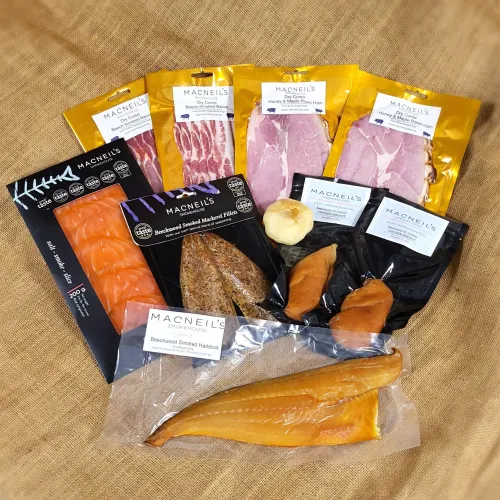
For charcuterie and smoked meat, the same logic applies. Hot-smoked chicken or duck is ready to slice and eat; cold-smoked bacon or ham will usually need cooking. Reading the label carefully — or asking the producer — is worth doing, because the terminology is not always consistent across different smokehouses and regions.
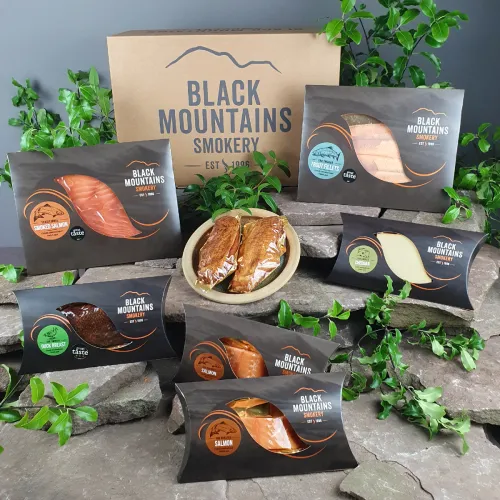
The best British smokehouses tend to be serious about one style rather than both. A producer who has spent years perfecting cold-smoked salmon over oak is not necessarily the right person to go to for hot-smoked chicken, and vice versa. Knowing what you are looking for makes it much easier to find the right maker.