What ganache actually is
Strip a chocolate truffle back to its core and you find ganache — chocolate and cream combined into a smooth, stable emulsion. The chocolate provides fat and solids; the cream provides water, fat of its own, and a little sugar from the lactose. Bring them together carefully and the fats from each source form a single unified mass rather than separating into greasy pools.
The ratio between cream and chocolate is the most consequential decision a maker takes. A high proportion of chocolate relative to cream produces a firm, almost fudge-like ganache that can be rolled by hand into balls, chilled, and coated. Tip the balance the other way and the result is a pourable glaze or a soft, yielding filling that would collapse if you tried to shape it. Hand-rolled truffles sit towards the firmer end; centres piped into moulded shells sit closer to the softer extreme.
Why emulsions split, and how to rescue them
An emulsion is inherently unstable. Introduce heat unevenly, add cold cream to hot chocolate too quickly, or allow moisture in from a poorly dried bowl, and the fat and water phases separate — the result looks broken: greasy, grainy, curdled. A split ganache is usually salvageable. Gentle warmth, a small addition of cream, and patient stirring from the centre outwards can coax the emulsion back together. A stick blender, used with care, shears the mixture finely enough to re-integrate the phases.
Chocolate that is too hot when the cream arrives can seize or scorch. Cream that is barely warm may not melt the chocolate evenly. The window in which a good emulsion forms is narrower than it looks on paper, which is why ganache-making rewards experience over instruction.
Infusions and flavour
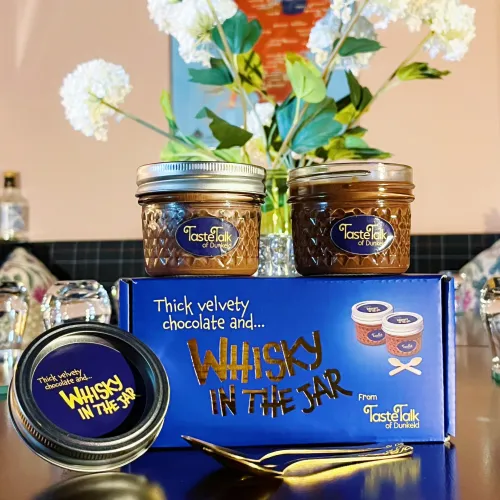
Because ganache begins with cream, it takes to infusion readily. A maker might steep Earl Grey tea, dried lavender, pink peppercorns, or fresh herbs in warm cream, strain it, and use the scented liquid as the base. Spirits — brandy, rum, whisky — are typically stirred in after the emulsion forms, since adding too much alcohol early can destabilise it. The fat in the chocolate carries fat-soluble flavour compounds particularly well, which is why spices and citrus zest, both rich in essential oils, translate so vividly into a finished truffle.
The chocolate itself is a flavour decision before any infusion begins. Chocolatiers working at the finer end of the trade tend to use couverture — high-cocoa-butter chocolate formulated for professional use — rather than standard confectionery chocolate. As we cover in our piece on couverture, its higher fat content produces a ganache that is smoother and more fluid at a given temperature, which matters for both mouthfeel and workability. The origin and percentage of the chocolate set the flavour ceiling; infusions and additions work within it.
Coating and finishing
Once a ganache is firm enough to handle, it needs a shell. Rolling in cocoa powder is the simplest approach — the bitterness of good cocoa cuts through the cream's richness. Crushed nuts add texture and a toasty note. A coating of tempered chocolate gives a clean snap and extends shelf life slightly, since it slows moisture loss and provides a physical barrier. Tempering — heating and cooling chocolate through specific phases to stabilise its crystal structure — is a separate skill, and one that determines whether a coating sets glossy and firm or dull and soft.
The outside of a truffle is where presentation happens. The inside is where the maker's judgement lives.
Shelf life and the small-maker difference
Fresh cream is perishable, and ganache made with it does not keep the way a mass-produced chocolate bar does. Truffles from independent makers typically carry a shelf life measured in weeks rather than months, and flavour peaks within the first few days. The water activity in fresh-cream ganache supports microbial growth, which is why producers and retailers keep truffles cool and move them quickly.
Large manufacturers address this through reduced water activity, glucose syrups, preservatives, and lower cream content — all of which extend shelf life but pull the ganache away from the texture that makes hand-made truffles distinctive. This is a description of what you are buying, not a criticism of either approach. When you pick up a box of fresh truffles from an independent chocolatier, the short shelf life is inseparable from what makes them worth eating.
Proper storage matters more than many buyers realise. Chocolate absorbs refrigerator odours easily, and dramatic temperature shifts cause condensation that damages both the coating and the ganache within. Our piece on chocolate storage covers this in detail — but the short version is that a cool, stable, dark spot in an airtight box is almost always preferable to the fridge.