What actually happens in cultured butter
Before the cream ever meets the churn, it rests. Live bacterial cultures — the same broad family responsible for yoghurt and crème fraîche — are introduced to the cream and left to work. Over hours, those cultures convert some of the natural sugars into lactic acid and a compound called diacetyl, which produces the characteristic buttery aroma we associate with the best continental blocks. Only once that fermentation is complete does the cream get churned into butter.
The result is measurably different. The fat carries a tang — gentle rather than sharp — alongside a toasted, almost nutty depth that sweet-cream butter cannot replicate. Spread it on bread without anything else and you understand immediately why it was the default for so long in France, Denmark and much of northern Europe.
Why British butter went a different way
For most of butter's history, some degree of ripening was unavoidable. Fresh cream soured naturally, and churning it was the practical response. As refrigeration became widespread through the twentieth century, dairies could keep cream cold enough to halt that process entirely. Churn it quickly, keep the flavour neutral, and you get a product that is consistent and long-lived — what we now call sweet-cream butter. That became the supermarket norm across Britain.
There is nothing wrong with sweet-cream butter. It performs reliably, its mild flavour stays out of the way in baking, and most people grew up with it. But the word "butter" in that context describes something quite different from what a dairy in Normandy or a small creamery in the British countryside is making when it takes the slower route.
The British revival
A number of small British dairies have returned to culturing their cream, often sourcing milk from single herds or named breeds where the fat has its own character before the cultures begin. The approach sits naturally alongside a broader interest in fermented foods — sourdough, kefir, aged cheese — where slowness itself is a form of craft.
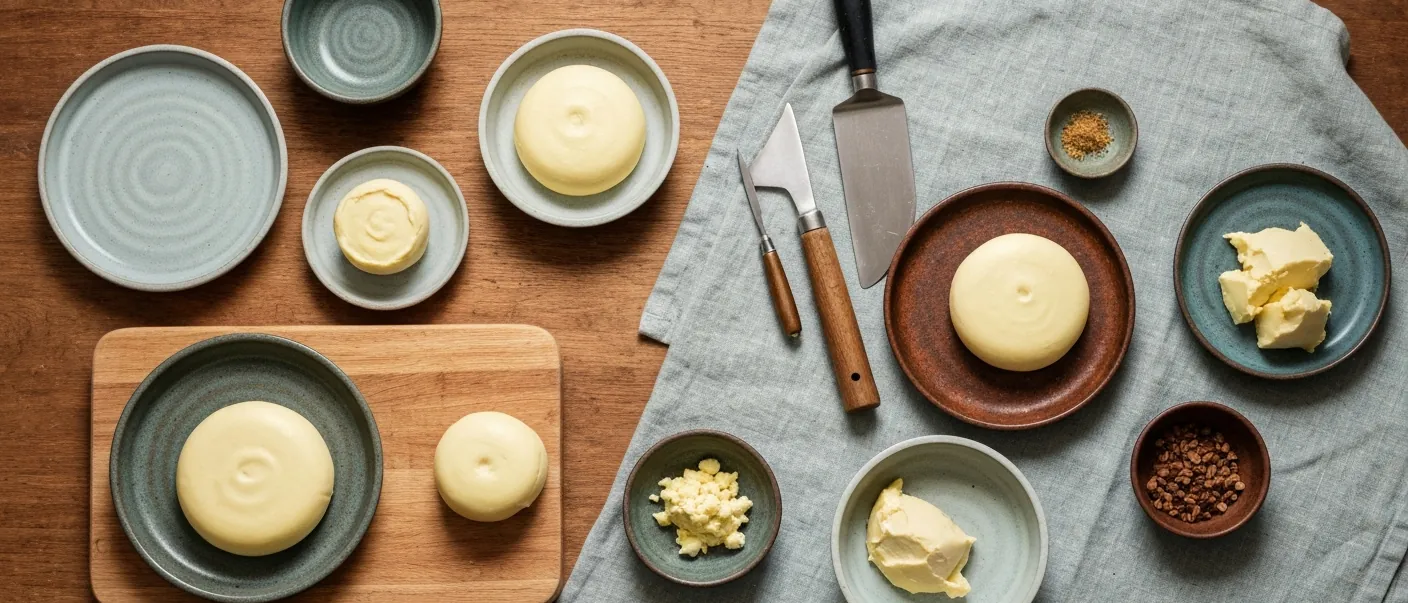
These producers tend to sell through farm shops, specialist delis and online rather than at scale through supermarkets. The butter is often slightly softer in texture, ivory rather than pale yellow, and the flavour develops further as it ages in the fridge. Some makers salt generously, which sharpens the lactic notes rather than dulling them.
How to read what you're buying
Labels do not always make the distinction obvious. The clearest signals:
- "Cultured cream" in the ingredients list — the definitive indicator that fermentation happened before churning.
- "Lactic butter" — a term used particularly in continental European food writing, meaning the same thing.
- A notably higher fat percentage is common in premium cultured butters, though fat content alone tells you nothing about whether the cream was cultured.
- Sweet-cream butter will list simply "cream" (and salt, if salted), with no mention of cultures or lactic fermentation.
Butter labelled "farmhouse" or "artisan" may or may not be cultured — those terms are not regulated in the same way. The ingredients list is the honest answer.
Using it well
Cultured butter earns its place where butter is the thing being tasted rather than a background fat. Spread thickly on good bread, worked into pastry where you want a slight tang against sweet fillings, melted over new potatoes or asparagus — in each case, the fermented complexity does something a neutral butter cannot. At high heat in a frying pan the subtler notes fade, which is why most cooks use cultured butter at gentler temperatures or uncooked entirely.
If you bake regularly, it is worth keeping a block of each. Sweet-cream butter has its place in recipes that need a clean, unassertive fat. Cultured butter is for the moments when butter is the point.