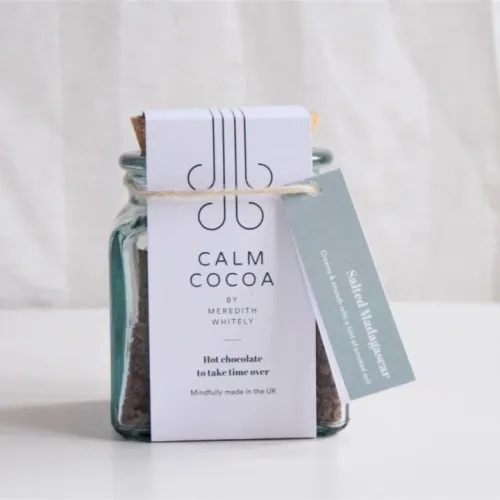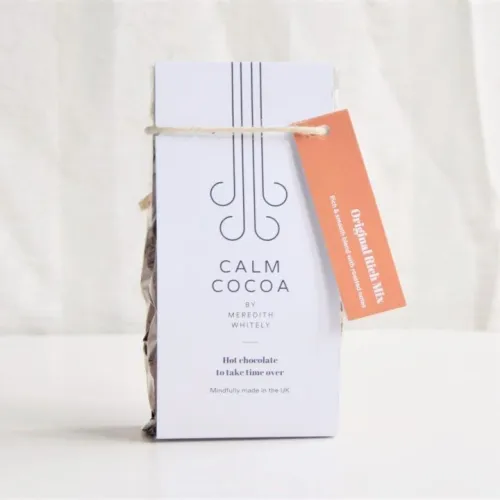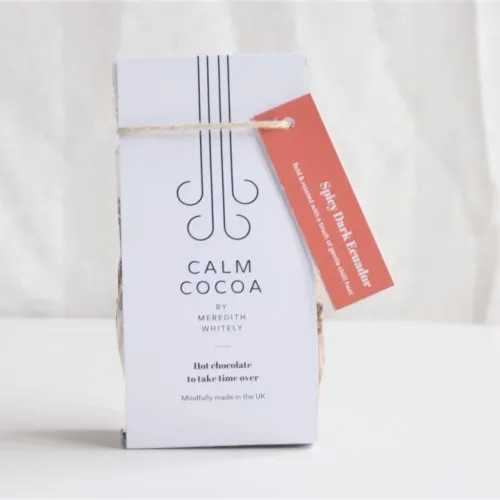
Three products, one muddy category
Walk into any artisan food shop and you'll find cocoa powder, drinking chocolate, and what makers sometimes call "real" hot chocolate grouped together as though they're interchangeable. They're not. Each starts from a different point in the chocolate-making process and behaves differently in the cup.
Cocoa powder is what remains after most of the cocoa butter has been pressed out of the roasted, ground cacao bean. It is unsweetened and intensely flavoured. Some cocoa powders are treated with an alkalising agent — a process known as Dutching — which darkens the colour, softens the acidity, and produces that deep, almost mahogany hue familiar from many continental cocoa tins. Dutched cocoa dissolves more readily and tastes milder; natural cocoa is sharper and fruitier. Neither is superior in any absolute sense; they suit different results.
Drinking chocolate is cocoa powder with sugar already added, and often with dried milk powder too. It was designed to dissolve quickly and require no further thought. There is nothing wrong with that as a category, but the proportion of actual cocoa in a drinking chocolate mix varies enormously — a product that lists sugar first tells you something meaningful about where the emphasis lies.
What craft chocolate makers do differently
Real hot chocolate is made from chocolate itself: bars, flakes, or grated pieces of properly tempered chocolate melted slowly into warm milk. This is where the craft end of the market operates, and the difference in texture and depth is not subtle.
Because it retains its cocoa butter, chocolate-based hot chocolate is noticeably thicker. The fat coats the palate in a way that cocoa powder cannot, which is why a cup made this way feels closer to what you'd find in a specialist chocolatier in Turin or Bruges. British craft makers — particularly those working with single-origin cacao — often produce flaked or tablet-format hot chocolate for exactly this method. The provenance of the bean matters here in the same way it does with bar chocolate. A Madagascan cacao will carry red-fruit brightness; a Peruvian one might lean earthier and more complex.
Reading the label on these products is the same exercise as reading a chocolate bar. Cocoa percentage matters: a higher figure means more cacao solids and butter relative to sugar, producing a less sweet, more intensely flavoured cup. If you already know how to interpret cocoa percentages on bar chocolate, that knowledge transfers directly.
How to read the label before you buy
The ingredient list is the most reliable guide. For cocoa powder, look for nothing except cocoa — and possibly the alkalising agent (potassium carbonate or similar) if it is Dutched. For drinking chocolate, the order of ingredients reveals whether you are buying cocoa-with-a-little-sugar or sugar-with-a-little-cocoa. For real hot chocolate flakes or tablets, look for cacao percentage, bean origin if stated, and minimal additional ingredients: cocoa mass, cocoa butter, sugar, perhaps vanilla.
Some products marketed as "luxury" drinking chocolate are simply standard drinking chocolate in more elegant packaging. A genuinely craft product will state where the cacao came from and, ideally, how it was processed. Vague descriptors such as "finest" or "premium" carry no regulated meaning and deserve scepticism.
Serving it well
Cocoa powder rewards whisking with a small amount of cold liquid first to form a smooth paste before hot milk goes in — this prevents lumps and draws out more flavour. Drinking chocolate, especially if it contains milk powder, is more forgiving and dissolves readily.
Chocolate flakes or grated bar chocolate need low, steady heat and patience. Rushing the process affects the texture and can knock back more delicate flavour notes. Traditional preparations in parts of Spain and Mexico use a wooden whisk called a molinillo to create a light froth; a small balloon whisk or milk frother does the same job at home.
What makes the difference is starting with good material, understanding what you've bought, and not trying to force cocoa powder to do what only chocolate can.