A meat with deep roots
There was a time when rabbit needed no introduction. Country families caught it, urban markets sold it, and cooks of every background knew exactly what to do with it. It fed people through lean decades and plentiful ones alike, precisely because it was so consistently available and so easy to cook well. Somewhere along the line, rabbit slipped off the everyday menu — overtaken by cheap factory chicken, perhaps, or simply forgotten as cooking habits shifted. It never disappeared from game dealers and good independent butchers, but it became a curiosity rather than a staple.
Wild rabbit remains one of the most affordable and genuinely interesting meats you can buy in Britain, and it asks very little of the cook beyond patience.
Wild versus farmed
The distinction matters more with rabbit than with almost any other meat. Farmed rabbit — the pale, mild product found in some supermarkets and European delis — is close in texture to chicken breast: tender, fairly bland, and suited to quick cooking. Wild rabbit is a different creature. The flesh is darker, the flavour more pronounced, and the muscles are leaner and firmer from a life spent moving across fields and warrens. That leanness is part of its appeal, but it also means the meat needs a different approach than you would give a farmed animal.
Wild rabbit has no statutory closed season in the UK, so it is available year-round from a good game dealer. Most people who handle it regularly consider autumn and winter the best time — the animals are fully grown, the flavour is at its most developed, and it suits the cooking styles that bring out the best in it.
What to ask for, and what to expect
A game dealer or butcher who stocks wild rabbit will usually offer it whole or jointed. Whole is often the better buy if you are comfortable with a knife, since it gives you more control and wastes less. Jointing a rabbit follows the same logic as jointing a chicken: the saddle — the long back section — yields the most meat and benefits from different treatment than the legs, which are the toughest and most flavoursome parts. Many cooks separate the two, giving the legs longer in the pot and adding the saddle later so it does not dry out.
The carcass, once stripped, makes an excellent stock. Rabbit bones produce a clean, delicate broth that works well as the base for the same dish you have just made.
How it is traditionally cooked
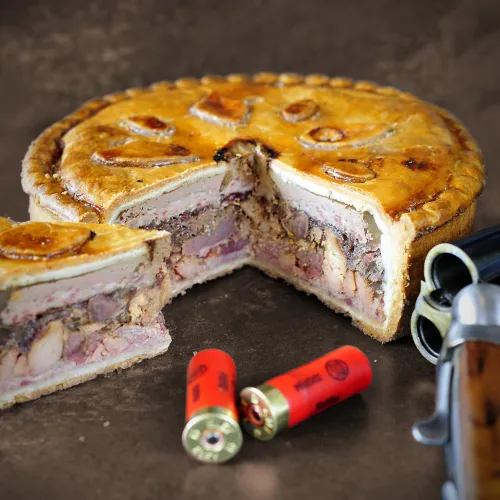
Slow cooking suits wild rabbit well. The legs in particular have dense muscle fibre that needs time and moisture to relax. A deep, covered pot is your friend: classic British rabbit pie, for instance, braises the jointed meat first before it goes under pastry, so the filling is already tender rather than relying on the oven to do all the work.
The flavours that traditionally accompany rabbit are worth understanding rather than just copying. Cider brings a gentle acidity that cuts through the richness of any added fat and complements the slight gaminess of the meat. Mustard — particularly a wholegrain or a strong Dijon — gives body and warmth without dominating. Bacon or pancetta adds the fat the rabbit itself lacks, basting the meat from within as everything cooks together. These are not arbitrary combinations: they have developed over generations of cooking an animal that makes specific demands, and they reliably work.
Rabbit also takes well to assertive herbs. Thyme, bay, and rosemary all stand up to the flavour rather than being lost in it. A long, slow braise with any of these — finished with something creamy if you like — produces a dish that rewards the minimal effort involved.
Where to buy and what to look for
Your best starting point is an independent game dealer, a traditional butcher who sources game, or a farmers' market stall that handles seasonal meat. Some online game suppliers deliver whole or jointed wild rabbit, chilled or frozen, which is worth knowing if there is nothing local to you.
Fresh wild rabbit should smell clean and faintly gamey — not strong, not off. The flesh should be a deep pinkish-brown rather than grey, and the joints should look firm. If you are buying frozen, defrost it slowly in the fridge; the texture suffers if it is rushed.
Ask the dealer or butcher how recently it was shot and how it was hung. Less hanging means milder flavour; more hanging gives a deeper, more pronounced result. For a first attempt, something lightly hung is an easier introduction.